


Dental retainers prevent teeth from shifting back after orthodontic treatment.
Why Dental Retainers Guard Your Teeth Better Than Anyone
The moment your braces are taken off or you finish your last clear aligner tray is definitely a milestone to be happy about! There is even a certain magic in your reflection when you suddenly notice that perfectly symmetrical alignment. However, at Lema Dental Clinic in Istanbul, Turkey, we usually tell our patients that this isn’t the end—it is the start of a new phase called “retention.”
The teeth are already straight, don’t you wonder why a retainer still needs to be worn?
Your Teeth’s Biological “Memory”
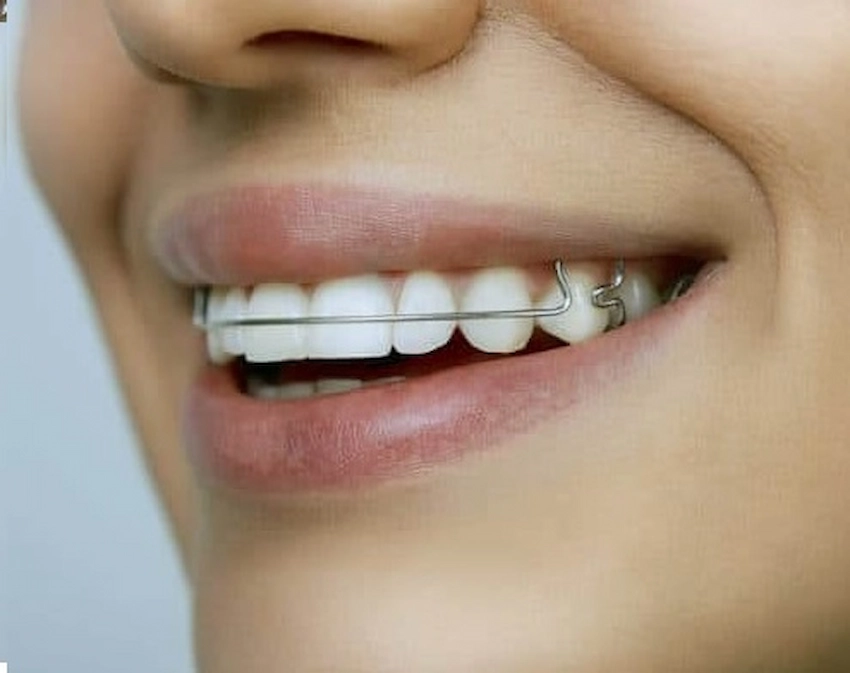
You shouldn’t imagine your teeth as stones set in concrete but as passengers of a vehicle that moves very slowly. The periodontal ligament, a complex network of fibers, keeps them in place. These fiber networks are stretched and reshaped upon orthodontic treatment.
By referring to Professor Doctor Coşkun Yıldız‘s words, these ligaments have a very stubborn “memory”. For months or even years after orthodontic treatment, the ligaments will be home in a desperate attempt to pull your teeth back to the original crooked positions. Unless you have a retainer, your teeth will drift back to their old position gradually. This is known as relapse in clinical terms.
Why It Takes Time for the”Foundation” to Set
In construction, you don’t take down the scaffolding until the cement is fully cured. Your jawbone would be the cement in this context. The bone surrounding the root of the teeth actually becomes temporarily less dense to make it easier for the shift when the teeth move. Once the braces pressure has been removed, the bone will harden and “remineralize” around the newly aligned teeth, so it needs time.
Dentist Polen Akkılıç and her assistants point out that the post-treatment six months are very important since that is the stage where the bone is most malleable and the likelihood of movement is the highest.
Comparing Your Options: Fixed vs. Removable
At Lema Dental Clinic, we don’t believe in a one-size-fits-all approach. Every month tells a different story. Here is how we break down the two primary paths for our patients in Turkey:
| Feature | Fixed (Bonded) Retainer | Removable (Essix/Hawley) Retainer |
| Visibility | Completely hidden (behind the teeth) | Clear (Essix) or slightly visible (Hawley) |
| User Compliance | No effort required; it’s always there | Requires discipline to wear daily |
| Cleaning | Needs careful flossing with threaders | Easily removed for brushing/flossing |
| Longevity | Can last many years | Typically replaced every 1-2 years |
| The “Lema” Verdict | Best for high-risk lower front teeth | Excellent for nighttime stability |
The Reality of Age-Related Shifting
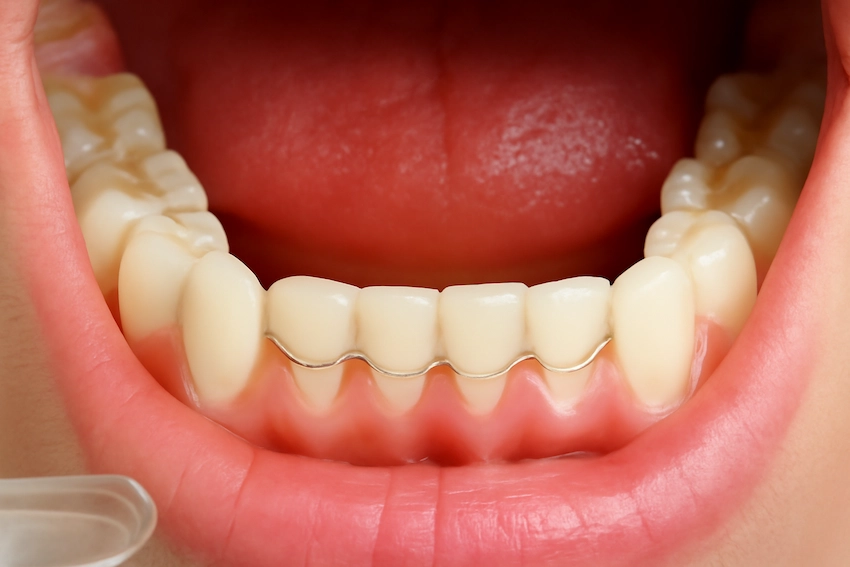
Even if you never had braces, teeth naturally move forward and inward as we age. This “physiological drift” is a natural part of the human aging process. By wearing a retainer, you aren’t just protecting the work done by your orthodontist; you are essentially “freezing” your smile in its most aesthetic state, preventing the natural crowding that often happens in our 40s and 50s.But let’s look closer at the psychological aspect. Investing in a smile at a world-class facility like Lema Dental Clinic involves time, emotion, and finances. The retainer is your insurance policy. It is the only thing standing between you and a “do-over” treatment five years down the road.
Frequently Asked Questions (FAQ)
Definitely not. A new retainer might feel a bit tight at first but this should not be like the pain you get from braces being adjusted. Pain is a sign that your teeth might be shifting without the retainer so you should come and see us as soon as possible.
The quick answer is: as long as you want your teeth to stay straight. Usually, patients will wear their retainers all day for a couple of months and then switch to only at night for life.
Don’t worry but act fast. If you’re near our clinic in Turkey we can visit scan and quickly print your new one. If you’re out of the country, go to a local dentist to get a temporary one. A few weeks without a retainer may cause your teeth to move in a very noticeable way.
That depends. If your retainer is a removable type then you definitely have to take it out while you are eating. When you eat with your retainer on, pieces of food get stuck and start to rot your teeth very fast. Also, your plastic retainer can get broken because of the force of chewing.
You really should. Clean it like you would wash your hands. Gently brush it with a soft toothbrush and lukewarm water. Wrong temperature will damage your retainer such as hot water that deforms your plastic and ruins its tight fit. Dr. Polen Akkılıç suggests putting your retainer in cleaning tablets once a week to keep the freshness of your retainer.
- Johnston, C. D., & Littlewood, S. J. (2015). Retention in orthodontics. British Dental Journal, 218(3), 119-122.
- Littlewood, S. J., et al. (2016). Retention procedures for stabilising tooth position after treatment with orthodontic braces. Cochrane Database of Systematic Reviews.
- Nanda, R., & Burstone, C. J. (1993). Retention and Stability in Orthodontics. W.B. Saunders Company.
- Sadowsky, C., et al. (1994). Long-term stability after orthodontic treatment: Nonextraction with prolonged retention. American Journal of Orthodontics and Dentofacial Orthopedics, 106(3), 243-249.
- Proffit, W. R., Fields, H. W., & Sarver, D. M. (2018). Contemporary Orthodontics. Elsevier Health Sciences.

