


The root is permanent, but the crown needs replacing.
Many patients come in, sit in the consultation chairs with us in Turkey, holding a panoramic X-ray, and ask a very human question: “Will this last forever?”
Actually, a complete smile restoration is a lifelong decision. You want total confidence in it. At Lema Dental Clinic, through our clinical experience, we observe this long-term process quite closely. Professor Doctor Coşkun Yıldız frequently remarks that a titanium screw is not merely a piece of metal. It quite literally becomes a part of your face.
Biological Fusion: Titanium Implants in the Jawbone for Decades
Titanium in vivo for 30 years? View your jawbone as the groundwork of a skyscraper. The titanium “root” is precisely positioned. Subsequently, bone growth results in the enclosure of the metal. Essentially, it locks it into position. The term we have for this incredible phenomenon is osseointegration.
Nonetheless, a detailed examination of the scenario reveals a bond of extraordinary strength after thirty years. Furthermore, titanium is totally biocompatible. It neither rusts nor decomposes. If the bone remains in good health, then the implant will be stable and durable for the entire lifespan.
Things That May Endanger a 30-Year Implant

The question then is: if the metal is so reliable, why do some implants fail at a later stage?
The main culprit is the peri-implant tissues rather than the metal per se. Dentist Polen Akkılıç and her team decided to spend countless hours on patient education. Their main theme revolves around the dangers of peri-implantitis. Conceptually, it is akin to gum disease. We can compare it to the destruction of soil around a building caused by pests. Plaque accumulates over time. By treating the bone as a “building,” we can say that the supportive element gradually diminishes. Once there is no bone, even a mighty foundation will become unstable.
Moreover, a few tips can be mentioned for your general health throughout the 30 years. Heavy cigarette smoking or diabetes, if not under control, are examples of harmful habits that can impair blood circulation. This, in turn, deteriorates bone quality and endangers a dental implant.
Lifespan of Dental Implant Components
Below, we present some observations of the clinic on long-term dental restorations. It is first important to make a distinction between the unseen implant root and the exposed tooth.
| Part of the Implant | Functionality | After 30 Years | Recommended Action |
| Titanium Post (Root) | It grips the jawbone very deeply. | Perfect condition. Remains firmly attached. | Brush, floss, and have X-rays regularly. |
| Abutment (Connector) | Connects root and crown. | Fairly well. Some invisible signs of wear possible. | Checked during the routine visits. |
| Zirconia/Porcelain Crown | Tooth visible above the gums. | Pretty worn. Constantly subjected to heavy use. | Typically replaced every 15–20 years. |
Wear and Tear: A Lot of It Is Normal
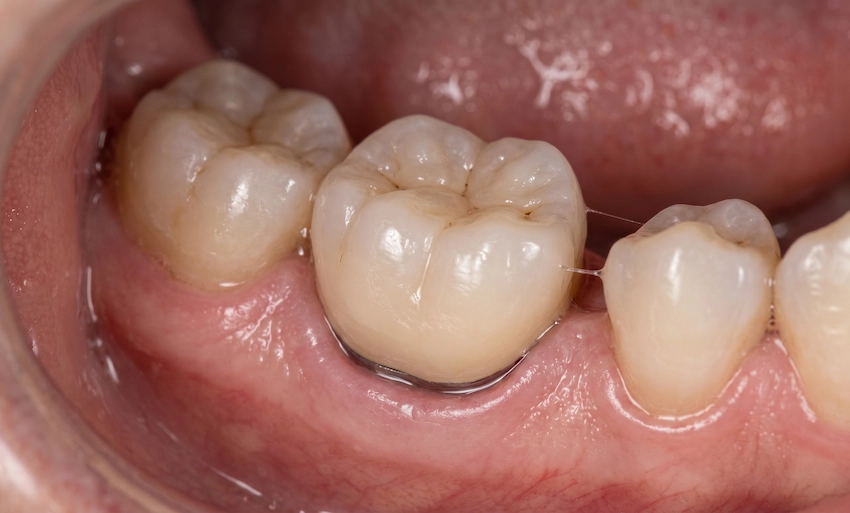
The main thing that ages is the veneer. The titanium post, a component of the foundation, can continue to reside within your bone for decades. But the zirconia or porcelain that you see is exposed to everyday pressure and tension. Thinking about it, after 15 or 20 years, a replacement might be necessary due mainly to wear and tear.
It is just a simple procedure. There is no operation involved. First, we remove a screw that holds the crown. Then, without changing a thing about the root, we replace the old crown with the new one.
Frequently Asked Questions
Provided your bone is healthy, then even not a bit of looseness occurs. My words to patients are simply that a settled implant feels just like a tooth naturally. It does not move, be it three years or thirty years since it was put in.
This normally is not the case. The titanium post is, in fact, the one that we count on staying in your jaw forever. That post remains at the location we implanted it, unless you go through serious bone loss because of gum disease.
One of the consequences of aging is reduced bone density. But in the case of your titanium implant, it actually plays a positive role for you. When you chew, the implant resupplies the jawbone with stimulation. Consequently, your jawbone remains strong and is not affected by the ‘sunken’ look often associated with aging faces.
Certainly. This is very common. If an implant was inserted in the 1990s and the crown has aged quite significantly, we can offer assistance. Our only task will be to manufacture a bright and contemporary zirconia crown and fit it onto your old, healthy post.
Because a lifetime result requires perfect precision. At Lema Dental Clinic, we use the highest global standards. Our sterile surgical protocols and master ceramists are world-class. You come to Turkey to ensure your foundation is built perfectly from day one.
- Albrektsson, T., Buser, D., & Sennerby, L. (2012). Crestal bone loss and oral implants. Clinical Implant Dentistry and Related Research, 14(6), 783-791.
- Buser, D., Sennerby, L., & De Bruyn, H. (2017). Modern implant dentistry based on osseointegration: 50 years of progress, current trends and open questions. Periodontology 2000, 73(1), 7-21.
- Derks, J., & Tomasi, C. (2015). Peri-implant health and disease. A systematic review of current epidemiology. Journal of Clinical Periodontology, 42(S16), S158-S171.
- Pjetursson, B. E., Thoma, D., Jung, R., Zwahlen, M., & Zembic, A. (2012). A systematic review of the survival and complication rates of implant-supported fixed dental prostheses (FDPs) after a mean observation period of at least 5 years. Clinical Oral Implants Research, 23(s6), 22-38.
- Sailer, I., Mühlemann, S., Zwahlen, M., Hämmerle, C. H., & Schneider, D. (2012). Cemented and screw-retained implant reconstructions: a systematic review of the survival and complication rates. Clinical Oral Implants Research, 23(s6), 163-201.

