


Short-term cold shock is normal.
You just got back from Istanbul. When you look in the mirror, you see the smile you have only dreamed of—bright, white, and perfectly symmetrical. You decide to celebrate with a glass of iced tea, take a sip, and- zing. An electric shock runs through a tooth.
This is a very frightening experience. You immediately get several questions through your mind: Is there anything wrong? Has the bonding come off? Am I losing my nerve?
At Lema Dental Clinic,we have been repeatedly receiving panic e-mails and pictures of a tooth sensitivity experienced by the patient, to which the dentists have replied with the explanation that the tooth causing the sharp sensation is alive and reacting to the changes.
Detailing The “Winter Coat” Analogy
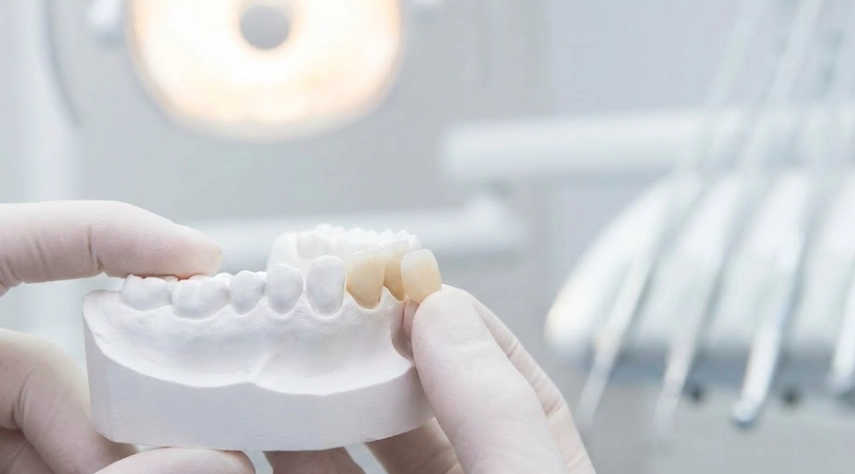
In order to grasp why this is the case, it is necessary to briefly delve into the tooth biology.
Professor Doctor Coşkun Yıldız very often explains the matter to patients with an easy metaphor: Suppose that your tooth has been wearing a winter coat (the thick, natural layer of enamel) its entire life. When veneers are prepared, a thin layer of the coat has been removed, even though the treatment has been very conservative, in order to give the porcelain some room. A veneer is a case (styling jacket) replacement.
It is beyond the strength of the veneer that the nerve inside the tooth (the pulp) acknowledges the “coat” alteration. For a short time, it “feels” that it is “naked” and “exposed” to the “outdoor elements”. It is a biological stress response. The nerve is irritated and very sensitive to temperature changes.
What Makes The “Zing” The Issue: It’s All About Tubules
Your dentin, which is a layer of the tooth, when viewed under a microscope, looks very much like a honeycomb in that it is a dense network of cemented walls forming a scaffolding comprised of many empty spaces. These empty spaces are the small channels known as dentinal tubules.
Some of those small channels will be damaged when the tooth is prepared; that’s just how it is. Dentist Polen Akkılıç and her team are using the most advanced and updated bonding agents to help seal those tubules efficiently right down to the deepest layer of dentin, before the application of the veneer. Still, the nerve is inwardly “bruised” as a result of the instruments’ vibration and the bonding cement’s “chemistry.”
The first thing we should assume from what we see around the dental chair is that most of the time the hypersensitivity is actually a self-repairing one. Biologically, it all takes time for the tooth to form a new protective barrier (secondary dentin) that can again serve as insulation. And it is certainly not a matter of hours; only after weeks can you see it happen.
Tell The “Settling Pain” Apart From The “Problem Pain”

So how to know if you should be worried? We carefully monitor the symptoms to decide if it is just a normal reaction or the early stage of a problem like pulpitis.
| Symptom | “Settling” (Normal Healing) | “Warning Sign” (Requires Contact) |
| Trigger | Only hurts when cold/hot hits it. | Hurts spontaneously (without a trigger). |
| Duration | Lasts seconds, then fades immediately. | Lingers for minutes or hours after the trigger is gone. |
| Sensation | Sharp “zing” or shock. | Dull, deep throbbing or aching. |
| Timeline | Improves gradually over 2-4 weeks. | Gets worse over time. |
| Bite Feel | Feels normal. | The tooth feels “high” or hits first when closing. |
The “High Spot” Culprit
Sometimes, the issue isn’t biology; it’s physics. If a veneer is even a fraction of a millimeter too “high,” meaning it hits the opposing tooth before the others do, it acts like a nail in a shoe. Every time you chew, you are hammering that specific tooth.
This mechanical trauma keeps the nerve inflamed, preventing it from healing. If your sensitivity persists beyond a month, it is often just a simple bite adjustment that is needed.
Clinical Answers on Post-Veneer Discomfort
For most patients, the “sharp” sensitivity peaks in the first week and gradually fades over the next 3 to 6 weeks. It is rarely a straight line; you might have good days and bad days. If it persists beyond two months, we need to investigate.
We recommend switching to a desensitizing toothpaste (containing potassium nitrate) immediately after treatment. Avoid “whitening” toothpastes with abrasive particles, as they can scrub open those microscopic tubules we are trying to let heal.
You don’t need to live on warm soup, but be kind to your teeth. Use a straw to bypass the front teeth when drinking iced beverages. Avoid biting directly into ice cream or very hot foods for the first few weeks. Give the nerve a “holiday” from extreme thermal shocks.
Not necessarily. Sensitivity can occur even with “no-prep” veneers, where almost no enamel is touched. The acidic gel used to bond the veneer cleans the tooth surface deeply, which can dehydrate the tooth and irritate the nerve temporarily regardless of drilling depth.
No. This is a common fear, but the statistical risk of needing a root canal after veneer preparation by a skilled specialist is low (typically under 2-5% over 10 years). The body is resilient. Given time and proper care, the nerve usually calms down and retreats to safety.
- Magne, P., & Belser, U. (2022). Bonded Porcelain Restorations in the Anterior Dentition: A Biomimetic Approach. Quintessence Publishing.
- Auschill, T. M., et al. (2019). Postoperative sensitivity after placement of ceramic veneers: a clinical study. Clinical Oral Investigations, 23(2), 567-574.
- Pashley, D. H. (2018). Dynamics of the pulpo-dentin complex. Critical Reviews in Oral Biology & Medicine, 7(2), 104-133.
- Gierthmuehlen, P. C., et al. (2020). Esthetic rehabilitation with laminate veneers: Clinical outcomes and patient satisfaction. Journal of Esthetic and Restorative Dentistry, 32(3), 268-275.
- West, N. X., & Seong, J. (2017). Management of dentine hypersensitivity: Efficacy of professionally and self-administered agents. Journal of Clinical Periodontology, 44(S18), S139-S152.

