


Tooth decay (dental caries) is an acidogenic biofilm that is adapted to live on the tooth enamel and dentin surfaces. These bacteria, together with the human host, form a cariogenic biofilm where bacteria metabolize sugars obtained from the diet and subsequent acidification ensues. At Lema Dental Clinic in Istanbul, Turkey, prevention, early detection, and minimally invasive dentistry are the main services to be followed by aesthetic rehabilitation (composite bonding, veneers, or crowns) if required to replace the natural form and function.
What Is Tooth Decay?
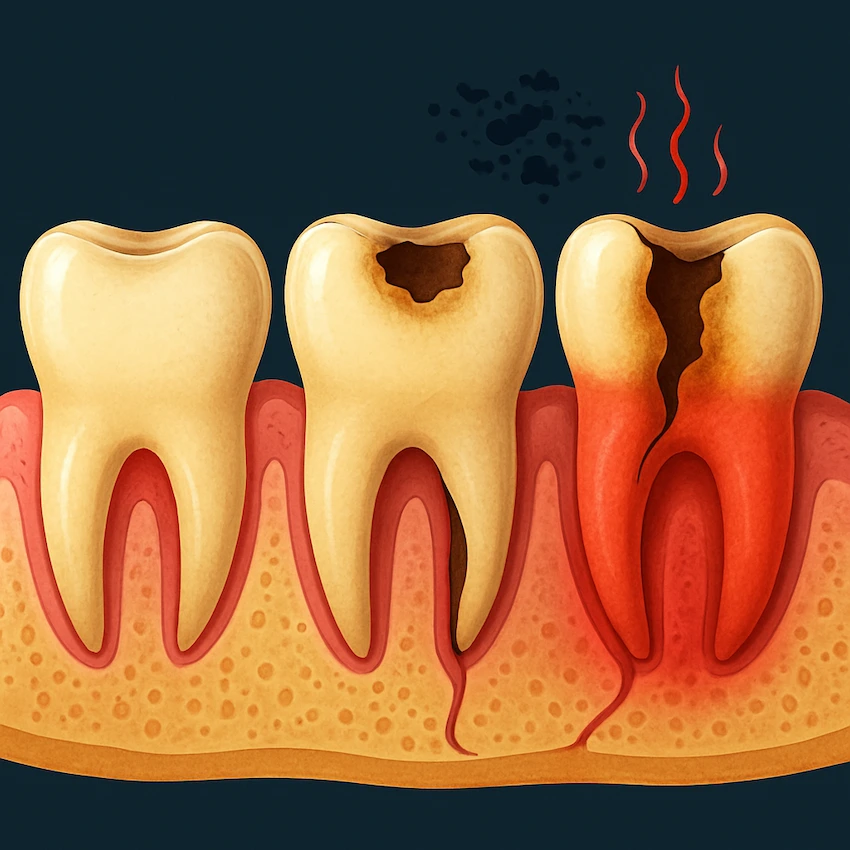
Tooth decay comes about when acid-producing bacteria (most notably the Streptococcus mutans group and Lactobacillus spp.) digestable carbohydrates, thereby leading to lowered pH of the dental plaque and hence the process of demineralization starts. If minerals (calcium/phosphate/fluoride) are not replaced through saliva and topical fluoride, these enamel porosities will become cavitated lesions. The disease in general is multifactorial in nature affecting by diet, saliva flow, oral hygiene and time.
Stages and Signs (Practical View)
- Initial (Non-cavitated) Lesion: A reversible lesion in the enamel with fluoride treatment appearing as a chalky white spot.
- Early Cavitation: Sensitivity to sweets and/or cold; a brown/grey shadow can be seen on bitewing radiographs.
- Moderate/Advanced Caries: Symptoms such as food trapping, persistent pain upon chewing, and in some cases pulp involvement may occur.
- Complications: Symptoms such as pulpitis that cannot be reversed, necrosis, periapical abscess and facial swelling can be experienced.
Caries Risk Factors You Can Change
- Diet: Frequent sugar exposures (sodas, juices, sticky snacks) and sipping at night.
- Oral Hygiene: Infrequent brushing/flossing; inadequate plaque control around gingival margins.
- Low Saliva (Xerostomia): Medications (antidepressants, antihistamines), Sjögren’s, radiation.
- Appliances & Crowding: Orthodontic brackets, tight contacts, rough margins retaining plaque.
- Systemic Conditions: Poorly controlled diabetes mellitus; reflux with acid exposure.
- Tobacco & Alcohol: Dry mouth and altered immune response increase risk.
How Dentists Diagnose Tooth Decay
- Visual-tactile exam with dry field and good lighting (ICDAS principles).
- Bitewing radiographs to detect proximal lesions and depth.
- Caries Risk Assessment (e.g., CAMBRA): Diet, saliva, history, fluoride exposure.
- Adjunctive tools: Transillumination or fluorescence devices (helpful but not standalone).
Prevention: Evidence-Based Playbook
- Fluoride toothpaste (1,000–1,500 ppm) twice daily; high-fluoride (5,000 ppm) for high-risk adults when prescribed.
- Professional fluoride varnish applications at recall for moderate/high risk.
- Pit-and-fissure sealants on susceptible molars (children and adults).
- Dietary counseling: Reduce frequency of sugars; limit acidic drinks; water between meals.
- Saliva support: Hydration; sugar-free gum (xylitol); discuss xerostomia-inducing meds with your physician.
- Interdental cleaning: Use floss or interdental brushes regularly; electric brushes contribute to more effective plaque removal.
Treatment Options by Lesion Severity
- Non-cavitated enamel lesions: Remineralization therapy (fluoride, CPP-ACP), resin infiltration in selected proximal lesions.
- Small cavitations: The minimally invasive restoration of the resin composite or the glass ionomer cement (great fluoride release for high-risk sites) is recommended.
- Moderate/large lesions: Adhesive composites or onlay/inlay; if cusps are undermined consider the use of full-coverage crowns.
- Deep caries with pulpal symptoms: Root canal treatment is followed by a definitive crown.
- Non-restorable teeth: Extraction by means of a dental implant, fixed bridge, or removable prosthesis is the solution.
- Arresting in special cases: Silver diamine fluoride (SDF) is capable of stopping the infection (staining is expected) in pediatric, geriatric, or medically complex patients, which is a short time after the application.
Special Populations
- Children: The initial first dental visit, fluoride varnish, sealants, counseling of the caretaker to avoid night bottles and frequent juices are the preventive measures.
- Pregnancy: Only safe and necessary restorations along with preventive care are given; erosion caused by reflux is managed; home care is reinforced.
- Older adults: The condition of xerostomia, root caries on exposed cementum, and the lack of dexterity—larger-handled brushes, and high-fluoride toothpaste should be addressed.
- Orthodontic patients: The easiest way to eliminate plaque is by proper brushing around the brackets; fluoride rinses; more regular hygiene visits are advised.
Oral–Systemic Health Connections (What We Know)
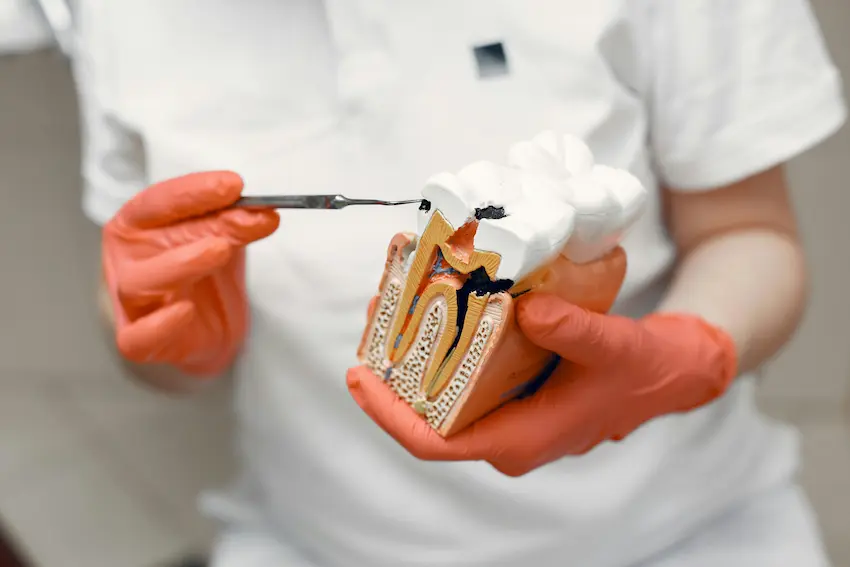
Poor oral health has been linked to worse glycemic control in diabetes, a higher risk of aspiration pneumonia in frail elders, as well as adverse pregnancy outcomes (although causality for some endpoints is still being researched). The management of caries and periodontal disease not only lowers the body’s inflammatory burden but also keeps the overall health in good shape.
Daily Home-Care Checklist (Simple & Actionable)
- Brush your teeth twice a day for two minutes with a fluoride toothpaste; after brushing, do not rinse but just spit out the toothpaste.
- Floss or clean the spaces between your teeth with interdental brushes daily.
- Have sugary/acidic foods and drinks only during your main meals; do not eat or drink sugary/acidic products continuously and at bedtime.
- To stimulate the production of saliva, chew sugar-free gum for 5 minutes after each meal.
- Change your toothbrushes every 3 months (or after you have had an illness).
- Arrange your appointments for routine check-ups (every 6 months or more often if you are at high risk).
From Health to Aesthetics: Restoring Form and Confidence
Aesthetic dentistry can only come to the rescue of the patient when the discoloration, cracks, and shape changes of his/her teeth are the result of the dental disease sides by ones. Depending on the structure and bite of a tooth, one can be treated with micro-abrasion, composite bonding, porcelain veneers, or ceramic crowns. At Lema Dental Clinic, the doctors follow the principle of “disease-first, design-second”—stabilize caries and periodontics, then commit to smile enhancers that are long-lasting and look natural.
What to Expect at Lema Dental Clinic (Istanbul)
- Comprehensive exam with radiographs and caries risk assessment.
- Diagnosis of periodontal disease and cleaning (scaling and root planing) if necessary.
- Topical fluoride and sealants to prevent caries.
- Oral hygiene instructions and motivation.
- Restorative treatment (fillings, inlays/onlaysCustom-tailored prevention plan (fluoride, diet, recall interval).Minimally invasive procedures for restorations; endodontics if necessary.Smile design (shade analysis, mock-ups) at the time of a stable oral condition.A maintenance program for the long term that is specific to the patient’s risk profile
References
- Lifespan of Dental Veneers: Peumans, M., Van Meerbeek, B., Lambrechts, P., & Vanherle, G. (2000). Porcelain veneers: Clinical performance and failure mechanisms. Journal of Dentistry, 28(3), 163–177. https://doi.org/10.1016/S0300-5712(99)00049-0
- Composite vs Porcelain Veneers Durability: Layton, D., & Walton, T. (2012). The clinical survival of porcelain and composite veneers. Dental Update, 39(7), 463–466. https://doi.org/10.12968/denu.2012.39.7.463
- Safety and Longevity of Veneers: Burke, F. J. T., & Lucarotti, P. S. (2009). Ten-year outcome of porcelain veneers. Journal of Dentistry, 37(1), 22–29. https://doi.org/10.1016/j.jdent.2008.10.004
Yes—non-cavitated enamel lesions can remineralize with fluoride, saliva, and diet control. Once cavitated, a restoration is required.
Recurrent decay often means high sugar frequency, plaque retention, or dry mouth. Addressing these risk factors plus regular recalls reduces recurrence.
Veneers are not placed over active decay; disease must be treated first. After stabilization, veneers can restore color and shape for suitable cases.
Not always—reversible sensitivity can improve with desensitizers and caries control. Persistent, spontaneous, or lingering pain suggests irreversible pulpitis and may require endodontic therapy.
Yes, SDF is well-studied for caries arrest, especially in children and elders. Expect black staining on treated lesions; your dentist will discuss cosmetic trade-offs.

