


Using denture adhesive for a dental crown can cause poor fit, leakage, irritation, and crown failure.
Things can change in an instant. One minute you’re enjoying your meal, the next, a firm lump in your mouth makes you realize your dental crown got dislodged. You panic and rush to your medicine cabinet only to notice a tube of denture adhesive. Since it holds false teeth firmly in their place, you reckon it should also work for a dental crown.
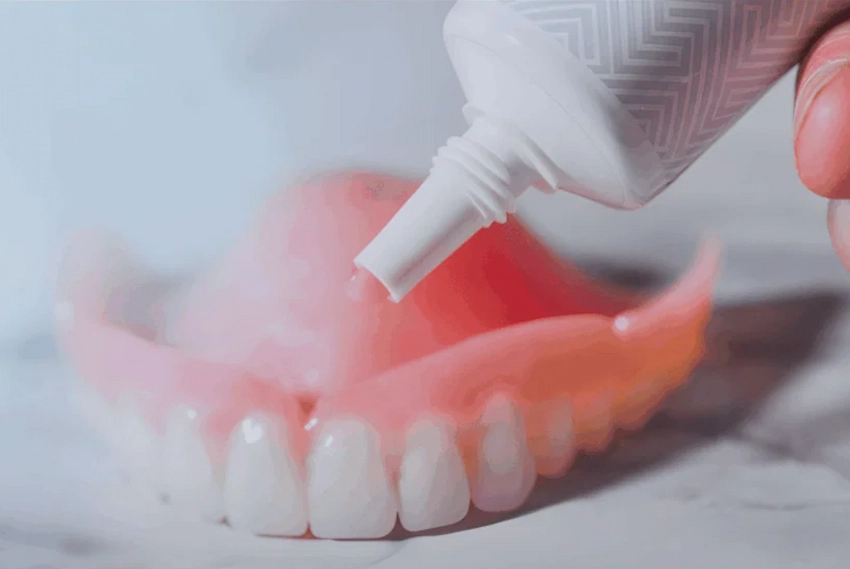
Things, however, are a lot different from what you think. The use of such a paste for a fixed dental crown is not just ineffective. In fact, it can cause serious and long-lasting damage to your natural tooth.
At Lema Dental Clinic in Turkey, we are using our clinical experience to manage the cases of patients who, in a state of panic, attempt this kind of self-repair. We understand. Being toothless or having an exposed nerve can be a nightmare enough. However, we must understand first why this short-term solution is a bad idea.
The Natural Tooth as a Base of a Crown
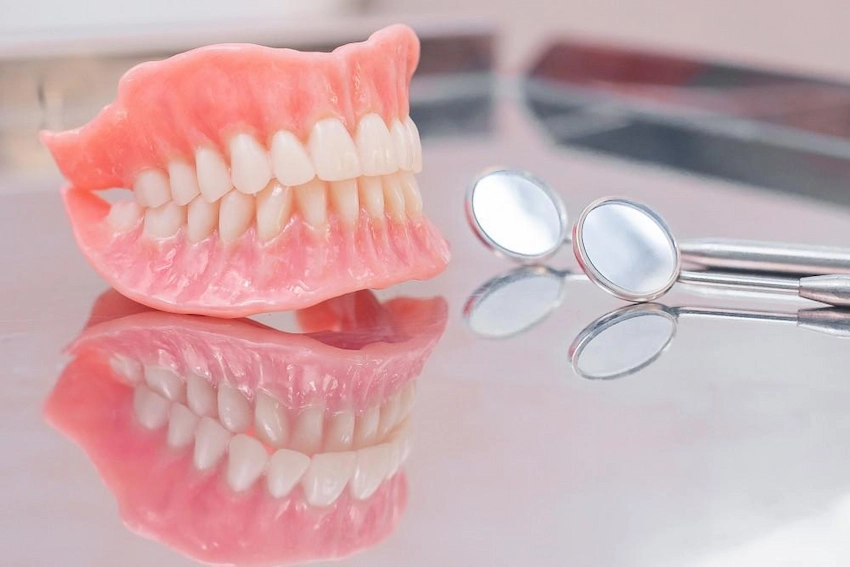
The failure of a denture glue can be better understood when the working of a dental crown is known. Unlike dentures that merely cover your gums, a dental crown is precisely fabricated in such a way that it tightly, and most importantly, in an airtight manner, encloses the existing natural tooth. This is what is referred to as the “abutment.”
If you think of the strength of a house being dependent on the wooden frame, then the tooth is like that frame. Continuing with the analogy, the dental crown is the roof. Having gotten a professional dental cement would be like installing high-quality weatherproofing, whereas relying on a denture paste could be likened to trying to hold a roof down with wet mud.
The smallest sources of leakage, according to Professor Doctor Coşkun Yıldız, are the greatest threats to a tooth. Being water-soluble, denture glue cannot help but deteriorate. The idea of the glue is to work in combination with one’s saliva so as to create a sticky suction against the soft gums. This really doesn’t work when you put this glue inside a hard dental crown and then bite down because spaces will inevitably crop up. These spaces will offer an easy way to saliva, food particles, as well as harmful bacteria that will completely bypass the glue. It is on the vulnerable interior layer of the tooth that they will get to reside.
The Harmful Effects of the Wrong Glue
It is still unclear what the consequences are of using an incorrect adhesive.
- Rapid Decay: The airtight seal is compromised. The dental crown and tooth become a haven for bacteria. In just a few weeks, your tooth can be so rotted that it will have to be removed.
- Choking Hazard: When it comes to strength, denture paste is nowhere near the level required for chewing. So, it will be no surprise if the crown falls off again. This is normally what happens: you eat or sleep. Getting ca rown down the throat is bad, whereas getting it into the lungs is a life-threatening event.
- Orthodontic Issues: Due to the thickness of denture glue, the crown is prevented from resting fully on the tooth. This results in an incorrect bite. The other teeth will be subjected to excessive force as they will be hitting the high spot of the raised crown when the mouth is closed. Having a sore jaw and deeply hurting tooth roots are the consequences.
The Right Clinical Procedure
The first thing that a dentist does when a patient comes in with a loose crown is to find out all the facts.
Dentist Polen Akkılıç and her team go about it quickly and methodically. The natural tooth is the first thing that we clean up and examine. We have to ascertain that it is neither compromised nor broken down. If the tooth turns out to be fine, we then clean and disinfect the crown’s interior.
Following this, we go for special dental-grade cements which are capable of bonding on a chemical level both the dental crown and the tooth. The cements are far superior to regular glue.
Occasionally, a natural tooth fracture occurs below the gum line. The situation is such that we just cannot put the crown on the tooth once more. If you still want to have a beautiful smile, then our surgical center in Turkey can help you using state-of-the-art dental implants.
Comparing Your Options for a Loose Crown
| Option | Mechanism | Biologic Risks | Clinical View |
| Denture Glue | Temporary sticky suction | Very high. Causes leaks, decay of the tooth very fast, and also choking. | Absolutely not recommended. |
| Pharmacy Dental Cement | Temporary weak paste | Moderate. Holds for 1-2 days. Risks of minor leaks. | Acceptable only in case of extreme pain where it is the patient’s only recourse. |
| Professional Recementation | Chemical resin bonding | None. Completely seals the tooth and prevents bacteria. | Safe, effective long-term solution. |
Patient’s Questions: from the Doctor’s Desk
What is the first thing I should do if my crown falls off?
First, try to locate the crown, and when you find it, rinse it in water gently till all loose dirt is gone. Keep the crown safely in a small container. In case you have to tidy your exposed tooth while the crown is absent, use a soft-bristled toothbrush, but be very gentle so that you do not do any harm. Call your dentist immediately and try to stay away from chewing on that side of your mouth till the visit.
Do I have some safe, over-the-counter glues that I could use?
Pharmacy-bought temporary dental cements are always a good option if you are away on a trip and cannot get to a dentist for another couple of days. Be sure to keep in mind that it should be used only if the pain due to the exposed tooth is so severe that it cannot be borne. Completely avoid superglue and denture paste for dental use.
Will I have to get a new crown?
We do not have to, as long as the crown itself is still intact and the condition of the tooth that is under the crown is such that it does not require any intervention. In many cases, what we do is just clean the original crown and re-bond it.
Is it painful to have a crown reattached?
You do not need to worry. Although some patients do feel a bit of sensitivity to cold air or water when their teeth are being cleaned, the discomfort can be managed with the help of pain anesthesia and a spray. Also, the actual “using the glue” step of the process is without pain.
How come my crown got loose in the first place?
It could be one or even a mixture of three possibilities. Consuming candies or other sticky foods, such as caramel,l is one. Teeth grinding at night, also called bruxism, can lead to cement breakdown and thus loosening of the crown. The last possibility is when tooth decay happens in the place where the tooth and the crown meet.
Academic References
- Rosenstiel, S. F., Land, M. F., & Fujimoto, J. (2015). Contemporary Fixed Prosthodontics (5th ed.). Mosby.
- Heintze, S. D. (2013). Clinical relevance of tests on bond strength, microleakage, and marginal adaptation. Dental Materials, 29(1), 59-84.
- Wadhwani, C., & Pineyro, A. (2012). Technique for controlling the cement for an implant crown. The Journal of Prosthetic Dentistry, 108(1), 54-56.
- Pameijer, C. H. (2012). A review of luting agents. International Journal of Dentistry, 2012, Article ID 752861.
- Donovan, T. E., & Cho, G. C. (1999). Contemporary evaluation of dental cements. Compendium of Continuing Education in Dentistry, 20(3), 197-199.

