


Implant dentures mimic natural roots to prevent jawbone loss.
Losing a tooth changes your reflection one way or another. The first thing that will stick out in your memory is a wide, toothless gap in your smile. Along with that, you may notice that your lips change as well. But why focus on just the looks? Besides that, there is a silent but very serious process unfolding beneath your gums.
The truth is, your jawbone resembles a muscle quite a bit. It remains strong only when it is exercised. The roots of your natural teeth are like the strongest of anchors. Each time you chew, they send active and healthy signals to the bone. In the absence of the root, the bone ceases to recognize its purpose. Hence, your body begins to resorb the hard tissue. It translocates those minerals to a different location. You can visualize this with the removal of the support pillars in a building. Subsequently, the entire structure starts to subside.
Mostly, that’s what we find in the clinic. Patients come in angry and with a list of complaints. They feel that their faces look very hollow or much older than their real age. So, what are the possible ways to prevent this? In fact, only with the latest dental treatment can we offer the correct solution.
Treatment that Replaces the Root, Not Only the Crown
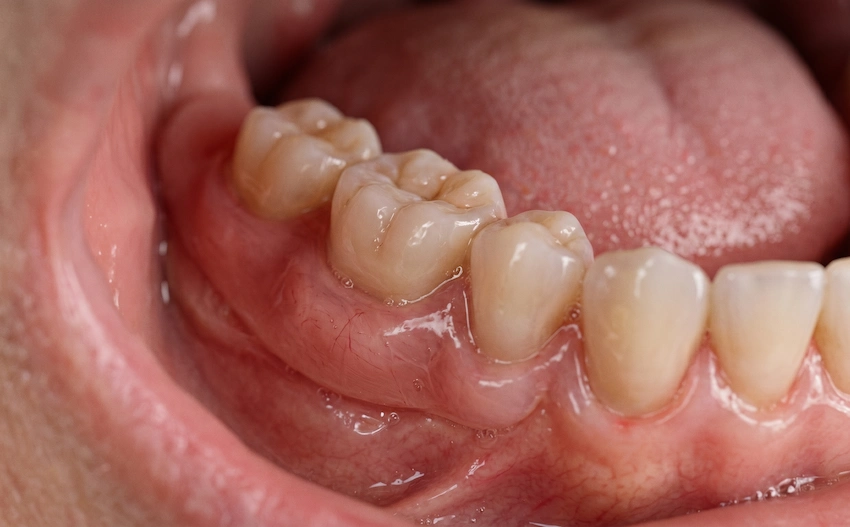
For many years, conventional dentures just rested on the surface of the gums. They restored the ability of the patients to chew and allowed them to smile again. However, they did not contribute to the maintenance of the underlying bone strength at all. In fact, poorly fitting dentures, by their rubbing and pressing on the gums, can even aggravate bone loss.
Nowadays, dental treatment in Turkey is entirely transformed. At Lema Dental Clinic, we primarily use implant-supported dentures. Implants are tiny, safe titanium posts that we place into the jawbone. This makes your body believe that the natural tooth roots are there again.
Professor Doctor Coskun Yıldız reminds us that, “A beautiful smile starts from a strong foundation. Implant denture anchoring eliminates bone loss from the first moment. And it bestows the patient with a robust and healthy jaw that lasts a lifetime.”
Conventional vs Implant-Supported Dentures
The better you know your options, the best way you can take care of your health. Both Dentist Polen Akkılıç and her team help you to communicate well that the path that you finally choose should be the best one for your mouth as well as for your lifestyle.
| Feature | Traditional Dentures | Implant-Supported Dentures |
| Operating on bones | Progressive bone loss. | Excellent. Implants maintain the jawbone. |
| Fitting and Feeling | Dependent on suction and adhesives. Might slip. | Firmly fixed. Cannot slip or click. |
| Delivering even biting pressure | About 20-30% of natural chewing is restored. | About 80-90% of natural chewing is restored. |
| Maintaining face shape | With time, the face can appear visually hollow. | Preserves your natural facial contours youthfully. |
| Duration | Require reshapings as excess gum tissue shrinks. | Implants are very durable and can last a lifetime. |
Easy Care Tips for Your Jaw and New Smile
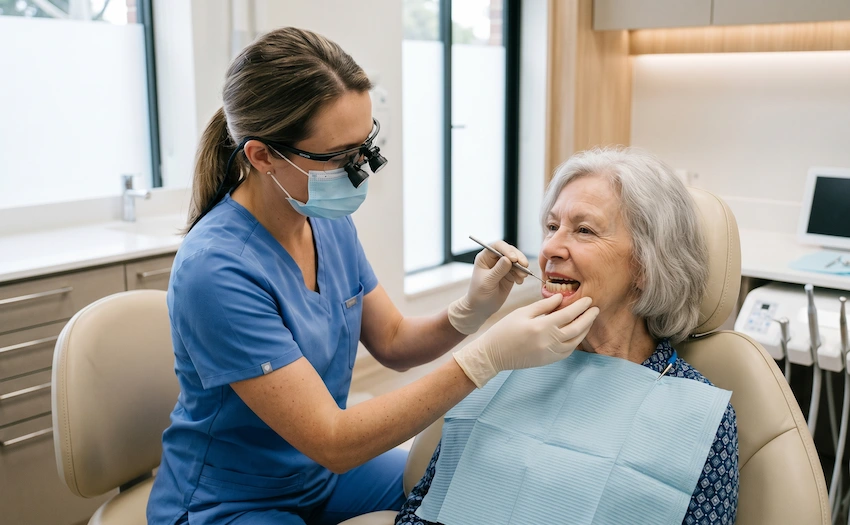
You are really the one taking care of your jawbone when you leave the clinic. Your attitude towards your new smile at home will first of all influence how long it lasts, remember that.
- Make it very clean all the time: Plaque not only causes damage to your gums but also to your implants. Therefore, daily use of a soft brush and special floss to clean the areas around the metal posts is highly advised.
- Allow your gums to rest: Taking out implant dentures at night is very helpful for gum tissue, as it is their turn to breathe and relax.
- Medical checks: Organize your visits with us at Lema Dental Clinic for regular check-ups. We will make sure that the bite is properly balanced. If the bite is not correct, the bone will be subjected to more and more pressure.
- Hydrate well: Drinking water helps a lot if what you think is a problem is a dry mouth, which in turn creates harmful bacteria. Water not only moisturizes your gums but also keeps them healthy, and thereby indirectly supports the bone lying underneath.
We believe that a new smile is not just a cosmetic change: it can actually be a health benefit by way of preserving your jaw. So do not be afraid to invest in your smile because it is very likely that, besides boosting your self-esteem, it will also.
Frequently Asked Questions
Regular dentures just lie on your gums, so they really don’t send the right signals to the bone underneath. It’s the implant that acts like the root of a tooth, and only that can help in preserving the bone.
It’s like a biological message. When you chew, the titanium implant moves slightly inside the bone. Your body detects this movement. It delivers calcium to the spot so that the bone stays dense and strong.
In fact, it’s rarely too late. Even if the bone in your jaw has diminished a lot, reconstructing it is possible. We use the grafting of bone technique in our clinic to fortify the jawbone before the implant surgery.
Typically, you’ll need to come twice. At your first visit, implants will be placed. Then, a few months will be given for your bone to fuse well with the implant. At your second visit, your brand-new, customized teeth will be fixed. Our team will prepare everything for a convenient stay.
No! Dentist Polen Akkılıç and her team have a very skillful approach to your teeth design. Natural tooth color, form, and shine serve as our model. Therefore, people will just see your radiant and healthy smile.
- Carlsson, G. E. (2014). Responses of the jawbone to pressure. Gerodontology, 31(s1), 8-14.
- Misch, C. E. (2007). Contemporary Implant Dentistry (3rd ed.). Mosby Elsevier.
- Tallgren, A. (2003). The continuing reduction of the residual alveolar ridges in complete denture wearers: a mixed-longitudinal study covering 25 years. The Journal of Prosthetic Dentistry, 89(5), 427-435.
- Zitzmann, N. U., & Marinello, C. P. (2002). Implant-supported removable overdentures in the edentulous maxilla: clinical and radiologic outcome. The International Journal of Prosthodontics, 15(3), 297-303.
- Adell, R., Lekholm, U., Rockler, B., & Brånemark, P. I. (1981). A 15-year study of osseointegrated implants in the treatment of the edentulous jaw. International Journal of Oral Surgery, 10(6), 387-416.

