


Use denture adhesive only after extraction sites heal and your dentist approves it.
Losing your natural teeth is a significant event in your life. Usually, the first few days after teeth loss can be the toughest for you. Once you leave the clinic, you have an “immediate denture” over your healing gums, albeit it feels very loose. You naturally go for the denture glue to make it tight, don’t you?
But let’s analyze the reality of the situation in your mouth.
Applying adhesive immediately after the procedure is the most typical mistake that may even lead to a disruption of the healing process. From our experience as a team at Lema Dental Clinic, Turkey, we have seen and helped a lot of patients who went through this exact transition. We care about your safety and well-being.
Timeline of Healing: Let Your Gums Heal Naturally
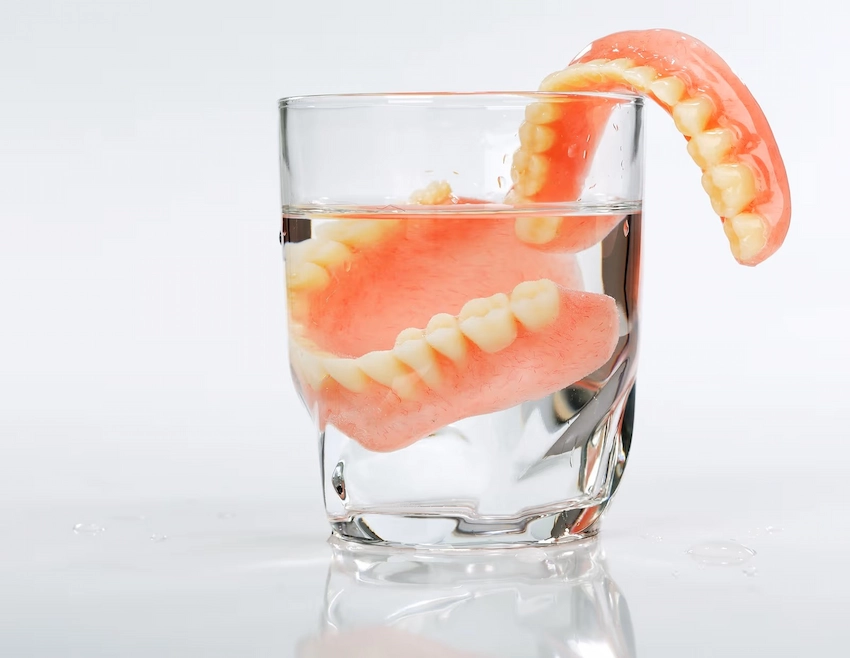
Firstly, you should visualize a newly extracted tooth site as a new garden bed. The ground—your gum tissue and jawbone—needs a few days to settle and close, in addition to healing. Let us imagine packing a wound with a very thick and sticky paste; this would obviously trap the germs inside, and that is not something you want.
Actually, you have to wait for 7-14 days post-tooth extraction before applying any kind of denture adhesive.
Firstly, within two days, your body will be busy making a blood clot in the socket of your tooth. This clot is like a bandage of Nature. Rhythmic getting loose of your denture glued to the clot may result in the removal of the clot. Besides the excruciating pain, this may also bring about dry socket.
According to Dentist Polen Akkılıç and her team, they concur that an immediate fitting denture can provide a protective covering over the tissues while they heal. Normally, a little looseness of the denture at this stage shouldn’t be a concern as the swelling gradually reduces.
The Danger of Using Adhesive Too Early
Covering raw gums with glues and ointments may lead to your face being at a great risk of getting:
- Infection: Pastes lock the harmful bacteria together with the existing wounds.
- Delayed Healing: Chemicals used in pastes can be harsh to your gums, irritate them, and slow down your recovery process.
- Gum Tearing: Tearing away a glued denture can harm your delicate skin that has just healed.
Say Goodbye to Adhesives: Implant Solutions
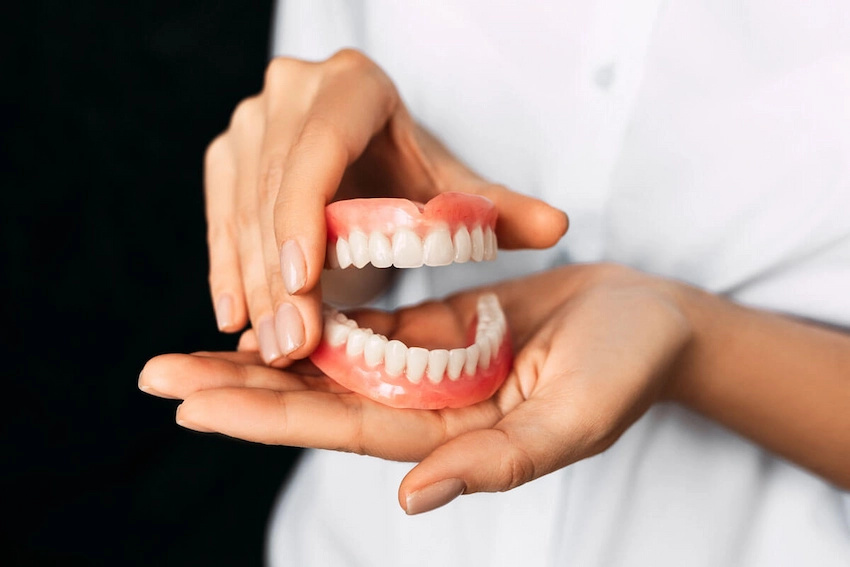
We, at the clinic, find that a lot of people eventually get tired of the sticky pastes. They start to get concerned about the chemicals that are used in them. Besides, they hate the fear of the smile slipping every time, which is a daily occurrence for them.
Think of your jawbone as the foundation of a house. Throw away the teet,h and the foundation starts to shrink. It needs to be emphasized that applying adhesives will not stop the shrinkage.
Professor Doctor Coşkun Yıldız usually indicates that dentures made quickly are merely a temporary means to cover the mouth. The practice of modern dentistry suggests that it is no longer necessary to resort to the use of daily adhesives.
Rather than carrying on using these sticky pastes, our patients are flying to Turkey to receive fixed solutions. We perform state-of-the-art procedures such as All-on-4, All-on-6, and Zygomatic implants. We directly secure your permanent Zirconium fixed bridges to your jawbone. In this way, the use of adhesives is eliminated. They restore your self-esteem and help you recover up to 95% of your natural bite force.
Evaluating Your Choices
| Dental Phase | Period | Secure Fit? | Stops Bone Loss? |
| Immediate Denture (No Glue) | Day 1 to 14 | Minuscule | No |
| Traditional Denture (With Glue) | From 2 Weeks | Moderate | No |
| Implant Bridge (All-on-4/6) | After Healing | Perfect (Permanent) | Yes |
FAQs
Dear doctor, I have just got my denture, but it is hurting me and giving me sores. Shall I use a bit of glue on the roof of my mouth?
I am with you in your pain, but even so, the answer would be no. In your mouth, the glue will mix with saliva, no matter how far it might be from the extractions. It is also going to be carried to your wounds. Anyway, just come to the clinic. We will be able to make the necessary adjustments to the hard plastic, ic which will resolve your sore spots without causing any harm.
What can I do if, in the first week, my denture comes off when I speak?
Though it is quite upsetting, it is completely normal while the swelling is reducing. To be on the safe side, eat only very soft foods. Try speaking slowly. Actually, swallowing just before speaking will help the denture to stick inside. Your facial muscles will be able to learn how to help in holding it.
Is there something better than the messy pastes once the gum heals?
Certainly, there is. When your gum has finally healed (it is usually 4 to 6 weeks), you can go for powder adhesives or seal strips. These are much less messy than heavy creams. But the best choice is an implant-supported bridge. It gets rid of adhesives forever.
How can I clean my mouth during the first two weeks without damaging the extractions?
Start by being very careful. You can remove the denture after a meal and then rinse with cold water. When it comes to your mouth, a warm saltwater rinse will be very helpful. Remember not to swish vigorously. Just let the water run around the inside of our mouth and down into the sink. It is also important not to brush the raw gums.
I have heard that denture glue contains toxic zinc. Is this true?
If you use a generous amount of the paste, it is a legitimate concern. To help grab the gums better, many heavy creams utilize zinc. If used day in and day out over several years in huge amounts, this may lead to nerve damage. As a consequence, here in Lema Dental Clinic,c we predominantly offer permanent, fixed implant treatments so that you no longer have to live dependently on these chemical pastes.
Academic References
- Carlsson, G. E., & Omar, R. (2010). The future of complete dentures in oral rehabilitation. Journal of Oral Rehabilitation, 37(2), 143-156.
- Felton, D., Cooper, L., Duqum, I., Minsley, G., Guckes, A., Haug, S., … & Sweitzer, B. (2011). Evidence-based guidelines for the care and maintenance of complete dentures. Journal of the American Dental Association, 142(1), 1S-20S.
- Grasso, J. E. (2004). Denture adhesives: changing attitudes. Journal of the American Dental Association, 135(1), 95-96.
- Kotsiomiti, E., Arapostathis, K., & Kapari, D. (2001). Denture adhesives: a systematic review. Journal of Oral Rehabilitation, 28(12), 1140-1147.
- Polzer, I., Schimmel, M., Müller, F., & Biffar, R. (2010). Edentulism is part of the general health problems of elderly adults. International Dental Journal, 60(3), 143-155.

