


It can be too abrasive.
You just have to step inside any pharmacy these days, and the shelves will be full of “activated charcoal” toothpastes claiming to be your one-step solution to a Hollywood smile.
Indeed, the sales pitch is very persuasive: say goodbye to harsh chemicals and hello to a natural, detoxifying way to exfoliate your teeth. Let’s find out what really happens to your teeth when you brush with that black paste, though.
During our clinical experience at Lema Dental Clinic in Turkey, we have been witnessing that most of the new patients present with enamel erosion and increased tooth sensitivity. In some cases, we can confirm that the cause is the overuse of such trendy “natural” solutions. The truth is that charcoal, when used excessively, will not only remove surface stains but will also harm your enamel.
Sandpaper in a Tube: The Abrasiveness Factor
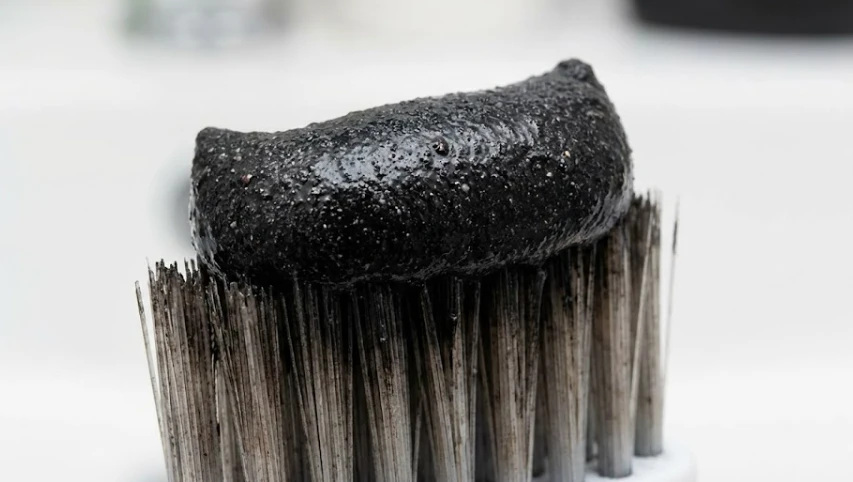
To figure out why charcoal really is an issue, you first might want to get a hold of RDA (Relative Dentin Abrasivity), which is the scale that measures the abrasiveness of toothpaste, as one of the examples. Picturing your tooth enamel as that shiny protective layer on a delicate porcelain vase, you can basically realize that the enamel is quite strong but when it gets scratched or worn down, it is gone forever.
Sometimes using charcoal toothpaste can be compared to using high-grit sandpaper to clean that porcelain vase. Because charcoal usually contains small particles, it works as a mechanical abrasive. It is not a chemical reaction that removes the color of the tooth; the black paste just scrapes off the layer that is visibly stained. After all, it is a reasonable question to ask how much damage can the tooth structure can sustain in the process.
What We See in the Clinic
Professor Doctor Coşkun Yıldız points out that the biggest joke, in a way, about charcoal toothpaste is that it can ultimately lead to the yellowing of one’s teeth. This happens when you rub off the white enamel, allowing the yellowish layer beneath (dentin) to be visible.
The Fluoride Gap
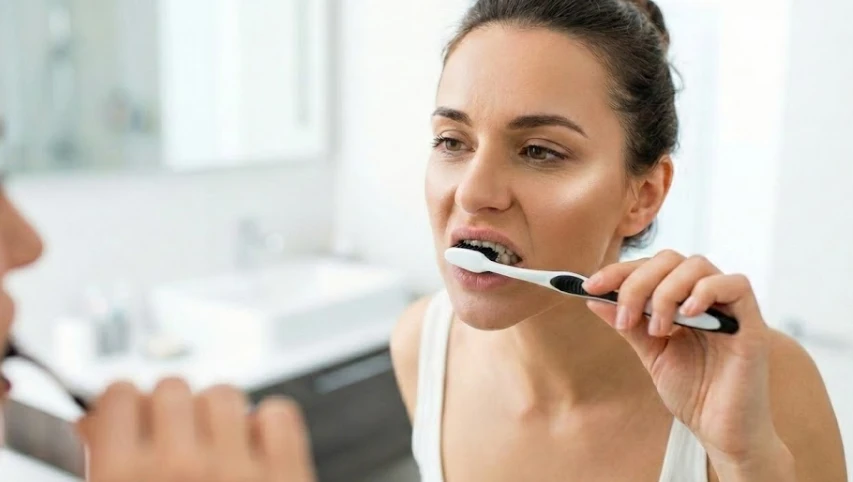
But let’s look closer at the ingredients. Most charcoal–based products are marketed as “fluoride–free.” In the world of modern dentistry, fluoride is like the reinforcing steel inside a building’s concrete foundation. It remineralizes the enamel and protects against cavities. By choosing a charcoal paste that lacks fluoride, you aren’t just wearing down your teeth; you’re also leaving the “gates open” for decay to settle in.
At Lema Dental Clinic, Dentist Polen Akkılıç and her team frequently treat patients who switched to charcoal for aesthetics, only to return months later with multiple “silent” cavities that developed because their protective fluoride shield was gone.
Comparison: Charcoal vs. Professional Whitening
| Feature | Charcoal Toothpaste | Standard Fluoride Paste | Professional Whitening (Lema) |
| Action Method | Mechanical Abrasion | Chemical Cleaning | Oxygenation/Laser |
| Enamel Safety | Low (Abrasive) | High | High (Clinical Control) |
| Internal Whitening | None | None | Deep Stain Removal |
| Fluoride Content | Usually None | High | N/A (Treatment) |
| Long-term Risk | Thinning/Sensitivity | Minimal | None (if supervised) |
Why Choose Professional Care in Turkey?
Here is what we see in the clinic: patients want results that are both fast and safe. In Turkey, we have pioneered techniques that provide that “charcoal-white” look without the destructive grit. At Lema Dental Clinic, we prioritize the biological health of your enamel. We use laser-activated whitening gels that act like a “deep-clean” for a sponge—lifting stains out of the pores without scratching the surface.
Dentist Polen Akkılıç emphasizes that a single professional session is safer for your enamel than six months of daily charcoal scrubbing.
Expert Insights: Your Questions About Charcoal and Safety
The reality is that even occasional use can be risky if your enamel is already thin. If you must use it, treat it like a ‘polish’ used once a month, but never as your daily driver.
Charcoal is great at absorbing odors in a filter, but in the mouth, it’s a different story. It can actually get trapped in small dental pockets or around fillings, turning into a playground for bacteria.
Your enamel is the ‘insulation’ for your tooth’s nerve. When you scrub it away with charcoal, you’re essentially thinning the walls of your house. Every cold drink then hits the nerve directly.
But let’s look closer—that instant brightness is often just the removal of surface film. Beneath that, you are creating microscopic scratches that will actually trap more stains in the future.
We always recommend toothpastes containing hydroxyapatite. It’s a natural mineral that actually helps ‘patch’ the holes in your enamel rather than scratching it away.
- Brooks, J. K., et al. (2017). Charcoal-based toothpastes: A literature review. The Journal of the American Dental Association.
- Greenwall, L. H., et al. (2019). Charcoal-containing dentifrices: What is the evidence? British Dental Journal.
- Machla, F., et al. (2020). Evaluating the abrasiveness of charcoal toothpastes on dental enamel. International Journal of Dental Hygiene.
- Yıldız, C. (2025). The clinical impact of non-fluoridated abrasive pastes on dentin hypersensitivity. Turkish Journal of Clinical Dentistry.
- Pertiwi, U. I., et al. (2017). Surface roughness of enamel after brushing with charcoal toothpaste. Journal of Physics: Conference Series.

