


Brush, floss, and professional cleanings.
At Lema Dental Clinic located in the heart of Turkey, we are witnessing this situation day by day. A patient looks at the mirror, notices the stubborn yellow crust which is near the gumline, and tries to brush it off himself only to realize that it won’t come off. That “crust” is tartar, and the truth is your toothbrush can no longer help you once the tartar has already formed.
Keeping away tartar isn’t just about looking good, it’s about saving your teeth and gums. Professor Doctor Coşkun Yıldız points out that if plaque is something that comes around everyday, then tartar is like a bad pest who after making himself at home, refuses to leave without a doctor removing him.
A Deep Look Into the Composition of Dental Calculus
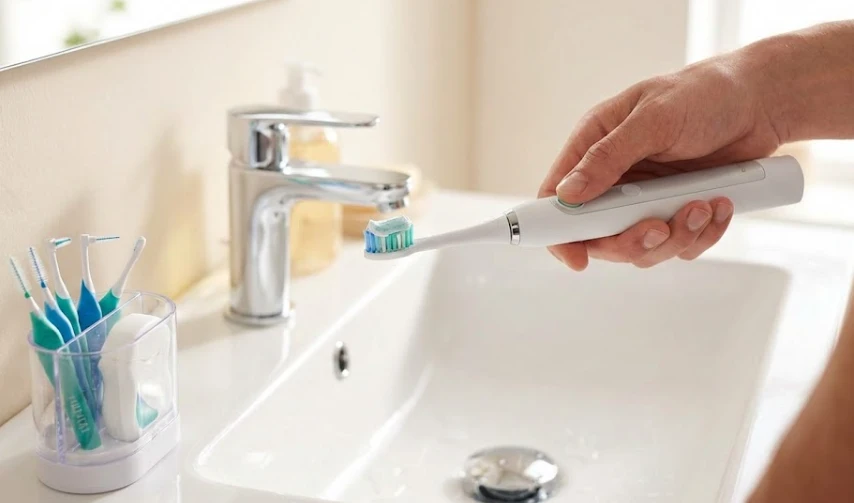
Your mouth is a tiny ecosystem. Bacteria combine with sugary or starchy leftovers when you eat to create a sticky film called plaque. If not removed promptly, the plaque which by the day is turning acidic and inflamed, combines with minerals in saliva to form scale through mineralization.
And what comes out is tartar that is extremely hard to get rid of. It is quite common at our clinic that we are picturing plaque to be like wet cement—something one can easily wipe off with a cloth—while tartar is the dry, unyielding stone that requires a jackhammer (or in our case, ultrasonic scaling) to extract.
Lema’s Quintessential Approach to Avoidance
The excellent team of Dentist Polen Akkılıç believes that a healthy lifestyle demands a forward-looking “defense-in-depth” strategy. It is about converting one’s daily routine with a toothbrush into a precise tool of oral hygiene and not just going through the motions of brushing your teeth.
- Double Brushing, Two Minutes Each Session: Statistically, most of the people brush their teeth for less than a minute. Two minutes, in our clinical experience, is the “right number” to solder-free the biofilm on the entire tooth surface tips.
- Use Floss: A toothbrush only covers 60% of tooth surfaces. The leftover 40%—the gaps between teeth—is the place where tartar hides most of the time. It is a must to get rid of those spaces using either traditional floss, water flossers, or interdental brushes.
- Use toothpaste with tartar-control ingredients: Those toothpastes that usually have pyrophosphates or zinc citrate work against the mineralization of plaque thus effectively “slow down” the process of plaque hardening.
| Feature | Dental Plaque | Dental Tartar (Calculus) |
| Appearance | Colorless or pale yellow film | Yellow, brown, or black crust |
| Texture | Soft and sticky | Hard and porous |
| Removal | Brushing and flossing at home | Professional scaling only |
| Formation | Forms within hours after eating | Hardens within 24–72 hours |
| Risk Factor | Causes cavities and gingivitis | Leads to periodontitis and bone loss |
Why Diet Dictates Your Defense
One question that still puzzles most people is: why does one person’s tartar build-up faster than another’s? Generally, the answer is your saliva’s chemistry along with what you eat. Sugary diets continuously feed bacteria which eventually produce plaque at an extremely fast rate.
But “detergent foods” deserve our special attention. Pieces of fruits and vegetables full of fibers like apples and carrots do work as natural toothbrushes since they physically scrub the surfaces while you eat them. Professor Doctor Coşkun Yıldız always encourages his patients to have a glass of water after the meal as it helps to neutralize the acids and wash away the particles before they get stuck.
Professional Care: The Ultimate Safety Net
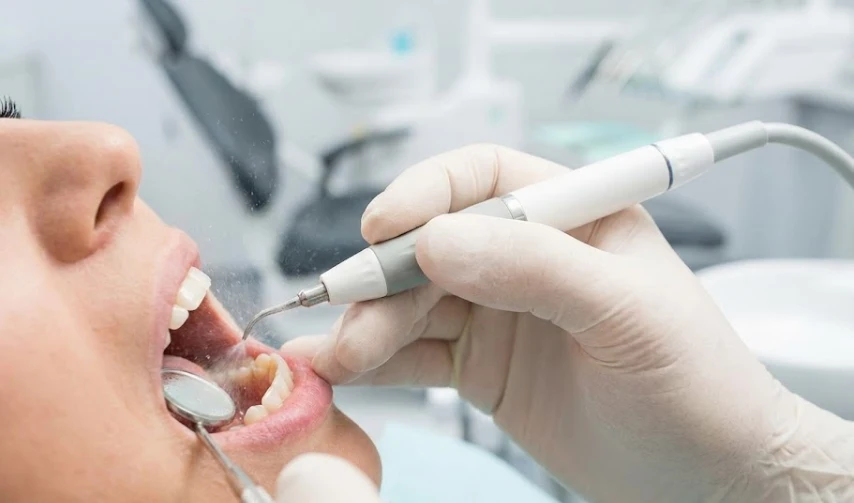
Whatsoever, there will always be some places on your teeth where the bacteria will hide if you don’t pay special attention. At that moment, it’s the professional services of the team at Lema Dental Clinic in Turkey that come to your rescue. We are trained in and equipped with the latest scaling and polishing technology to thoroughly clean your teeth and ensure that the gum tissues remain firm and healthy.
Honestly, getting your teeth professionally cleaned twice a year is not a luxury but rather a necessity for your oral health. It stops the vicious cycle of inflammation reaching the bone and destroying it which eventually ends up in tooth loss.
FAQ: Common Concerns About Tartar
The short answer is no. While the internet is full of “hacks” involving baking soda or vinegar, these can often damage your enamel. Once plaque has mineralized into tartar, it is physically bonded to the tooth. Attempting to scrape it off yourself can lead to permanent tooth damage or gum recession.
For the average patient, a professional cleaning every six months is the gold standard. However, if you have a history of gum disease or if your saliva has a high mineral content, Dentist Polen Akkılıç may recommend a visit every three to four months to stay ahead of buildup.
Absolutely. Tartar is porous, meaning it traps bacteria and food particles like a sponge. These bacteria release foul-smelling sulfur compounds. No amount of mouthwash can permanently fix the odor if the underlying tartar is still present.
At Lema Dental Clinic, we prioritize patient comfort above all else. Modern ultrasonic scalers use vibrations and cooling water sprays to gently lift tartar away. For sensitive patients, we offer various numbing options to ensure the experience is entirely stress-free.
Yes. Genetics play a role in the pH and mineral content of your saliva. Some individuals have “alkaline” saliva, which is great for preventing cavities but actually accelerates the hardening of tartar. If you are “tartar-prone,” your hygiene routine needs to be even more meticulous.
- Albandar, J. M. (2002). Global risk factors and risk indicators for periodontal diseases. Periodontology 2000, 29(1), 177-206.
- Egelberg, J. (1970). A review of the development of dental plaque. International Dental Journal, 20(2), 189-203.
- Marsh, P. D. (2006). Dental plaque as a biofilm and a microbial community – implications for health and disease. BMC Oral Health, 6(Suppl 1), S14.
- Socransky, S. S., & Haffajee, A. D. (2005). Periodontal microbial ecology. Periodontology 2000, 38(1), 135-187.
- White, D. J. (1997). Dental calculus: recent insights into occurrence, formation, prevention, and removal. Oral Diseases, 3(3), 175-181.

