


Dental retainers usually need replacement every 1–3 years, or sooner if damaged or loose.
You’ve spent so many months (maybe even years) with braces or aligners on. The moment they were taken off was like graduating. But as Professor Doctor Coşkun Yıldız is always reminding our patients at Lema Dental Clinic, the day when your braces come off is not the end of the road; it’s just the beginning of the so-called “protection phase.”
Your teeth remember. If you don’t wear a retainer your teeth have the natural tendency to gradually move back to their old, crowded positions, which is what we call orthodontic relapse.Your retainer is the faithful protector of your orthodontic work. But like a trusty pair of running shoes, retainers can’t last forever.
Why Retainers Aren’t “Forever” Devices?
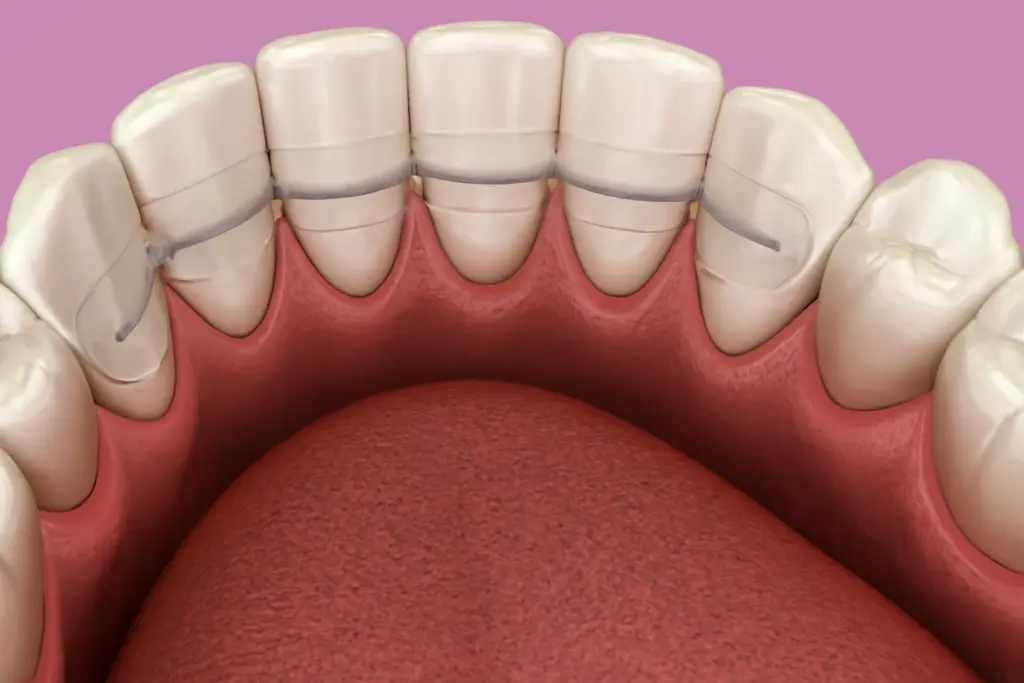
Consider your retainer as a custom-tailored suit for your teeth. The material keeps getting pressure, temperature changes from, say, coffee or tea, and also the natural acidity of your saliva. At some point, the “fabric” of the retainer will start to lose its shape.
At our clinic in Istanbul, Turkey, we see this kind of issue quite often. Patients almost always seem to think that their retainer will work perfectly if the plastic inside it isn’t cracked. However, the reality is somewhat different. It might be so little that the material is bent slightly to the extent that you cannot even notice it but it can still cause your teeth to move a bit. By the time you notice the space in your smile, it is definitely too late.
The Replacement Timeline: A Quick Guide
The length of time your retainer can be used mainly depends on the kind of device you were given. At Lema Dental Clinic, Dentist Polen Akkılıç and her team provide a tailored solution in close collaboration with the patients for choosing the ideal style that suits their lives.
| Retainer Type | Typical Lifespan | Key Signs It’s Time to Replace |
| Clear Plastic (Essix) | 6 – 12 Months | Yellowing, small cracks, or feeling “loose.” |
| Hawley (Metal & Acrylic) | 5 – 10 Years | Warped wires or cracked pink acrylic. |
| Fixed (Bonded Wire) | 10+ Years | The “glue” (composite) feels sharp or the wire moves. |
How to Tell Your Retainer is Retiring
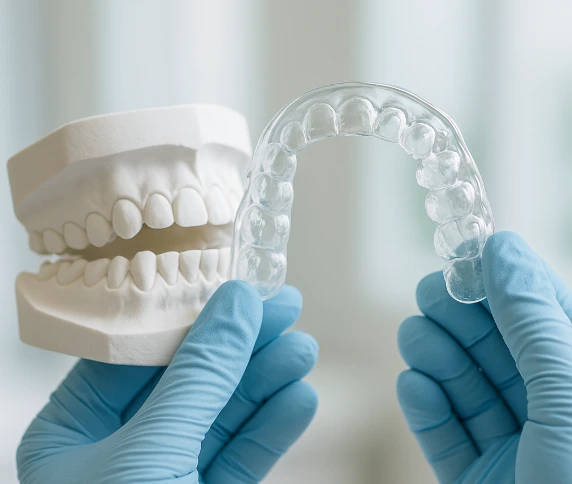
So the problem is: how do you figure out that you have to give up on your current appliance? Basically, here is what we identify as the most common scenarios in the clinic:
- The “Slack” Fit: Does your retainer just slide on without that “snug” feeling? Then it’s probably your retainer that has been stretched. The fit should be like a firm hug for your teeth, after all.
- Calcium Accumulation: If you notice some white and hard spots that are unfading with normal brushing, these are deposits (tartar) made by bacteria. Not only is it unsanitary, but it also provides bacteria with a place to multiply, which can elicit gum disease.
- The “Ghost” Cracks: It might seem these are just superficial microcracks, but they actually break down the material’s strength. A retainer with a crack is like a house with a crack in its wall—it won’t be able to support the teeth pushing, which is the main reason they move.
Lema – A Step Ahead: Precision in Turkey
It’s not just ordinary plastic that we give you when you come to us in Turkey. The molecular measurements of replacement retainers are made to the closest human limits by Professor Doctor Coşkun Yıldız who also applies leading digital scanning technology in the procedure. The retention phase is no less important than the surgery or the orthodontic treatment and we, therefore, apply the same clinical excellence to them.
Securing a set of backup retainers is probably one of the best decisions you are making for your oral health in the long run if you are going to Istanbul for dental work.
FAQ: Straight Talk from Our Doctors
“Actually, a tight retainer is a sign that you are on the wrong path. It is a signal that your teeth have already started moving and the retainer is ‘pulling’ them back. When the retainer is tight, wear it full-time for a couple of days and then give us a call. Do not try to fit a warped retainer on your teeth by any means.” — Dentist Polen Akkılıç.
Look at the plastic as a very delicate skin. Don’t use boiling water or chemicals that are too harsh. The best is to use lukewarm water and a mild, non-abrasive soap or cleaning tablets designed for that purpose. Do not use toothpaste; it is too abrasive and causes micro-scratches which become bacteria’s home.
The minute you lose your retainer you need to get in touch with us. Without even a retainer for a week, teeth can start to shift. Thanks to our in-house lab, if you are in Istanbul we can help you with a replacement retainer usually within 24-48 hours.
“I wouldn’t say that it’s the ‘better’ option but rather it is ‘insurance’ if you are a bit of a scatterbrain. On the other hand, they need a lot more thorough flossing. Many of our patients at Lema Dental Clinic opt for a mixed method: a fixed wire on the bottom and a removable one on the top.” — Professor Doctor Coşkun Yıldız.
The thing is that plastic is porous. Gradually, it takes in the smells and bacteria from your mouth. In case the stinky smell is still there after a thorough soak, it’s generally the problem of the plastic being at the end of its hygienic life and you will have to get a new one.
- Johnston, C. D., & Littlewood, S. J. (2015). Retention in orthodontics. British Dental Journal, 218(3), 119-122.
- Littlewood, S. J., Millett, D. T., Doubleday, B., Bearn, D. R., & Worthington, H. V. (2016). Retention procedures for stabilising tooth position after treatment with orthodontic appliances. Cochrane Database of Systematic Reviews, (1).
- Lyros, I., Tsolakis, A. I., Maroulakos, G., & Palomo, J. M. (2023). Long-term effectiveness of bonded vs. vacuum-formed retainers: A systematic review. American Journal of Orthodontics and Dentofacial Orthopedics.
- Renkema, A. M., Sips, E. T., Bronkhorst, E., & Kuijpers-Jagtman, A. M. (2011). Effects of long-term orthodontic retention: A systematic review. Journal of Orofacial Orthopedics.
- Sultana, J., & Williams, A. (2019). Patient compliance and wear-and-tear of removable orthodontic retainers. Journal of Clinical Orthodontics.

