


Two weeks for initial closure.
Getting a dental implant involves a great deal of consideration and effort on your part. You have come to a conclusive decision after thorough inquiry, selected Lema Dental Clinic in Turkey for our expertise, and your operation is done. Now the focus is on the mirror. It seems that the biggest concern of the majority of patients is not the titanium screw implanted into the jaw, but the delicate pink tissues around it. “How long will it be before this looks normal?”
In our patient care experience at Lema Dental Clinic, we have noticed that some patients don’t give enough credit to the role of gums. They get carried away with the “bone fusion” (osseointegration), which is definitely a must, but they also need to understand that the soft tissue seal is of the same importance. It serves as the first line of defense of the biological barrier protecting the huge investment you have just made in your smile.
Gum healing is actually the work of several different phases and not just a one-time event. Imagine planting a valuable tree. Initially, you have to plant it by disturbing the soil (surgery). Then, the surface soil has to calm down (initial healing). At last, the deep roots have to stabilize and the surrounding area of the trunk ought to mature (deep healing and shaping).
Here is a breakdown of that timeline, based on what we see daily in our Istanbul clinic.
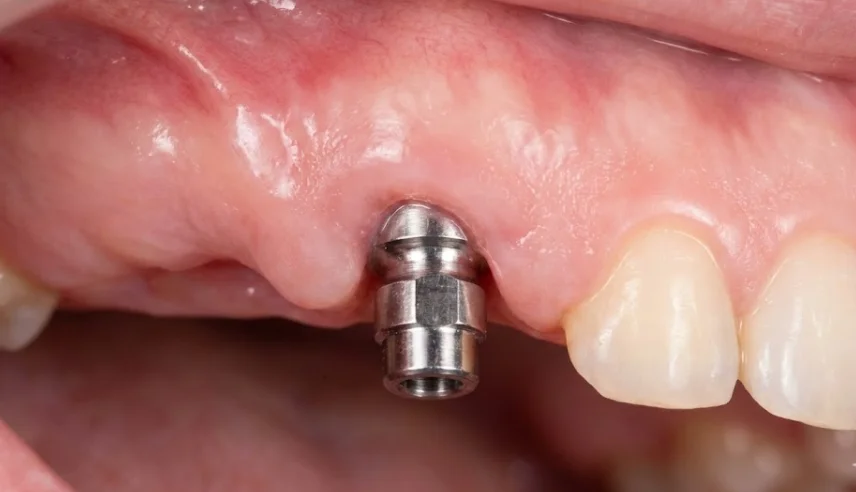
Phase 1: The First Wound Closing (Day 1 to Day 14)
Right after your operation with Professor Doctor Coşkun Yıldız or our surgical team, the emergency repair system of the body is activated. There will be sutures, and the location may be red and a bit swollen. It is sufficiently explained as a normal reaction.
During the first two weeks, the main challenge is to achieve a wound closure. The gingival tissue is trying to heal itself over the area that was surgically treated.
Dr. Polen Akkılıç along with her assistants consistently impress upon our patients that this is the stage when you are most vulnerable. It is like nurturing a “scab” in a wet environment. If you do recklessly brush or chew hard food on that side or fiddle with the sutures by your tongue, you can owe your embarrassment to these actions. We usually take out the sutures (if they are not dissolvable) around day 10 to 14, and the wound above should be well closed, looking nearly like a young layer of delicate pink skin.
Phase 2: The Tissue Maturation (Week 3–8)
When the wound at the surface is healed, one might start thinking that the whole healing process is done and dusted. However, there is a totally different reality going on deep beneath the surface. Actually, the mucous tissue is setting up its structure around the implant neck (or the healing abutment, if it has been placed).
This step helps the creation of what the biological width is. It is the body’s natural seal, a band of tough connective tissue that fits perfectly around the implant post to stop the bacteria from falling into the bone. The peri-implantitis (implant gum disease) risk becomes high, if such a barrier fails. The outside looks fine, but the inside is still not strong enough.
Stage 3: The Finalizing Step (Month 3–6)
Here is when, if only for a moment, you had better put your shoes aside and just relax. Your bone has merged with the titanium, and you are set for the last crown.
The placement of which is by the implant’s gums becoming accustomed to the new shape of the tooth. The whole of them need to envelop the ‘tooth‘ as naturally as they would a normal tooth. It is the aesthetic frame that exhibits the implant as if it were invisible to the naked eye. In order to perfect the scallops of the gingival tissue, we sometimes place temporary crowns prior to the final ones in Turkey in order to gently mold the gum tissue particularly in complicated cases especially in the aesthetic zone at the front of the mouth.
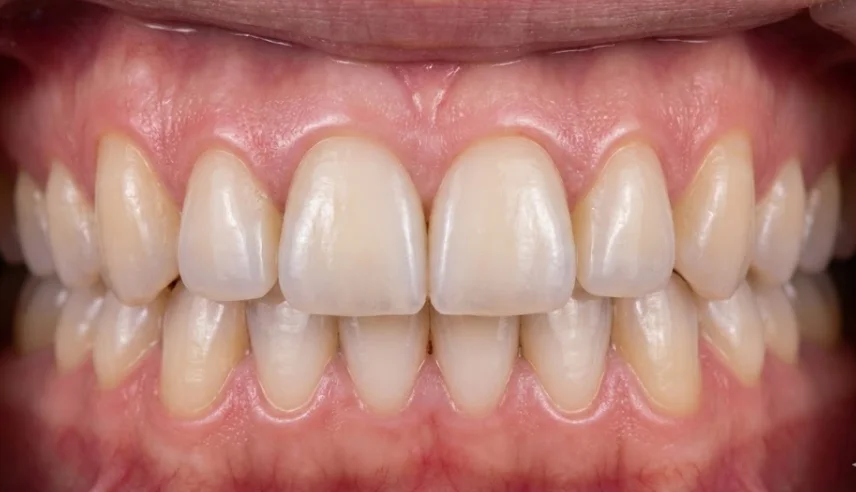
The Recovery Timeline at a Glance
Every patient heals differently, influenced by age, smoking status, and overall health. However, this table provides a general framework of what our patients at Lema Dental Clinic expect.
| Healing Phase | Timeframe | What is Happening? | Patient “To-Dos” |
| Initial Clotting & Closure | Days 1–3 | Blood clot forms; initial tissue response begins. | Gentle salt water rinses only. Soft diet. No smoking. |
| Surface Healing | Days 7–14 | The incision edges seal together. Sutures are ready for removal. | Resume gentle brushing near the site (with instruction). |
| Soft Tissue Maturation | Weeks 4–8 | The deep connective tissue forms a biological seal around the implant neck. | Maintain excellent oral hygiene. Normal diet usually resumes. |
| Final Gingival Shaping | Months 3–6+ | The gum tissue adapts to the final crown for a natural aesthetic look. | Regular check-ups to ensure the gum cuff is healthy. |
Frequently Asked Questions About Gum Healing
We usually advise waiting until the sutures are removed, typically around day 10 to 14, before you let a toothbrush bristles directly touch the surgical site. Until then, rely on the prescribed mouthwash or warm salt water rinses to keep the area clean without mechanical disruption. Dentist Polen Akkılıç will give you the ‘green light’ when the tissue is tough enough.
Do not panic. This is very common. In a wet environment like the mouth, healing tissue doesn’t form a hard, brown scab like a cut on your knee. Instead, it forms a soft, whitish/yellowish film called fibrin. This is nature’s ‘wet bandage.’ Unless it is accompanied by intense throbbing pain or pus, it’s usually a sign of healthy healing, not infection.
Yes, minor oozing can occur for the first few days, and you might see a pinkish tinge when you rinse up to a week later. The new blood vessels forming in the area are very fragile. However, if you experience active, bright red bleeding that fills your mouth after day three, you need to contact our clinic immediately.
The reality is that nicotine is practically kryptonite for gum healing. It constricts blood vessels, starving the new tissue of the oxygen and nutrients it needs to rebuild. In our clinical experience at Lema, smokers have a significantly higher rate of complications and slower soft tissue closure. We strongly urge pausing smoking for at least two weeks before and after surgery.
Sometimes the gum tissue is so enthusiastic about healing that it tries to grow right over the little metal healing cap we place on the implant. This isn’t a major problem. It just means we have to do a very minor, quick procedure to uncover it when it’s time for the next stage. It’s better to have too much healing than not enough!
- Berglundh, T., et al. (1991). The peri-implant mucosa. Biological parameters. Journal of Clinical Periodontology, 18(1), 21-24.
- Cochran, D. L., et al. (2002). Biologic width around titanium implants. A histometric analysis of the implanto-gingival junction around unloaded and loaded implants. Journal of Periodontology, 65(11), 1008-1015.
- Gomez-Roman, G. (2001). Influence of flap design on peri-implant interproximal crestal bone loss around single-tooth implants. The International Journal of Oral & Maxillofacial Implants, 16(1), 61–67.
- Linkevicius, T., & Apse, P. (2008). Biologic width around implants. An evidence-based review. Stomatologija, 10(1), 27-35.
- Sculean, A., et al. (2014). Soft tissue management as part of the surgical treatment of peri-implantitis: A narrative review. Implant Dentistry, 23(2), 210-216.

