


15+ years with proper care
The most popular question we get asked, especially during consultation time in Istanbul, is the one that a patient asks after watching a digital simulation of their new smile and seeing the excitement in their eyes: “But how long will this actually last? Is it forever?”
We sure want to say “forever” without any conditions. However, in the field of medicine, the word “forever” is a risky one.
The truth is that a Hollywood Smile is a kind of investment, which is similar to buying a luxury sports car. It is designed to last at a high level for many years, but if you treat it like an off-road vehicle every day and never change the oil, it won’t survive. Based on our treatment at Lema Dental Clinic, a properly done porcelain veneer can last 15 to 20 years and even longer.
However, the better question is why some smiles stay beautiful for a lifetime and others break down after only a few years.
Material Lays Out the Timeframe
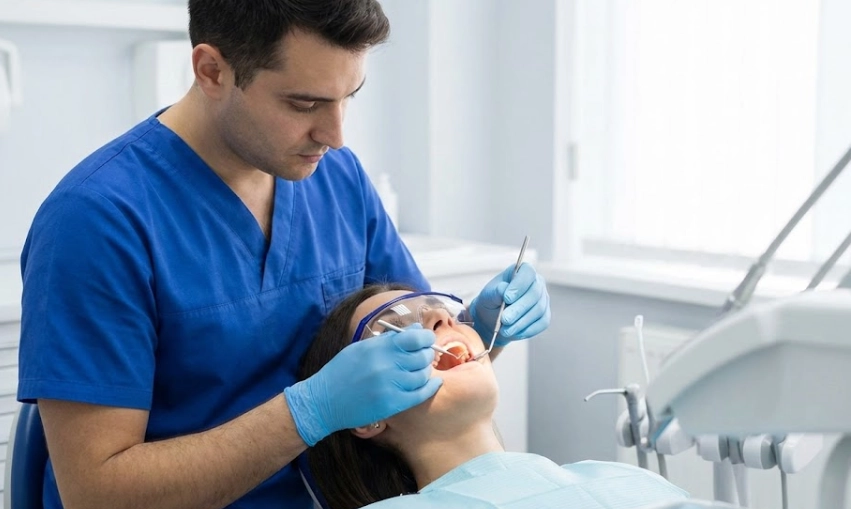
Not all Hollywood Smiles are the same. The durability of your new teeth depends almost solely on the composition.
Prof. Dr. Coşkun Yıldız frequently uses this metaphor: “When you build a house from wood, it will rot someday. When you use stone, it lasts.”
- Composite Bonding: It is “wood” here. The installation is cheaper, faster, and usually can be done in one appointment. However, composites are made of a kind of porous material. They get stained by the coffee and are prone to chipping, so such smiles become visibly worn out after 5-7 years.
- Porcelain (E-max / Zirconia): The “stone” is this. Using the best materials at Lema Dental Clinic is our regular practice. These are ceramic materials that have been fired in a kiln and are physically harder than naturally occurring tooth enamel. They don’t get stained or change color. Unless you have a significant accident, the porcelain itself is virtually unbreakable.
The “Gum Clock”
If porcelain is not deteriorating with time, what then is the reason for replacing the veneer? The solution lies in your biology rather than technology.
The surface of your porcelain veneers will look flawless for a long time, but your mouth, which is the environment inside of the body, keeps on changing all the time. Slowly but surely, your gums are naturally going to recede over the years, and as the gum line moves up, it can sometimes reveal that very thin section where the veneer ends and that part of the tooth root that is covered with the gum starts to become visible.
This is not the veneer failure but the human body’s natural ageing process. When this happens, patients often decide to have their veneers replaced just for good looks — to hide that new gap and to ‘start the clock’ again.
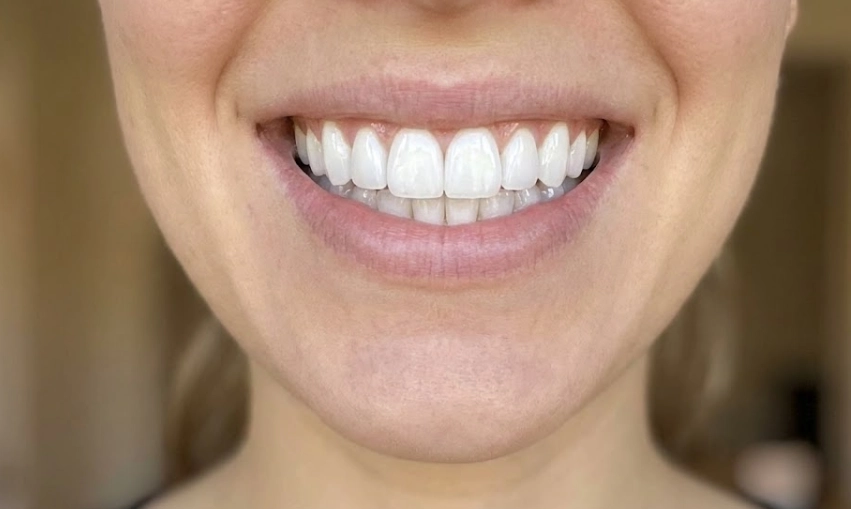
The most common cause of premature failure of a restoration is not really a matter of bad glue or cheap porcelain; it is basically stress.
Grinding of teeth at night is a common thing with many patients who are totally unaware of it. Dentist Polen Akkılıç and her team are super alert. You are basically going to damage your veneers if you put 200 pounds of pressure on them for eight hours every night.
We always say that the crown piece of your Hollywood Smile is not the teeth but the Night Guard. Sleeping with a protective splint is by far the most effective way of making a 15-year smile last 25 years.
Lifespan Expectations by Material
Here is the data of global clinical standards and our patient history in Turkey that we have incorporated to give you a practical idea of what to expect when it comes to having a dental restoration.
| Material | Average Lifespan | Stain Resistance | Durability |
| Composite Resin | 5 – 7 Years | Low (Absorbs pigment) | Moderate (Prone to chipping) |
| Lumineers (No-Prep) | 10 – 15 Years | High | High (But can look bulky) |
| E-max Porcelain | 15 – 20+ Years | Excellent (Glass-like) | Very High |
| Zirconia | 20+ Years | Excellent | Extreme (Hardest material) |
FAQ: Your Longevity Questions Answered
If you have high-quality porcelain veneers from Lema, no. Porcelain is essentially glass. It has no pores for the pigment to enter. You could soak a porcelain veneer in red wine for a month, wipe it off, and it would still be white. However, you still need to clean them to prevent surface buildup.
It is rare, but it can happen. This usually occurs if you bite into something incredibly hard (like a cherry pit or ice) which breaks the cement seal. If a veneer pops off whole, keep it! We can usually re-bond it in minutes.
As long as the seal remains tight, your natural teeth are perfectly safe. In fact, the veneer often acts as a shield, protecting the front surface of your tooth from decay and acid erosion.
Generally, no. To ensure a natural fit that doesn’t look bulky, we usually remove a tiny layer of enamel (about 0.3mm to 0.5mm). Once this enamel is gone, that tooth will always need a covering—whether it is a veneer or a crown.
You will know. Usually, it is because of gum recession (the “long in the tooth” look) or perhaps a small chip that cannot be smoothed out. We recommend a check-up X-ray every year to ensure the foundation underneath remains healthy.
- Beier, U. S., Kapferer, I., & Dumfahrt, H. (2012). Clinical long-term evaluation of porcelain laminate veneers: a 20-year retrospective study. International Journal of Prosthodontics, 25(1), 9-17.
- Layton, D. M., & Walton, T. R. (2013). The up to 21-year clinical outcome and survival of feldspathic porcelain veneers: Is poor performance related to existing evidence? Journal of Dentistry, 41(12), 1167-1178.
- Peumans, M., Van Meerbeek, B., Lambrechts, P., & Vanherle, G. (2000). Porcelain veneers: a review of the literature. Journal of Dentistry, 28(3), 163-177.
- Gurel, G., et al. (2012). The influence of tooth preparation design on the survival of porcelain laminate veneers: 12-year clinical results. International Journal of Periodontics & Restorative Dentistry, 32(6), 637-647.
- Friedman, M. J. (1998). A 15-year review of porcelain veneer failure—a clinician’s observations. Compendium of Continuing Education in Dentistry, 19(6), 625-636.

