


Elevate your head, manage pain.
The procedure is complete. Without a doubt, you managed to overcome the fear, the anesthesia, and the minutes after being in the dental chair. Now, when you are alone in your hotel room in Istanbul, there is a new dilemma minting as the effect of the local anesthetic disappears: how on earth are you going to sleep?
This is the most frequent question we have from patients once they have left Lema Dental Clinic. You are probably very tired, but your gums will be aching, you will be scared of the stitches coming undone, and in general, the pain will all work together to keep you awake.
According to our clinical experience, after an oral surgery, sleep is not just a luxury but a vital biological need for recovery. Professor Doctor Coşkun Yıldız is a man who always reminds our patients that surgical skill only makes a stage for the healing process and it is your own body regeneration that, through deep sleep complete the whole process. Considerhere that deep sleep is like your body cellular mechanisms and immune system in deep repair mode, quite analogous to your body being off-line, while tissue repair, inflammation reduction and other recuperative processes are ramped up.
However, the truth is that lying flat on your back after an extraction or implant procedure can make the night unbearable. Here is a doctor’s method of organizing a nice sleep-night when you are in a healing stage in Turkey.
The Physics of Swelling: Why Elevation is Non-Negotiable
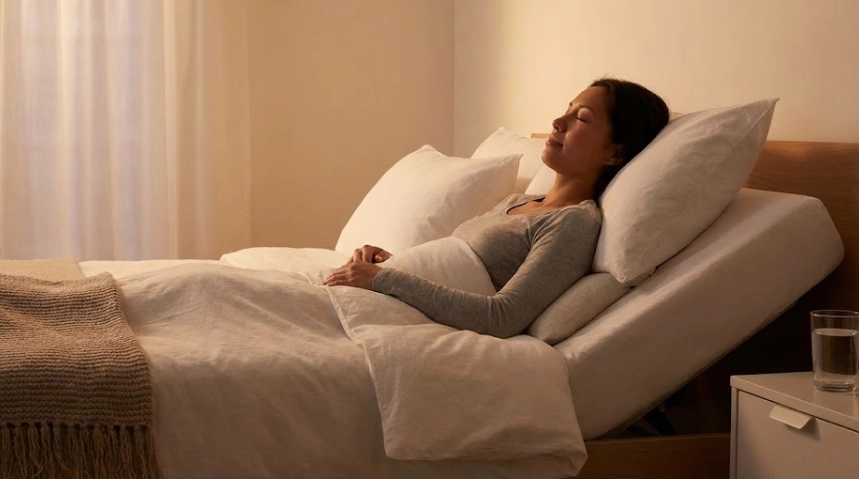
One of the biggest threats to post-surgery sleep is the throbbing of the head as a result of pressure. Edema, or inflammation, is the biggest culprit. When you lie flat, the blood pumped by your heart goes contrary to the direction of gravity. Your head can thus receive an increased amount of blood so that the areas that have been injured and traumatized with the face will collect the fluid. Therefore, what happens is that typical feeling of your jaw pounding.
The answer to this is good old physics: make sure that the level of your head is above your heart.
We are recommending that Dentist Polen Akkılıç and her team patients hand their beds over to a temporary recovery area. You don’t need to buy a hospital bed to achieve this.
- The 45-Degree Rule: Use the support of two or three pillows to achieve this. You should aim to be sitting slightly leaned back, approximately a 45-degree angle.
- Build a “Pillow Fort”: Just piling up pillows behind your head is not enough; you also need to place some under your shoulders and upper back. This helps to keep your neck aligned, which in turn allows you to breathe more easily and prevents headaches caused by muscle tension, thus avoiding swapping one type of pain for another.
- Gravity as Your Ally: Maintaining this elevation allows the lymph to drain which leads to these swollen areas receiving less liquid which will lessen both the pain and the swelling on the next morning.
Mastering the Pain-Sleep Cycle
Pain is one of the most potent stimulants, as it will wake you up. Also, anxiety over pain may prevent you from falling asleep again. Strategic timing is required for you to break this cycle.
We encounter in the clinic that patients seem to not take their medicine until the pain becomes unbearable. This is essentially “chasing after the pain,” and sleep will hardly come.
Nevertheless, you will have to prevent it this time. Stamp the time you take your drugs for the pain relief that is as prescribed, be it an NSAID to fight inflammation or a stronger analgesic, so that the time of their greatest effectiveness coincides with the moment you want to sleep. Take the last dose of your medication about 30 minutes before you lie down. This will put you in a comfort zone which is basically the therapeutic window when you can fall asleep before any discomfort sets in, and hence, it is easier to expect a good sleep.
Comparing Sleep Positions for Surgical Recovery
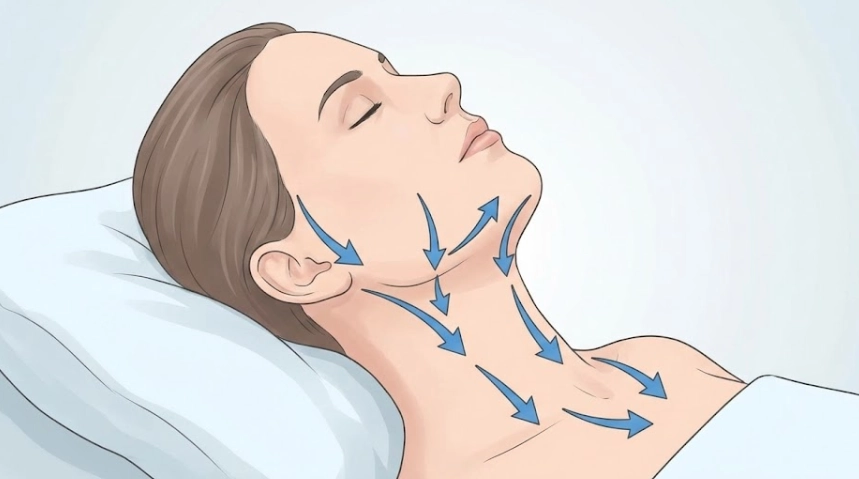
Changing your sleeping habits is just a matter of time but it is very important. Here is the list of the most popular positions along with their effect on your mouth healing.
| Sleep Position | Clinical Impact on Recovery | Risk Level | Recommendation |
| Elevated Back Sleeping (Semi-Fowler’s) | Highly recommended for first 3-7 days. | Lowest | Highly Recommended for first 3-7 days. |
| Flat Back Sleeping | Increases blood flow to the head, leading to increased throbbing and edema. | Moderate | Highly recommended for the first 3-7 days. |
| Side Sleeping (Non-Surgical Side) | Better than flat back, but can cause accidental rolling onto the painful side. | Moderate | Acceptable later in recovery, with caution. |
| Side Sleeping (Surgical Side) | Applies direct pressure, causes heat buildup, increases pain and risk of bleeding. | High | Strictly Forbidden until healed. |
| Stomach Sleeping | Worst possible position. Maximizes pressure on the jaw and face. | Highest | Strictly forbidden until healed. |
Critical Queries on Nighttime Recovery and Comfort
This is a very common fear. The body has a natural reflex to avoid pain, so you will likely wake up before causing significant damage. To prevent this, build a physical barrier with pillows on either side of your body. This “nest” makes it difficult to roll over unconsciously. If you do wake up on the wrong side, gently reposition to your back and check for any fresh bleeding.
A small amount of blood-tinged saliva is perfectly normal for the first 24-48 hours. It often looks worse than it is because a few drops of blood can color a lot of saliva. We recommend placing an old towel over your pillows to protect the cases. However, if you are experiencing active, dark red bleeding that fills your mouth rapidly, you need to apply firm pressure with gauze and contact our emergency line immediately.
Do not mix sleep aids with your prescribed pain medication without explicit clearance from our team. The combination can cause dangerous respiratory depression. If you are struggling significantly with insomnia due to anxiety, discuss this with us during your follow-up; there may be safer alternatives we can recommend.
Never sleep with an active ice pack strapped to your face. You risk giving yourself a frosty-bite injury on the skin, as you won’t feel the cold intensity while asleep. Apply ice in intervals (e.g., 20 minutes on, 20 minutes off) during waking hours up until bedtime, but let your skin rest while you sleep.
Listen to your body. Most patients can return to a normal, flat sleeping position within 3 to 5 days, once the peak swelling has subsided. If you try lying flat and feel that familiar throbbing return, it’s a sign you need another night or two of elevation.
- Pogrel, M. A., & Dodson, T. B. (2020). Oral and Maxillofacial Surgery Secrets. Elsevier Health Sciences.
- Misch, C. E. (2014). Contemporary Implant Dentistry. Mosby.
- Hupp, J. R., Ellis, E., & Tucker, M. R. (2018). Contemporary Oral and Maxillofacial Surgery. Elsevier.
- Dym, H., & Ogle, O. E. (2020). Atlas of Minor Oral Surgery. Elsevier Health Sciences.
- Becker, D. E. (2010). Pain management in dentistry: guidance for the dentist. Anesthesia progress, 57(2), 67–79.

