


Yes, dry mouth can weaken denture adhesive by reducing saliva needed for a secure hold.
Imagine trying to stick a suction cup to a dry windshield. It will slip off the glass in no time.
Analogically speaking, the situation mirrors the conditions inside your mouth. When tooth-replacement patients visit our clinic and complain about their false teeth being loose, very often we realize that the real root cause is a lack of fluids in the mouth. Simply put, saliva is the natural substance that forms the seal between a removable tooth replacement and the oral mucosa.
Will dry mouth impact the performance of denture adhesive? Definitely. Even a good holding agent is going to be a failure when there is a moisture deficiency.
Why Saliva is Important
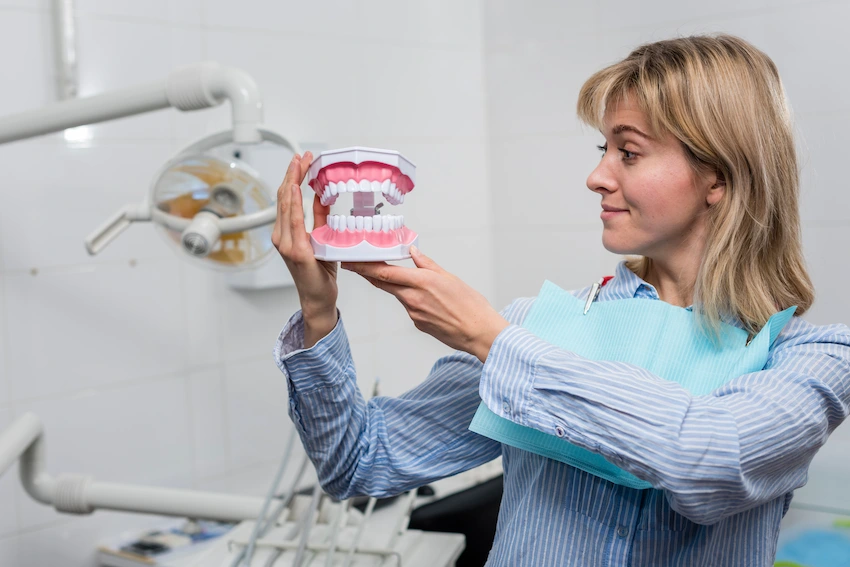
Surely, you know that saliva helps you break a piece of candy. Actually, it does more for you. Saliva also provides a natural support and sealing function.
Your natural saliva is secreted onto your oral mucosa as soon as you put your removable denture back into your mouth. The saliva forms a tiny layer between the artificial base and your teeth that causes the two to hold on to each other via suction, especially if you speak, chew, or both.
- Seal: With the help of saliva, small spaces or gaps can be filled to prevent air from causing suction.
- Lesser Friction: Your mouth getting moisturized means the plastic base of the tooth replacement won’t cause much abrasion to the gum tissue.
- Activation: In most cases, the bonding agents require a certain level of moisture to expand or become sticky, and therefore, grip properly.
Chronic xerostomia, the dryness of persistent dry mouth, destroys this delicate balance.
How Dry Mouth Interferes With Bonding
Moisture is an indispensable element for the proper functioning of bonding agents. Without adequate hydration, such products cannot uniformly absorb or spread the water.
If the material cannot spread evenly, the result is either uneven clumps that may cause the product to be ineffective or dried-out patches that can lead to tooth loosening. In this situation, most patients would try to compensate for the lack of moisture or dryness by applying the product excessively, which can lead to a very unpleasant experience.
Clinical Note: A good adhesive is definitely useful,l but it cannot be a substitute for natural moisture. So treating the reason behind dryness is fundamental.
Causes of Dry Mouth
Saliva levels in the mouth can be reduced by various factors but, generally speaking, dry mouth as a pathological issue has a few underlying factors:
- Medications: Saliva production tends to be a major side effect of medications, e.g., BP-lowering drugs, antihistamines, and antidepressants.
- Medical Conditions: Sjögren’s syndrome, diabetes, and autoimmune diseases can lead to dry mouth by impairing the function of the salivary glands.
- Aging and Dehydration: The level of natural fluids in your body can decrease significantly as you age. Additionally, many people drink far less water than they ought to.
- Mouse Breathing: When your mouth is constantly open, particularly during sleep, dry out your oral cavity.
Clinical Solutions in Turkey
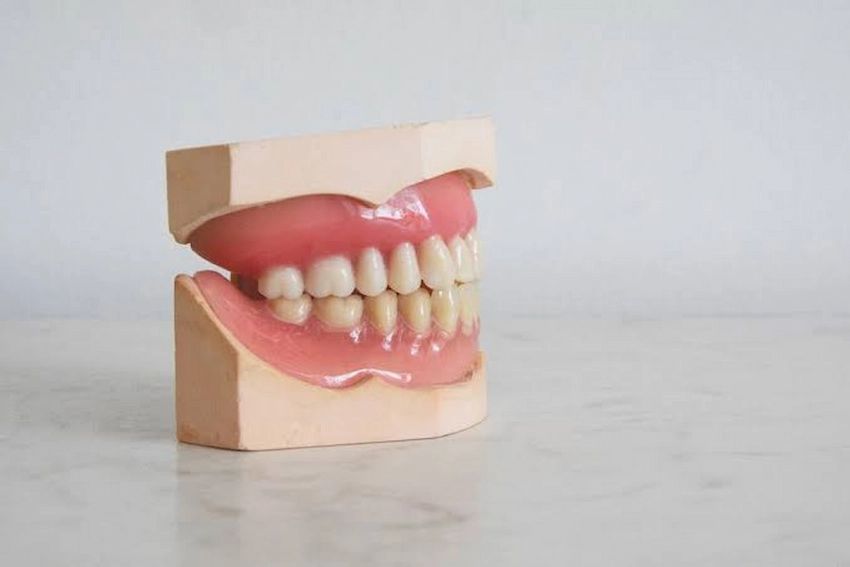
From time to time, we at Lema Dental Clinic in Istanbul, Turkey, do a holistic analysis. Professor Doctor Coşkun Yıldız pointed out that one of the key objectives in restoring oral function is to consider the whole biology around it as it changes and interacts.
Dentist Polen Akkılıç, with the team at Dental Clinic, checks both the appliance and the functioning of the salivary glands when the patient is presenting with symptoms that may indicate dry mucosa and loosening of the dentures. Our services include, among other things:
- Saliva Substitutes: Denture wearers can benefit from using oral moisturizers and sprays that give enough lubrication to the oral cavity, without blocking out bond-forming agents.
- Prosthetic Relining: Tailoring the resin base of the prosthesis is a way to change both the mechanical fit of the tooth and the dependency level on the bond.
- Implant Options: The most convenient solutions for people who are always complaining about their dry mouth issues are a dental implant-supported bridge or a snap-on denture where the denture part is fastened via a series of metal attachments located in the jaw area.
Comparative Analysis of the Different Means of Tooth Retention
| Means Of Dental Retention | Drought Tolerance | Powersource | Lifetime |
| Denture With Regular Adhesive | Very weak; mouth dryness leads to dentures coming loose easily & also causing inflammation. | A dental adhesive and suction are employed. | The product has to be replenished either all day long or very frequently. |
| Soft Lining Denture | Good; soft lining offers more protection; nevertheless, there is also some dependency on saliva as well as the function. | A mechanical + cushioning mix. | Reline is needed every 1–2 year(s). |
| Implant-supported dentures (snap-on) | Superb; the dentures are anchored by means of mechanical devices directly into the jawbone; therefore, the requirement of a saliva-based bond is no longer there. | Mechanical connectors like locators or bars are utilized. | One of the advantages and a great thing about these types of dentures is that they don’t rely on suction or saliva for their stability, and the only thing that is needed for their long-term success is that the teeth are taken care of properly. |
FAQ’s
Is your dry mouth able to destroy your dental adhesive?
The answer is no; it does not destroy the dental adhesive, but its effectiveness is reduced when the mouth is dry since saliva is the essential medium used for the adhesive to hold on effectively, and dry mouth is one of the factors that cause denture loosening, leading to inflammation.
Would the use of more product compensate for the dry mouth?
That might be an erroneous belief. In cases of dry mouth or insufficient fluids in general, an increase in the amount of bonding agent will lead to the creation of a thick layer that is responsible for the shifting of teeth and irritation of the sensitive gum tissue.
If I’m wearing dentures, what can I do to keep my mouth moist?
Drinking lots of water, especially at the time of wearing your dentures, is the best suggestion we could make for you. In case you find difficulty keeping your mouth sufficiently moist with just water, we suggest products that are alcohol-free and can help maintain oral hydration, and we also recommend limiting the use of alcohol and caffeine.
Would tooth implants be a forever fix for dry mouth problems?
We believe that dental implants would be a permanent solution to your problem because the teeth will be anchored directly into the bones of your jaw through the implant and hence will not require a saliva- or bond-based connection, a type of support system that we refer to, with the help of our readers, as the suction or the chewing support through saliva.
How can I tell if medications cause my dry mouth?
As we know, most of these medicines that you take reduce saliva production. We will make a full review of your prescriptions at your next examination and check to see if there is any relationship between your prescriptions and your problems.
Academic References
- Felton, D., Cooper, L., Duqum, I., Minsley, G., Guckes, A., Haug, S., … & Turner, C. (2015). Evidence-based guidelines for the care and maintenance of complete dentures: a publication of the American College of Prosthodontists. Journal of Prosthodontics, 24(S1), S1-S40.
- Navazesh, M., & Kumar, S. K. (2008). Measuring salivary flow: challenges and opportunities. The Journal of the American Dental Association, 139, 35S-40S.
- Villa, A., Connell, C. L., & Abati, S. (2015). Diagnosis and management of xerostomia and hyposalivation. Therapeutics and Clinical Risk Management, 11, 45-51.
- Bansal, R., Khatri, M., & Tandon, S. (2010). Xerostomia: overview of a clinical condition. The Internet Journal of Dental Science, 8(2), 1-10.
- Zarb, G. A., Hobkirk, J., Eckert, S., & Jacob, R. (2013). Hobkirk’s Prosthodontic Treatment for Edentulous Patients: Complete Dentures and Implant-Supported Prostheses. Elsevier Health Sciences.

