


Root canal treatment safely removes infection and saves the natural tooth.
Debunking the Top 5 Myths Around Root Canal Treatment
“Root canal” might be the single phrase in dentistry that instantly triggers a deep, almost instinctive negative response. For a long time, the routine, tooth-saving procedure has been portrayed as the ultimate horror by not only popular culture but also children’s playground rumors. We at Lema Dental Clinic in Turkey can clearly read the worry and anxiety in our patients’ eyes as soon as they take their seat in the dental chair.
On the other hand, what is true has very little to do with the so-called “reputation.”
Our clinical team is always emphasizing to our patients: It is not the treatment that causes pain; rather it is the infection that does so. A root canal can be compared to a fire extinguisher that is used to stop the fire. Come with me as I help you discard that terror and face the clinical facts.
One of our dentists, Polen Akkılıç, together with the working precision of our surgeon under the guidance of Professor Doctor Coşkun Yıldız normally reserved for complex cases, will show you the clearest path to the truth here.
These myths are the nightmares of which the truth – surprisingly – is the light of day.
Myth 1: “Root Canal Treatment is Excruciating”
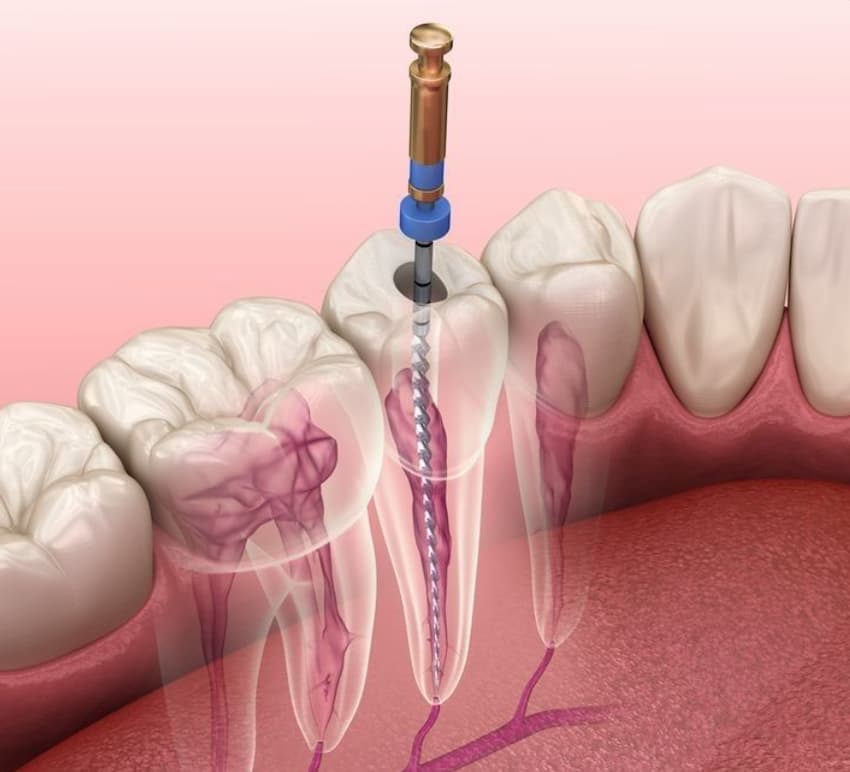
If truth be told, it is the origin of all dental myths. It goes back to the times when people had no access to modern anesthetics whose effects were almost miraculous compared to the crude and very limited pain relief methods available back then.
The Clinical Reality:
At Lema Dental Clinic, a root canal treatment hardly differs from a normal filling in terms of discomfort. The severe pain that the public generally associates with the procedure is actually the pain caused by the nerve inflamed due to the infection that the patient comes to us with. The bacterial infection produces pressure inside the tooth similar to an overinflated balloon ready to burst.
In the course of such therapy, Dentist Polen Akkılıç, together with her team, goes to great lengths to ensure the patient first receives a profound local anesthetic. When there is no feeling, nothing can hurt. We are indisputably taking out the nerve that is responsible for the pain signal.
Let me illustrate: A root canal is not about you touching the hot stove more if your hand is on it; it is about you taking your hand away from the stove.
Myth 2: “It’s Better to Just Pull the Tooth”
Quite frequently, patients pose to us the question, “Why waste time on this tooth? You can just extract it, and then I get an implant.” While implantology is undoubtedly one of our strongest areas of expertise here in Turkey, we always put biology first at our clinic.
The Clinical Reality:
Nothing actually functions like a dental natural. The natural tooth is anchored in the jawbone just like a tree with roots, and it is supported by a ligament that besides holding it in place also acts as a shock absorber. The sensation of pressure while chewing is transmitted from the ligament to the brain. Implants are great—consistently, Professor Doctor Coşkun Yıldız constantly uses them to make complex rehabilitations—but they are a substitute, not the original one.
Maintaining the original tooth keeps the natural bite unchanged and its neighboring tissues healthy. The loss of teeth is actually a traumatic event for the whole body, and a root canal is an attempt at salvation. An extraction is only necessary when the tooth is severely damaged and there is no possibility of reconstruction.
Myth 3: “Root Canals Make the Whole Body Sick”
This misleading conception is disturbing for it is completely unfounded, yet it is continuously being spread all over. It is derived from discredited experiments conducted in the 1920s (the so-called “focal infection theory”) which alleged that “dead” teeth contained bacteria that could cause cancer or heart disease.
The Clinical Reality:
That research was faulty, besides which it did not make use of control groups, and both the flaw of the experiment and the unreliability of the results have been pointed out and published by the major medical associations.
Currently, there cannot be found any scientifically reliable evidence implying that diseased teeth that have undergone root canal treatment play a role in the development of systemic diseases. To be precise, it’s more dangerous to leave a tooth decaying and infected in the mouth because such a tooth becomes a continuous source of bacteria that are introduced into the bbloodstream.
Myth 4: “The Tooth Will Eventually Die Anyway”
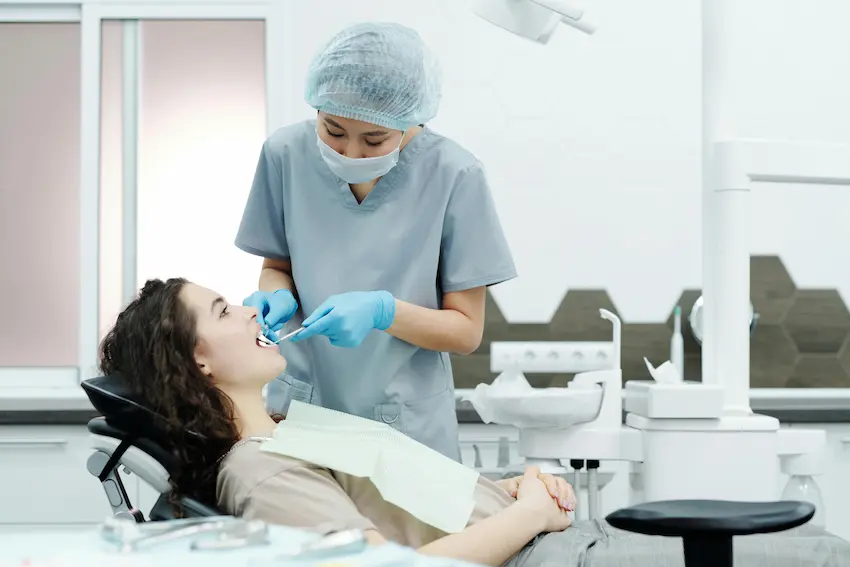
This is one of the situations where people have a misunderstanding of the term “alive” from a dentistry perspective.
The Clinical Reality:
There are two main elements of a tooth’s connection to the body: one is the nerve which along with providing sensation, it also signals pain and pleasure, and the other is the blood supply coming from the gum that nourishes the hard outer layer of the tooth.
When a root canal is carried out on a tooth, the nerve and the pulp are extracted. Indeed, the tooth will not be able to “feel” anything anymore—i.e., it will not give you pain even upon exposure to extremely cold water—but it is not considered to be “dead” as necrotic tissue.
Instead, the tooth continues to be a functional part of your jaw. If the tooth is covered with a crown, which is our forte here at Lema, then that tooth can easily serve you for decades.
Comparing the Options: Save or Extract?
Choosing is not always straightforward. Here is how we clinically look at both options.
| Feature | Root Canal Treatment | Tooth Extraction |
| Primary Goal | Preserve as much as possible of the natural tooth and its biological components. | Eliminate the infection source. |
| Recovery Time | Immediate relief is common; mild discomfort may last 1–3 days. | Soft tissue heals in 1–2 weeks; bone healing may take several months. |
| Bone Health | Supports natural jawbone density preservation. | Bone loss is likely over time if no implant is placed. |
| Cost Efficiency | Moderate initial cost; most cost-effective long-term solution. | Lower upfront cost but higher long-term expenses due to implants or bridges. |
| Chewing Force | Maintains natural tooth sensation and proprioception. | An implant or bridge feels different; missing teeth reduce chewing efficiency. |
Myth 5: “It Takes Many Long Appointments”
This could have been the case some years ago. You may have been coming in, getting drilled, coming back after a week, and perhaps even a third time.
The Clinical Reality:
Thanks to new technology, the clock has changed. Depending on the extent of the infection, Dentist Polen Akkılıç is enabled by the use of ultramodern rotating tools combined with digital imaging to perform a root canal in one session in most cases.
At our practice in Istanbul, we are thoughtfully aware of the fact that our patients come from different parts of the world. Hence, our methods are not only highly thorough but also very time-efficient. You don’t want to spend all your vacation time at the dental office.
FAQs: Your Questions Answered
Yes, you may. A long-standing infection can slowly and gradually kill the nerve in such a way that you do not feel any pain while the bone surrounding the root is actually being degraded by bacteria. The absence of pain can hardly be used as an indication that nothing is wrong.
Previously, this would occur if either the material was old or the pulp tissue had not been completely removed. Nevertheless, nowadays utilizing the latest methods together with the immediate placement of a top-notch zirconia or E.max crown, your teeth will be in such a great condition that no one will be able to tell which one is treated.
Surely. Just keep in mind we always recommend that you wait 24 hours since any initial discomfort may still be there; however, there is no contraindication for flying after undergoing endodontic therapy.
The success rate is higher than 95%. Although re-infection can happen when either the restoration (crown) leaks or the root is cracked, hidden by the root canal. That’s precisely why we give so much attention to the final restoration.
We are highly geared to patients who have a dental phobia. Besides the sedation treatments we have to offer, and the caring nature of our specialists’ hands, many patients tell us that it was before they knew it that it was over, and the whole procedure had been done.
- American Association of Endodontists. (2023). Root Canal Safety: Debunking the Myths. Chicago, IL: AAE.
- Siqueira, J. F., & Rôças, I. N. (2022). Clinical implications and microbiology of bacterial persistence after treatment procedures. Journal of Endodontics, 34(11), 1291-1301.
- Holland, R., et al. (2019). Healing process of teeth with open apices: Histological findings. Journal of Endodontics, 29(4), 234-239.
- Mayo Clinic Staff. (2023). Root canal treatment: Why it’s done. Mayo Foundation for Medical Education and Research.
- Wu, M. K., & Wesselink, P. R. (2021). Endodontic leakage studies reconsidered. Part I. Methodology. International Endodontic Journal, 26(1), 37-43.

