


Clean, dry, and store grillz properly to prevent oxidation.
After investing, you have taken impressions, selected the karat, and gotten a custom piece of a smile-transforming work of art. But the reality is that glitter won’t stay there forever if you don’t support it.
We at Lema Dental Clinic Turkey see hundreds of patients travelling to us for a world-class smile makeover, including custom prosthetic work. One question always keeps coming up: “Why does my gold look so dull?“
It is all because of oxidation.
To illustrate, imagine your gold grillz are like a luxury car. A car sure looks great when it is displayed in a showroom but if you take it through the mud and never wash it, the paint will get damaged. Your mouth is a very complicated, wet environment—actually, it resembles a rainforest more than a showroom. If you want to keep that “fresh out of the box” shine, you need to learn the chemistry of your jewelry.
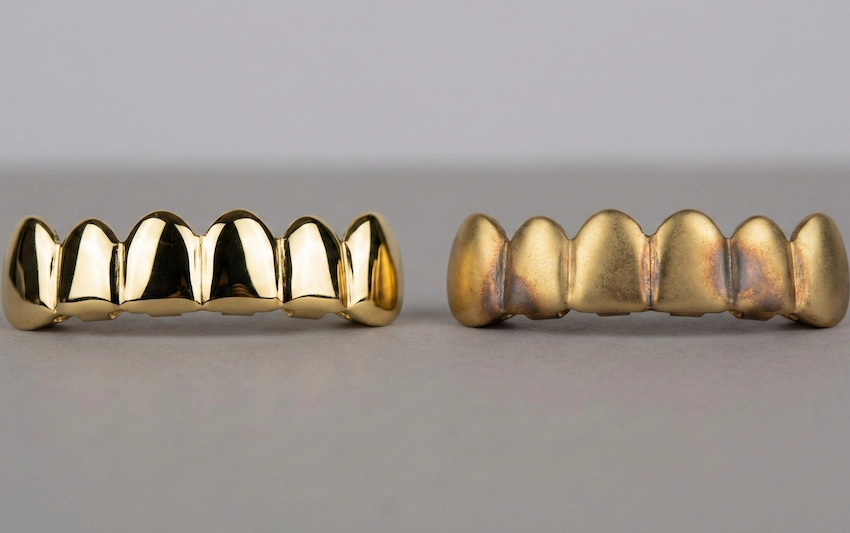
The Science of the Tarnish: Why Does Gold Change Color?
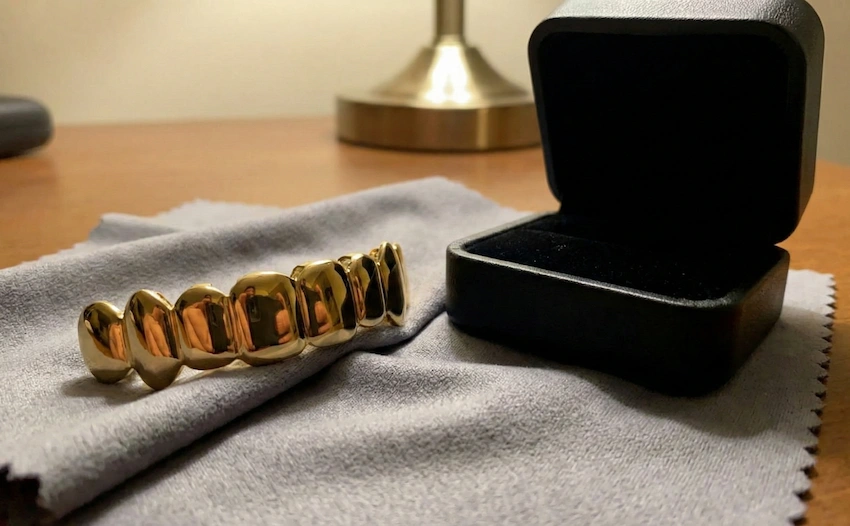
What is most common at the clinic is that patients are quite often under the false impression that since they have bought “gold,” it must be naturally resistant to any kind of harm.
Pure gold (24K) is a very noble metal, which means it doesn’t rust or tarnish. However, 24K gold is extremely soft – so soft that it can’t be used for biting and chewing. It’s like using clay to make a skyscraper. To make grillz durable enough for everyday use, gold has to be mixed with other metals like copper, silver, or zinc, hence making an alloy (10K, 14K, or 18K).
Daily Rituals: The Anti-Oxidation Routine
You wouldn’t wear a tailor-made suit to the shower, so why casually treat your grillz? Dentist Polen Akkılıç and her colleagues think that the maintenance should start the very moment that you remove it from your mouth.
1. The “rinse and dry” rule
Saliva being acidic, leaving the grillz in contact with saliva overnight means that you are effectively soaking them in a very mild corrosive bath.
- You take off the grillz.
- You rinse it with warm water for the removal of any particles.
- Completely dry the grillz by patting with a microfiber cloth as moisture is the biggest enemy.
2. The soap solution
Keep away from harsh chemical cleaners. This is what we recommend: a gentle, clear dish soap mixed with warm water. Whether it is the outside or the inside, a soft-bristle toothbrush (used only for the grillz) will help to scrub gently.
Note: Do not clean your grillz with the same cleaners that you use for diamonds or silver unless explicitly indicated as such; these cleaners might be toxic if swallowed afterwards.
Doctor’s tip: Cleaning gold with toothpaste at home can cause damage. Toothpastes contain micro-abrasives whose purpose is to effectively remove stubborn stains on tooth enamel (the hardest substance in the body). Gold is far softer, and therefore, brushing it with toothpaste is basically the same as sanding a mirror—you will end up with hundreds of microscopic scratches in which germs and tarnish can easily accumulate.
Comparing Gold Purities: Durability vs. Shine
One of the most important parameters when deciding on the grills at our clinic in Turkey is the karat in relation to the amount of effort required for maintenance.
| Karat | Gold Content | Durability | Tarnish Risk | Best For |
| 10K | 41.7% | Extreme (Hardest) | High | Budget-focused users; contains higher copper/silver content. |
| 14K | 58.3% | High | Moderate | Industry standard: balanced strength and color. |
| 18K | 75% | Moderate | Low | Daily wearers seeking a rich yellow tone and easier maintenance. |
| 24K | 99.9% | Low (Very Soft) | None | Aesthetic purposes only; not ideal for functional grillz due to warping risk. |
The “Silent Killers” of Your Grillz
So, which is the main culprit that causes the damage? In most cases, they are the lifestyle habits of a person.
- A smoker: Smoke from tobacco contains substances that under normal circumstances can stick to gold making it difficult to remove without a professional polish.
- Acidity: Layers of oxidation can be stripped off by phosphoric acid found in soda, although the main cause of discoloration is still citrus fruits and even your body’s pH levels.
- Perfumes and Hairsprays: Put on your grillz at the last step of your dressing or styling routine if you are going out. In fact, the alcohol and other chemicals in the sprays can cause metal spots.
Over here at Lema Dental Clinic, we noticed that the patients who put their grillz in airtight containers along with a silica gel packet to soak up the moisture have their grillz significantly less tarnished than those who leave their grillz on the bathroom counter.
Frequently Asked Questions
We highly insist that you don’t because food particles will be trapped between the gold and your tooth and gum line so it can create bacteria (cavities) and acids in food will dull the gold color. So, it is better to take them off just as you do with jewelry when eating.
It doesn’t make you sick, but it is bad for your hygiene. The majority of the black residue you see is oxidized forms of copper and silver from the alloy mixed with biofilm (plaque). You should go for a professional cleaning right away in order to stop the irritation of the gums.
Yes, but only if it is intended for gold polishing. Use it to wipe the external surface gently and help the shine come back. Do not use chemically treated cloths on the inner surface of the grillz touched with your teeth as you do not want the chemicals going into your mouth.
They will not be forever ruined but they will be so dirty that you will suffer a lot in the maintenance since the tar will be stuck on the surface and the only way that the gold is cleaned is by professional ultrasonic cleaning at very frequent intervals.
Your dental grills and natural teeth are similar in that they both need to be checked regularly. So, it is recommended that you visit Lema Dental Clinic in Turkey every 6 months with your grills. We will be checking the fit (to make sure they are not hurting your gum tissue) and doing sterilization and polishing with hospital-grade products.
- Anusavice, K. J., Shen, C., & Rawls, H. R. (2013). Phillips’ Science of Dental Materials. Elsevier Health Sciences.
- Knosp, H., Holliday, R. J., & Corti, C. W. (2003). Gold in Dentistry: Alloys, Uses and Performance. Gold Bulletin, 36(3), 93-102.
- Roberts, H. W., & Berzins, D. W. (2009). Color stability of provisional restorative materials after accelerated aging. Journal of Dentistry, 37(1), 80-87.
- Wataha, J. C. (2002). Biocompatibility of dental casting alloys: A review. The Journal of Prosthetic Dentistry, 87(2), 205-214.
- Mantri, S. S., & Mantri, S. P. (2010). The psychological and social implications of dental aesthetics: A review. Journal of Esthetic and Restorative Dentistry, 22(1), 21-29.

