


Yes, in suitable cases, a tooth can be extracted and an implant placed on the same day.
Many of our patients find the idea of living with a missing tooth—an empty spot in their smile—for even a few weeks as a major worry. Implant dentistry used to be a very slow and patient game. You’d have a tooth taken out, wait for the bone to heal over the next few months, then get the implant, and wait once again.
What most people don’t know is that dental science is currently evolving at a much faster pace than they realize.
At Lema Dental Clinic, Turkey, we are regularly doing what is called Immediate Implant Placement. This technique enables us to take out the old tooth and insert a titanium or zirconia post into the empty socket in one surgical session only. But is this “fast-track” projection suitable for everybody? Let us analyze the clinical aspects of a same-day smile in more detail.
The Science of the Immediate Socket
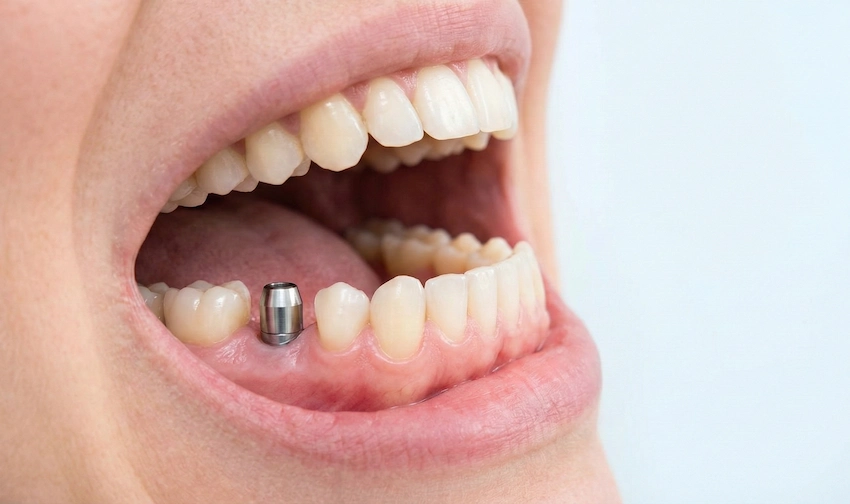
The natural “housing” of a tooth that is in the jawbone is what is left when a tooth is extracted. A drawing of your jawbone as a building’s foundation will help your understanding. Traditionally, the hole was filled, the filling was allowed to settle, and a new hole was drilled later.
He also explains that the real trick is that the immediate method uses the body’s natural healing cascade. Placing the implant immediately not only provides a “scaffold” that can help the bone maintain its original volume and shape but also helps to prevent resorption of the bone that normally results from a tooth extraction.
Still, this is not only about speed; it is about accuracy. Dr. Polen Akkılıç is with her group, and they use advanced 3D imaging technology to make sure that the extraction is done with a minimum of trauma to the supporting tissues—meaning that the tooth is removed so gently that the bone walls around it are left intact and thus able to support the new implant.
Comparing the Pathways: Immediate vs. Delayed Implants
| Feature | Immediate Implant (Same Day) | Traditional (Delayed) Implant |
| Total Treatment Time | 3–4 Months total | 6–9 Months total |
| Number of Surgeries | One single session | Two or more sessions |
| Bone Preservation | High (prevents initial resorption) | Moderate (requires healing period) |
| Aesthetic Gap | An immediate temporary crown is possible | The patient may need a “flipper” or partial |
| Suitability | Requires healthy bone and no infection | Ideal for complex cases or bone grafts |
Are You a Candidate for Same-Day Restoration?
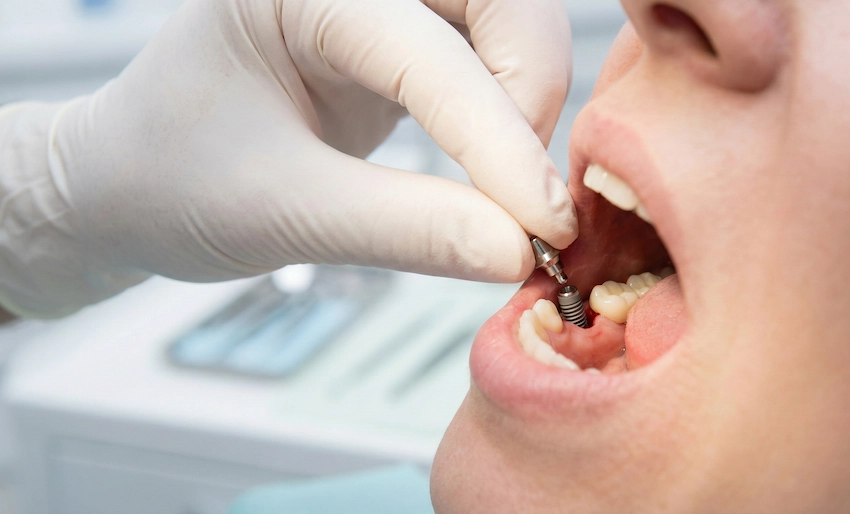
The question remains: if it’s faster and more efficient, why isn’t it done for every patient?
Here is what we see in the clinic: success depends entirely on the “primary stability” of the implant. If the bone is thin or if there is an active, raging infection at the root of the extracted tooth, placing an implant immediately is like trying to anchor a boat in shifting sand.
In our clinical experience at Lema Dental Clinic, we prioritize the long-term biological outcome over a quick fix. If Professor Doctor Coşkun Yıldız determines that the bone density is insufficient, we may recommend a short healing phase or a bone graft first. But for a high percentage of patients arriving in Turkey for a smile makeover, the “one-day” protocol is not just a dream—it is our standard of care.
The Lema Experience: Why Turkey?
Choosing to have this procedure at Lema Dental Clinic means combining world-class surgical expertise with the efficiency of modern dental technology. While the surgery itself is quick, the planning is exhaustive. Dentist Polen Akkılıç meticulously designs the temporary crown that sits on the implant so that it doesn’t “work” during the healing phase—meaning it looks beautiful but doesn’t take the force of your bite, allowing the bone to fuse to the metal undisturbed.
Frequently Asked Questions (FAQ)
Most people actually feel it is less difficult. Besides, we have to numb the area for the tooth anyway and in doing so, placing the implant requires hardly any additional pain. Moreover, this way you have only one ‘healing’ time instead of two separate ones. Full sedation can be an option in Turkey if you want to feel anything at all during the procedure.
This happens very rarely. Provided that the implant is stable, we immediately put a ‘healing cap’ or a temporary tooth crown. So you simply leave with a tooth. If for any reason the implant cannot bear the load, we give you a subtle aesthetic solution to keep your smile while you enjoy your time in Istanbul.
Nowadays research data have shown that treatment outcomes performed by experts of the highest level such as Prof. Dr. Coşkun Yıldız are almost indistinguishable, with a 95 to 98 percent success rate. The key factor is the degree to which the implant initially “fits” the bone.
Technically you can but please be very careful. Think of the implant as a ‘fractured bone’ that is healing; hence soft foods will do just fine for the first couple of weeks. Refrain from biting straight into an apple with your fresh implant until we authorize you to do so!
Taking an immediate protocol, 5–7 days are usually enough to get your first surgery done and wear your temporary restoration. Then, you come back after several months to receive your ultimate, permanent porcelain or zirconium crown.
- Buser, D., Sennerby, L., & De Bruyn, H. (2017). Modern implant dentistry is based on osseointegration. Periodontology 2000, 73(1), 7-21.
- Lang, N. P., Pun, L., Lau, K. Y., Li, K. Y., & Wong, M. C. (2012). A systematic review on survival and success rates of implants placed immediately into fresh extraction sockets. Clinical Oral Implants Research, 23, 39-66.
- Tarnow, D. P., Chu, S. J., & Fletcher, P. (2014). Clinical decisions: Immediate vs. delayed implants. The International Journal of Periodontics & Restorative Dentistry, 34, s1-s9.
- Yıldız, C., & Akkılıç, P. (2024). Protocols for Immediate Loading in the Aesthetic Zone: A Clinical Review at Lema Dental Clinic. Istanbul Journal of Oral Sciences.
- Wagenberg, B., & Froum, S. J. (2014). A retrospective study of 1925 consecutively placed immediate implants from 1988 to 2004. International Journal of Oral & Maxillofacial Implants, 21(1).

