


Simply put, teeth straightening is a procedure that fixes the smile not only to be more stylish but also to be a very important issue in the oral health system. Incorrectly aligned teeth may lead to certain dental problems that cause difficulty in chewing, speaking, and also in the maintenance of oral hygiene. These dental problems can become worse because they make it possible for gum disease, tooth decay, and the production of excessive wear on teeth, which in turn will affect the person’s general welfare.
Nowadays, the change in orthodontic treatments has made it possible for patients of any age to get their teeth corrected, that is, children as well as older people. Actually, as the dentist and the dental team of Polen Akkılıç explain, contemporary orthodontics provides various treatment options that can be personalized according to each patient’s requirements. This explanatory guide is designed to reveal the truth of the question “Can teeth be straightened at any age?”. It also touches upon the different treatment methods, and the orthodontic course of events.
How Are Teeth Straightened?
Teeth straightening is accomplished through a gradual process that necessitates the use of orthodontic appliances to shift the teeth step by step into their proper places. Patient’s age, the complexity of the dental issue, and likes or dislikes will be the deciding factors of the treatment. Professor Doctor Coşkun Yıldız emphasizes the fact that the biggest result of the orthodontic treatment comes from the individualized treatment plans that are created for each case. The most frequent issues corrected with orthodontic treatment are:
1. Traditional Braces
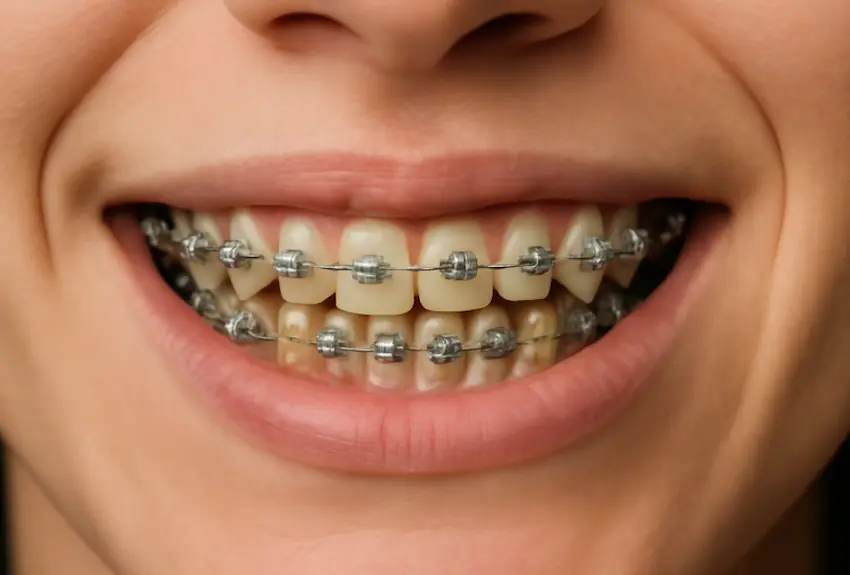
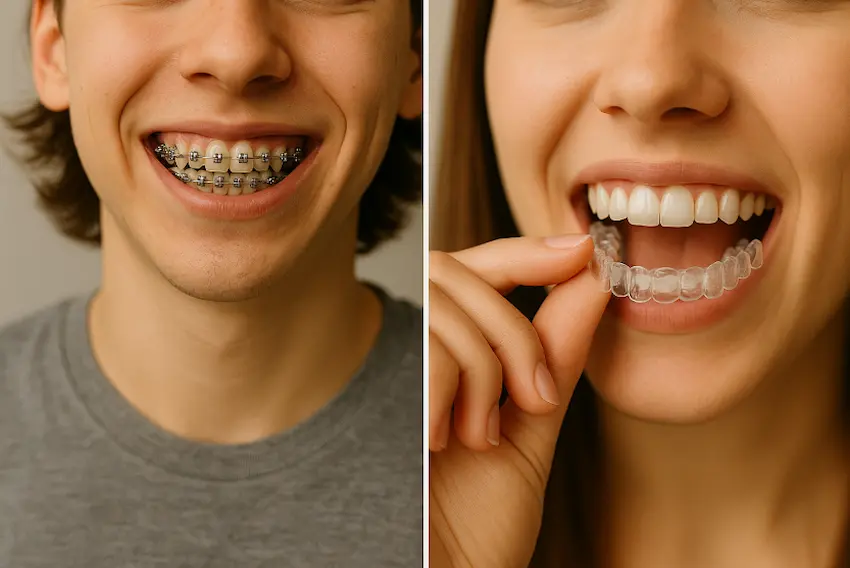
Traditional braces are the most typical and well-known orthodontic appliances. The system consists of metal brackets that are glued to the front of the teeth and wires that connect them. The dentist pulls the wires every time, which tightens the wire, putting pressure and the teeth gradually move into the desired position. Dentist Polen Akkılıç and her team most often combine traditional braces with successful treatments of the following dental misalignments: dental malocclusions, dental crowding, dental overbites, and dental underbites. Apart from the fact that these braces are visible, they are still very efficient in ridding oral problems, even in severe cases and, in a lot of them, they are the cheapest solution.
2. Clear Aligners (Invisalign)
The clear aligners method such as Invisalign is one of the most believed alternatives for conventional metal braces which is also a very convincing one. These tailor-made, transparent trays which fit over the mouth can give you the desired straightening effect in a certain period of time. Professor Doctor Coşkun Yıldız stresses that clear aligners are a good option for adults who want to straighten their teeth without the visible appearance of braces. It is also possible to take them off for eating, brushing, and flossing. Moreover, they also allow the wearer a less conspicuous look, which means that adults who want to get their teeth straightened without the notice of their orthodontic treatment are an ideal group to wear them.
3. Lingual Braces
In essence, lingual braces are the same as conventional ones, but they are put on the (lingual side) of the teeth, so one can hardly distinguish them with the naked eye. This method is desired by many adult patients who need their teeth straightened but get a feeling of discomfort seeing braces on themselves. Dentist Polen Akkılıç and her team deliver lingual braces as a very successful, a less visible option, mainly for those patients who are similar to the ones treated with conventional braces and hence require no metal brackets to be shown.
4. Palatal Expanders
Palatal expanders help the little ones in orthodontics to make the upper jaw wider and, thus, allow more space for teeth to be aligned. This device is used to prevent any future problems and also to provide enough room for the permanent teeth to grow correctly before full orthodontic treatment gets started. Gradually widening the jaw is done by adjusting the expander over time, a technique Doctor Coşkun Yıldız frequently uses to treat children and adolescents with crowding issues.
5. Retainers
Retainers are given to the patient after the orthodontic treatment and the primary function of these items is to make sure the teeth stay in the new places they have been moved to. Doctor Polen Akkılıç and her team state that it is really important to have a retainer so that the teeth do not move to their original positions after braces or aligners have been taken off. Retainers are designed according to the individual and it is necessary to wear them for a certain time, usually, it can be for several months or years depending on the instructions of the orthodontist.
Is There an Age Limit for Teeth Straightening?
The possibility of teeth straightening has no restrictions regarding the age of the person. So, in any case – child, adult, or elderly – orthodontic treatments would still be feasible and effective. Professor Doctor Coşkun Yıldız has pointed out that the main factor that determines the success of orthodontic treatment is healthy teeth and gums, rather than age. The point may differ from case to case and treatment approach may depend on the patient’s age and his/her dental condition; however, orthodontic treatment is possible and effective in all patients. The main way age affects orthodontic treatment is as follows:
Children and Adolescents (Ages 6-14)
Orthodontic problems in children can be generally treated more effectively when the permanent teeth have already erupted and the jaw is still developing. Therefore, the stage allows orthodontists not only to control the jaw and teeth growth but also to make the treatment progress faster and more effectively. Dentist Polen Akkılıç along with her team normally applies palatal expanders and partial braces for the youngest patients to deal with the incorrect position of the teeth at an early stage, thus making the treatment period more efficient and shorter.
Adults (Ages 18+)
Orthodontic treatment is still possible for adults, but the treatment may be longer due to their bones being mature and the jaw not growing. Professor Doctor Coşkun Yıldız asserts that treatment duration in adult patients is often prolonged due to their bones being denser, which in turn makes the tooth movement more gradual. Additionally, in some complicated cases, surgery can be performed on the patient’s jaw to obtain the best possible results. Nonetheless, adults have the possibility to select from various less visible treatments like clear aligners and lingual braces which are more aesthetically pleasing and thus, the concern of the patient does not hinder the effective treatment.
Seniors (Ages 60+)
Orthodontic work is a good idea for people over 60 and even those in their 70s. Through the development of orthodontic technology, it is now possible for older adults to get the same treatment as youngsters with no loss of quality and accuracy. A decrease in bone density may be the reason why treatment can be a bit slower. Dr. Polen Akkılıç and her staff have been able to turn the smiles of elderly patients around and give them back chewing comfort. To some extent, based on their dental situations, elderly people may need dental implants or other restorative therapies to reach the desired dental health and aesthetic results.
How Does Adult Treatment Differ from Pediatric Orthodontics?
The variety of orthodontic treatments for kids, teens, and adults differs greatly mainly because the children’s bones are still growing and the cases for adults are more complicated. Prof. Dr. Coşkun Yıldız states that adult orthodontic treatment is generally more complicated due to the mature bones. The differences between children’s and adults’ treatment processes are as follows:
| Factor | Pediatric Treatment | Adult Treatment |
| Bone Development | Jawbones are still growing, making treatment easier. | Jawbones are fully developed, requiring more time for treatment. |
| Treatment Complexity | Focused on guiding growth and eruption. | More complex, focused on repositioning fully erupted teeth. |
| Duration of Treatment | Treatment typically takes 12-24 months. | Treatment can take 18-36 months or longer. |
| Types of Devices | Palatal expanders, partial braces. | Traditional braces, clear aligners, and potentially jaw surgery. |
| Flexibility | More flexible, as children’s jaws are still adjusting. | Treatment requires more planning and may require additional procedures. |
Kids, Orthodontics most of the time, are carried out to correct the growth of the jaw and teeth, whereas the treatment of mature adults is aimed at shifting the teeth, so it is more complicated to do.
How Does the Adult Treatment Process Work?
In most cases, the stages of the adult orthodontic treatment are as follows:
1. Initial Consultation and Evaluation
At the first appointment, Dr. Polen Akkılıç and her team perform a thorough examination which includes X-rays, digital pictures, and teeth records. The orthodontist will determine how complex the misalignment problem is and then inform the possible ways of treatment so that the chosen method will not only satisfy but also exceed the patient’s needs.
2. Customized Treatment Plan
After the consultation, Prof. Dr. Coşkun Yıldız will come up with a personal treatment plan which will be the justification for the orthodontic concerns of the patient. The plan would clarify the suitable appliance, approximate time, and also any other unwanted interferences like the case of surgery of the jaw.
3. Braces or Aligners
Next, the patient will be given braces and clear aligners depending on which is the better choice. In the use of braces, the braces are permanently attached to the teeth, and with clear aligners, one can remove them and change to a new set every few weeks as the teeth gradually get into place.
4. Regular Adjustments
Patients with traditional braces need to have the braces serviced at the orthodontic clinic every 4 to 6 weeks. The person with clear aligners will be provided with a new set of aligners several weeks into the process to continue the straightening of the teeth.
5. Retainers
After the teeth are aligned correctly, retainers are devices that avoid the comeback of the teeth in their original positions. They might be used for some months or even years, depending on the individual case.
6. Follow-Up Visits
One cannot do without follow-up visits even when treatment has been done, as these visits are essential to ascertain that the teeth have stayed in their right places and that the effects of the treatment have been maintained over time.
Pros of Adult Braces?
- One of the first things that people notice after the teeth have been straightened is the upgraded appearance of the person which directly results in the rise of self-esteem and self-confidence.
- If teeth are properly aligned then people can easily maintain oral hygiene in that mouth and it also means that the chances of dental caries, periodontal diseases and the formation of calculus and plaque become very low.
- Results of orthodontic therapy are permanent if the patient is fully obedient to the instructions of the orthodontist.
- Besides the traditional braces, there are also clear aligners and lingual braces that are less visible and thus more discreet for adult patients who are concerned about their braces being visible.
Cons of Adult Braces?
- In most cases, the duration of the orthodontic treatment procedure for adults is several times longer than that of children. The time period can range from 18 to 36 months.
- Noisy patients who were given braces or aligners have openly admitted that the mechanical function during the very first days after the dental appliance has been installed or after the adjustment causes them a lot of discomfort.
- During the treatment, patients will have to control strictly what they eat and follow oral hygiene to obtain the maximum treatment results.
- Increased Cost: The total cost of orthodontic treatment for an adult patient, especially when the treatment is with the help of clear aligners or lingual braces, may be more expensive than that with traditional braces.
Are Braces More Painful for Adults?
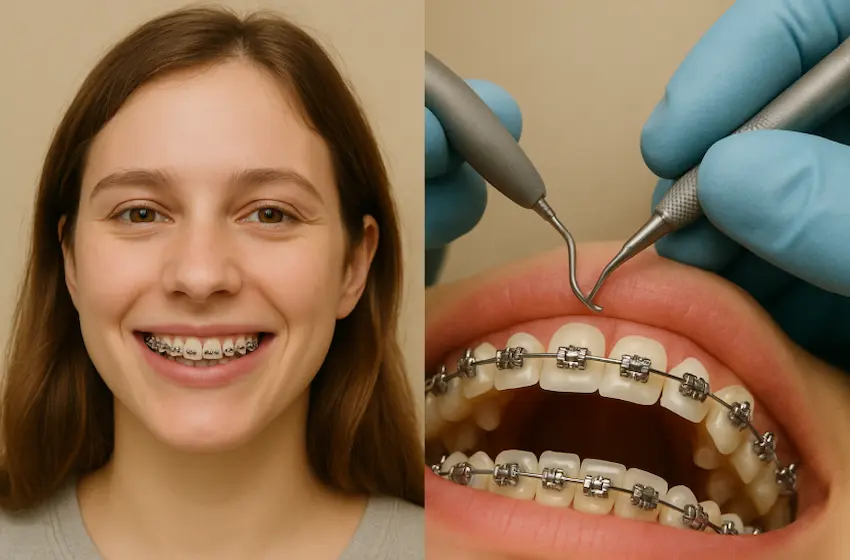
Braces are a common question for adults whether they will suffer more pain than children during orthodontic treatment. Professor Doctor Coşkun Yıldız describes that a certain level of discomfort during orthodontic treatment is common, but adults can feel it in a different way than children. The main reason for this is that in adults, jawbones are mature, and tooth movement can be a little bit slower, which usually leads to the first period of treatment having more severe discomfort. Though discomfort becomes less as the treatment continues and adults can use the appropriate drugs and methods for relief.
References
- American Association of Orthodontists. (2019). Orthodontic treatment in adults: Is age just a number? Journal of Clinical Orthodontics, 53(1), 45-49.
- Khayat, L., & Wainer, L. (2017). The effectiveness of clear aligners in adult orthodontic treatment. Orthodontics & Craniofacial Research, 20(2), 102-109.
- Proffit, W. R., Fields, H. W., & Sarver, D. M. (2019). Contemporary orthodontics (6th ed.). Elsevier.American Dental Association. (2020, March 12). Braces for adults: What to know about orthodontics later in life. ADA.https://www.ada.org/en/member-center/orthodontics-for-adults
Frequently Asked Questions for Teeth Straightening
Of course, adults in their 30s can achieve dental straightening using traditional braces or invisible aligners. Orthodontic procedures are applicable at any time if the teeth and the gums are in good health. The result of the therapy can bring about a radically improved smile even at 30, thus you can enjoy not only aesthetic but also functional benefits such as correct biting and higher self-confidence in the long term.
Not at all, it is never too late to get braces or other orthodontic treatment. Many adults in their 40s get their teeth straightened with orthodontic treatment, and often they prefer clear aligners or lingual braces, which are less noticeable. The idea of getting braces is often the last consideration for individuals as they age, as they may not prioritize orthodontic treatment later in life.. It can make a smile more beautiful and restore the lost function regardless of how old the person is, and the effect will be just as strong as in younger patients.
Certainly, you can still eat as usual with braces, but you will be required to make certain changes. In order to protect the braces from being broken and to avoid the unpleasant feeling, the patients should stay away from hard, sticky, and chewy foods. It is easy to eat soft food like pasta, yogurt, and smoothies, which will be perfect especially in the first few days after you’re gotten braces or following an adjustment.
Adult braces usually last 18-36 months treatment time depending on the degree of misalignment. Adults’ treatment may be longer than children’s because of the non-growing bones, but the results have the same effectiveness. The period of therapy can be upgraded to shorter durations for patients suffering from minor malocclusions, and treatment with clear aligners can also become a faster alternative.
The answer is yes: a 70-year-old with braces or invisible aligners can also straighten their teeth. Orthodontics can be prescribed to any age group, adults and seniors included, if the teeth and gums are in good condition. As a consequence, older people can also enjoy the benefits of orthodontics which are not only beautiful but also functional, and they can perceive the health advantages of better alignment and thus a nicer smile.
Braces can be used at any age as long as the teeth and gums are healthy. As they will be able to address a dental health and smile issue, older patients can be treated by orthodontics. Although the management will take longer in older patients, the results achieved will still be gratifying and can be kept for a long time.
The fact is that there is no maximum age for orthodontic treatment. Success in orthodontics for any one of any age whether they had been kids, grown-ups, and seniors is possible. The deciding factor is the health of the gums and teeth, not age, which means that everyone can have a dazzling smile at any time of their life.

