


Yes, early dental care can often save a loose tooth.
Knowing that your adult tooth is moving a bit is really frightening. This is so counter to what people usually associate with their adult teeth that one of your first thoughts might be of a missing tooth right after or a nasty, complicated oral surgery. However, the fact is that the sooner you realize that your tooth is moving, the better. It potentially becomes a matter of saving your tooth versus losing it.
The Framework of Your Teeth
A good way to look at teeth is not as fixed wooden pegs, but rather as trees with deep roots. Our teeth are located in the jawbone, which is their place of setting. Gum ligaments holding our teeth in place are structurally analogous to tree roots holding the soil around them. The presence of gum disease can be equated to a silent flood that erodes the bone, destroying these equally vital “roots”. Consequently, the tree would “wobble” due to lessened support, metaphorically speaking.
Nevertheless, to think more deeply about how we can do away with the flood and repair the foundation, we just have to examine those aspects a bit more closely.
Methods Employed at Lema Dental Clinic
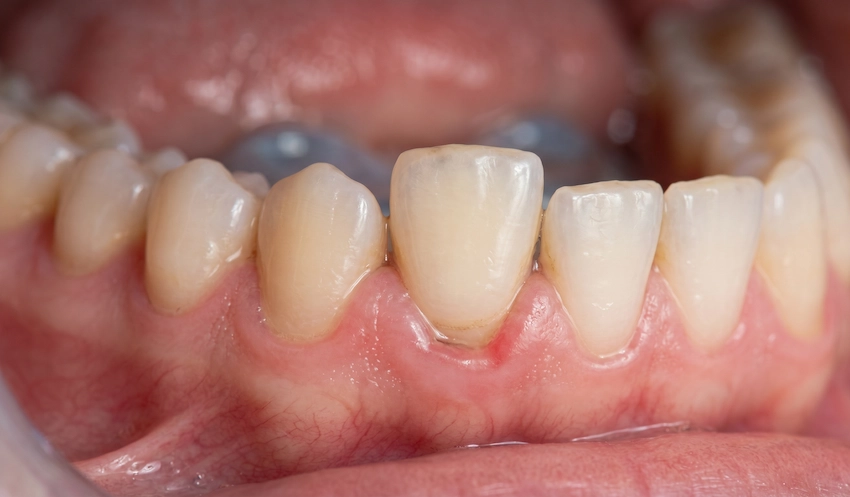
This is what we saw at the clinic. Really, many patients arriving in Turkey are so hopeless that they think the only solution is to have a tooth extracted. Besides that, they worry and get scared that they might no longer be able to chew. First of all, Lema Dental Clinic prioritizes the preservation of natural teeth.
According to Professor Doctor Coşkun Yıldız, the main telltale of a wobbly tooth is merely a sign. It hardly ever is the final blow. The predominant factors that cause it are deep infections after al,l or a bad bite. By eliminating these main reasons, our ability to stop the progression of tooth loss is pretty high.
Under the close supervision of Dentist Polen Akkılıç and her team, we employ sophisticated procedures for your teeth:
- Deep Cleaning: We thoroughly sanitize the area below the gum line. We clear away the hardened deposits and the bacteria. If you could see it that way, it is clearing away the overgrowth on a boat hull so that the wood can once more get well.
- Tooth Splinting: At times, even though the bone is getting better, the tooth is still moving. In such cases, we can attach it to the strong teeth on its sides. One can liken it to fastening a frail new tree to a robust oak for shelter from the winds.
- Bone Grafting: It is a fact that we can do a makeover of the lost bone. We insert safe, healing substances in the areas that are most vulnerable. This, in turn, helps your body create new bone and healthy gum tissues.
Timelines and Expectations of Treatment

We still have to figure out the most suitable option for you. Initially, we require a 3D scan to reveal the extent of damage.
| Type of Treatment | Most Suitable Cases | Healing Time (Typical) |
| Bite Adjustment | Eroded teeth due to heavy grinding. | Instant elimination of discomfort |
| Tooth Splinting | Teeth that are loose but have neighboring teeth that are strong. | 1 to 2 weeks until the tooth feels firm |
| Deep Cleaning | Gums that are infected and swollen | 2 to 4 weeks during which the gums reattach |
| Bone Grafting | Extensive bone loss that requires correction | 3 to 6 months for the new bone to mature |
Most Popular Questions
No, not necessarily. What makes gum disease the primary factor is that very few other reasons lead to loose teeth. I have come across a case where teeth become loose as a result of the grinding of teeth. Also, hitting the mouth very hard does lead to this. We need a 3D scan for the exact reason for your trouble.
In a case where the loosening happened due to a small injury, and it was a very recent one, it is possible. The roots of the gums can recover on their own, but if the problem is an infection that has reached a very high level, the area will definitely not be able to get healed by itself. If you are still hesitant, you can hold on to your decision to wait and see. I, however, would advise against it.
We mostly resort to splints when we need to make the most of the time that we have left. They hold the tooth firmly. The bone will have the chance to heal without being hit each time the person is eating. There are cases when the splint is taken off after a few months, and there are also others when it is kept on as a permanent retainer.
Allow me to console you on this point. For all the deep gum work, we use very powerful local anesthetics. Your biggest sensations will be the pressure and the vibration. We have made sure that the level of anesthesia is the one where you do not feel any sharp pain before proceeding with the work.
We can even say that the bone is just not there anymore in some cases. In these situations, to save the other teeth, it is better that the one causing the problem is removed. Right from that moment, the dental implant will be our next plan. The implant is made out of titanium and functions similarly to a natural tooth root. It is what helps you maintain a complete and powerful smile.
- American Academy of Periodontology. (2015). Comprehensive periodontal therapy: a statement by the American Academy of Periodontology. Journal of Periodontology, 86(7), 834-836.
- Cortellini, P., & Tonetti, M. S. (2015). Clinical concepts for regenerative therapy in intrabony defects. Periodontology 2000, 68(1), 282-307.
- Giargia, M., & Lindhe, J. (1997). Tooth mobility and periodontal disease. Journal of Clinical Periodontology, 24(11), 785-795.
- McGuire, M. K., & Nunn, M. E. (1996). Prognosis versus actual outcome. II. The effectiveness of clinical parameters in developing an accurate prognosis. Journal of Periodontology, 67(7), 658-665.
- Sonnenschein, S. K., & Meyle, J. (2015). Localized severe periodontitis. Periodontology 2000, 69(1), 160-184.

