


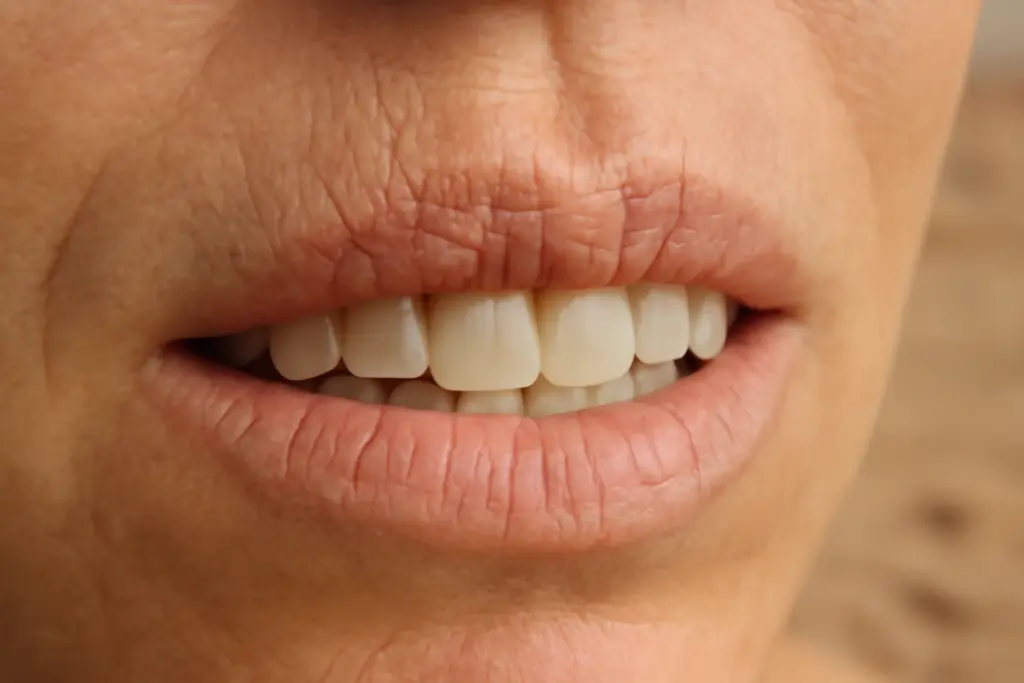
Dehydration is not just a problem that can affect the whole function of the body, but it can also have a negative impact on the oral health sector. A lack of hydration is often not recognized by many people as it is the main cause of dry mouth, gum issues, and even cavities. Besides keeping the body at its peak of performance, water is also the main player in bringing teeth and the gums to their optimum health. Why the mouth-health argument is heavily influenced by water intake is the topic we are about to discuss.
At Lema Dental Clinic in Istanbul, Turkey, our motto is “a healthy smile is the root of it all; the main habits determine the final outcome!” Hydration through water is the simplest and one of the most efficient ways to take care of your teeth and gums. The hydration routine is not the only way to bring you closer to the desired perfect Hollywood smile, but it is definitely one of the main factors in the whole process. We are a team of medical staff, ready and available, with modern solutions such as dental veneers, implants, and more, to place you instantly in the realm of the Hollywood Smile.
What Happens to Your Mouth When You’re Dehydrated?
The series of events explaining the depletion of bodily functions is not complete without mentioning the mouth. The production of saliva slows, and dry mouth results. The dryness may lead to difficulties in swallowing, conversing, and even tasting food. In the absence of saliva, the mouth becomes an ideal habitat for bacteria that cause bad breath, tooth decay, and gum infections. The importance of drinking enough water is; your whole body and your oral health get the lion’s share.
Dehydration also turns your mouth into a more acidic place, which may contribute to enamel erosion. Enamel is the protective layer of your teeth, and without it, your teeth will be impacted by acid attacks that come from foods and drinks. Keeping hydrated aids in the production of saliva, which is the neutralizer of acids and the protector of your teeth against attack.
The Importance of Saliva in Protecting Your Smile
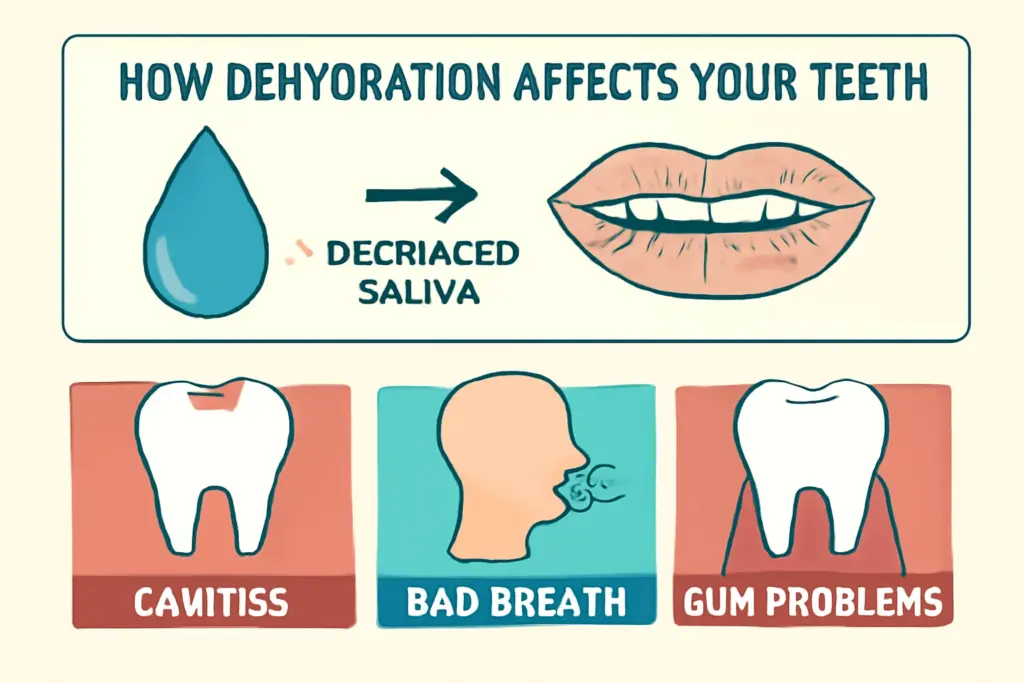
Saliva is the mouth’s trump card, the last line of defense, and cannot be forgotten in the oral health equation. Saliva works as a buffer to acids that are formed due to bacteria in the mouth, thereby avoiding dental caries and enamel attrition. It also helps to pull off the food particles from the teeth surface and maintain the balance of bacteria in the mouth.
On the other hand, dehydration results in less saliva production, thereby causing a dry mouth, which becomes a place for plaque and bacteria to multiply. The gradual development of this community will result in the formation of cavities and various kinds of gum disease. It is the right water that will provide the mouth with the required amount of saliva, thereby keeping the teeth and gums healthy, ultimately saving on the dental bills in the future.
Signs That Dehydration Might Be Affecting Your Teeth
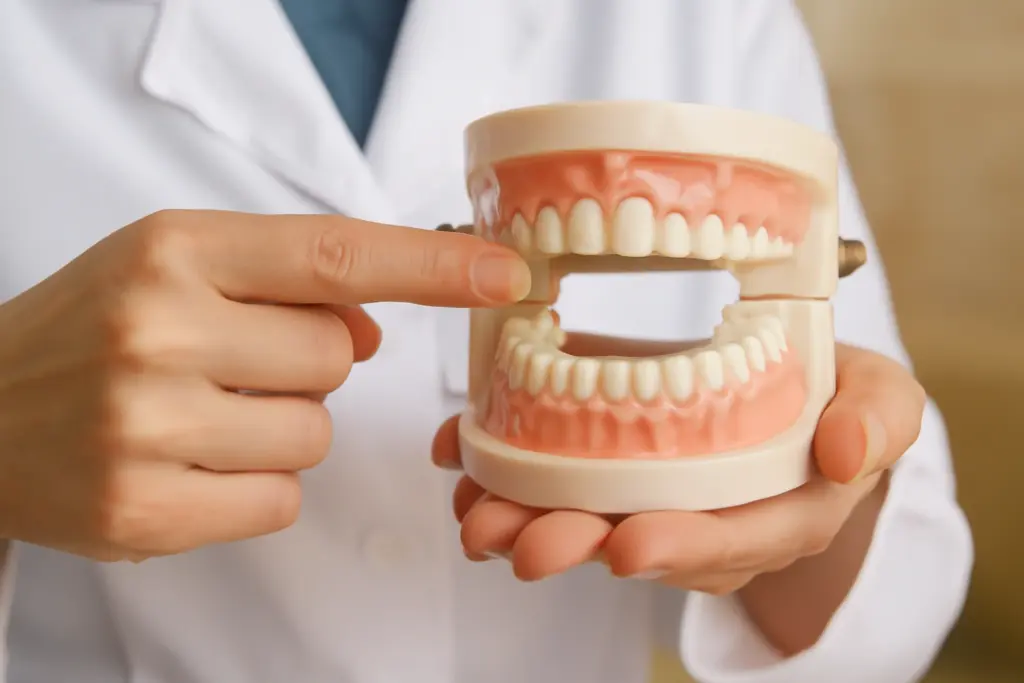
Dehydration is not that straightforward in revealing itself and thus can be easily overlooked. The dry mouth feeling (xerostomia) is the most typical indication that the oral health in your mouth is affected by dehydration. If your mouth feels sticky or unpleasant, it may be a sign that you are not consuming enough water.
In addition to this, bad breath, difficulties in swallowing, and a dry tongue are symptoms of dehydration, too. In the case of your teeth becoming sensitive and the presence of more significant plaque build-up, low hydration levels could also be the cause. Take these signs seriously and do not forget to drink water during the day so that your teeth will be at their best.
Best Ways to Stay Hydrated for Better Oral Health

The simplest method of keeping your mouth in a healthy state of health is by drinking water all throughout the day on a regular basis. If you are sporty or the temperature is high where you live, then try to drink at least eight 8-ounce glasses of water daily. Water in the form of fruits and vegetables with high water content can also be a helpful source to prevent dehydration.
To avoid dental caries and the occurrence of plaque in the mouth, you should completely avoid sugary drinks like soda, which is the main cause. Besides, water, herbal teas, or milk could be a good alternative. Drinking water after meals shall make it easier for some remaining food particles to be washed off, thus reducing the possibility of the occurrence of caries and providing fresh breath.
Why Water Beats Other Drinks for Your Teeth
The reason why water is number one in the list of drinks for oral health is that it is free from sugar, acids, and calories. One of the leading causes of the formation of tooth decay is the bacterial process of which is stimulated by sugary drinks, that is, soda and fruit juice. Also, they contribute to the wear of the enamel, which weakens your teeth over time.
In contrast, water helps to balance the acid in the mouth and encourages saliva of the good kind. Water is the cleanest and healthiest way to keep your teeth strong and white, and it is a lot more efficient than other drinks, such as sugary sodas and coffee, that can stain your teeth and cause decay.
FAQ
Yes, dehydration can lead to dry mouth, increasing the risk of tooth decay, gum disease, and bad breath.
The main symptoms include a sticky or dry feeling in the mouth, difficulty swallowing, and a sore or dry tongue.
It’s recommended to drink at least eight 8-ounce glasses of water a day to stay hydrated and promote oral health.
Yes, dehydration reduces saliva flow, which leads to a higher risk of plaque buildup and cavities.
No, while dehydration is a common cause of dry mouth, other factors like medication, mouth breathing, or medical conditions can also contribute to it.

