


Safe only with professional application.
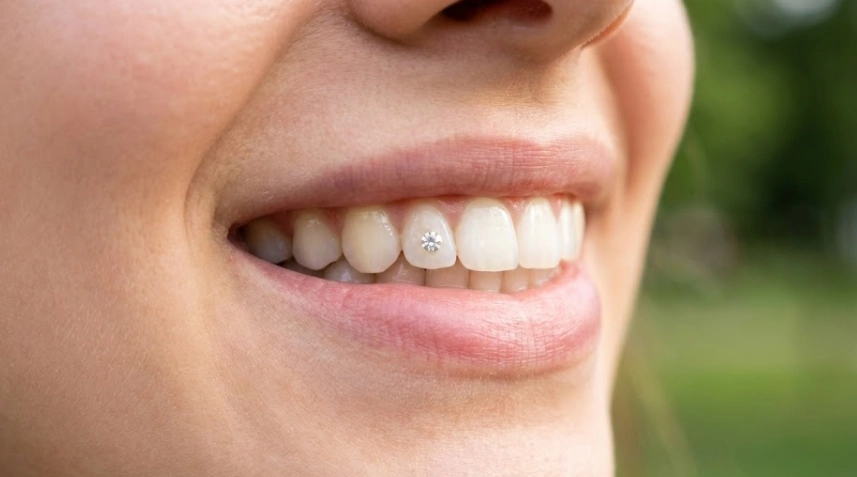
In our clinical work at Lema Dental Clinic, we have witnessed how different trends in dentistry come and go, but the craving for a one-of-a-kind, dazzling smile stays unchanged. Recently, “tooth gem” has resurfaced quite strongly. These tiny crystals or gold charms that are glued to the front of a tooth provide a fun way to show one’s character. Nevertheless, behind that glittering surface is a serious issue concerning biological safety. The fact is that your enamel is a limited resource, and thus, any beautification procedure should be done with the utmost respect for the preservation of this protective layer.
Your Smile’s Biology: Your Enamel as a Protective Layer
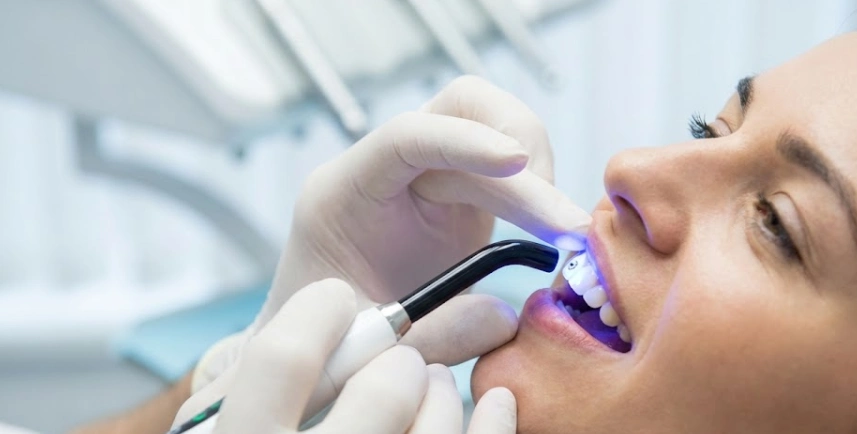
Try to imagine your tooth enamel as being similar to the protective glass screen of a smartphone. It is extremely tough and made to safeguard the fragile internal components – in this case, the nerves and dentin. By sticking a gem, you are, in essence, putting some sort of glue on that glass. Professor Doctor Coşkun Yıldız frequently mentions that enamel is the hardest material in the human body; however, it is very easily attacked chemically and physically. If a jewel is fixed with the wrong kind of materials, it’s just like putting industrial-strength glue on that phone screen; when you want to take it off, you end up damaging the glass itself, thereby leaving the vulnerable parts exposed to the environment.
Why Professional Application Makes the Difference
The question remains: can this be done without causing permanent harm? At our clinic in Turkey, we follow a strict medical protocol to ensure that the “sparkle” doesn’t lead to a “scar.” Dentist Polen Akkılıç and her team prioritize a non-invasive approach that treats the tooth with the same respect as a complex restorative procedure.
At the clinic, we have identified the essential requirements for a safe application as follows:
- Medical-Grade Etching: We carefully control our use of phosphoric acid at a very low concentration in order to create a microscopic texture for bonding, which is totally reversible.
- Dental Composite Resins: Our primary concern is your health and safety. Therefore, we solely use bio-compatible materials which are locally safe and have no side effects.
- Zero-Drill Policy: The professional application does not involve any “drilling” or “carving” of the tooth.
- Professional Removal: In case you decide to remove the look, the dentist can easily remove the resin by buffing and restore the enamel to its original state by polishing.
- Sterile Environment: Carrying out this procedure in a clinical setting completely removes the risk of infection or bacteria being trapped under the gem.
The Hidden Danger of DIY and Salon Kits
But let’s look closer at where the real damage happens. The majority of enamel erosion we treat doesn’t come from dental offices, but from at-home kits sold online. These kits often contain acids that are far too strong, literally “burning” a hole into the enamel surface. Even worse, the glues provided are frequently not intended for human tissue. This can lead to chemical burns on the gums or a bond so aggressive that it causes a “fracture” when the gem inevitably gets caught on food or a toothbrush.
Comparing the Safety Paths
To help you decide, we’ve outlined the clinical differences between the two main ways people acquire tooth jewelry:
| Safety Factor | Professional (Lema Dental Clinic) | DIY Kits / Beauty Salons |
| Bonding Material | Dental-grade composite resin | Industrial or nail glue |
| Enamel Preparation | Controlled microscopic etching | Aggressive or unknown acids |
| Procedure Risk | Negligible; fully reversible | High risk of permanent scarring |
| Hygiene Education | Provided by dental experts | None provided |
| Removal Process | Safe polishing by a dentist | Often forced off, causing chips |
Maintaining the Sparkle Safely
Even a perfectly placed gem requires a change in your daily routine. Because the gem creates a tiny “shelf” on your tooth, it becomes a natural gathering spot for plaque. If you don’t clean around the edges meticulously, bacteria will begin to eat away at the enamel surrounding the stone. This results in a “white spot lesion“—a permanent chalky scar that only becomes visible after the gem is removed. We always advise our patients that a tooth gem isn’t just a “set it and forget it” accessory; it is a commitment to even better oral hygiene.
FAQ: Direct Answers from Our Specialists
Not at all. Since we do not drill or remove any tooth structure, there is no need for anesthesia. It’s a completely painless, “sit-back-and-relax” procedure that takes about 20 minutes.
Yes, but we suggest a bit of caution. Avoid biting directly into very hard foods (like green apples or crusty bread) with the tooth that has the gem, as the lateral pressure could pop it off.
Don’t panic. The crystals we use at Lema Dental Clinic are small and lead-free. They are non-toxic and will simply pass through your system naturally without any harm.
You must come back to see us or visit a local dentist. We use a specialized polishing tool to gently vibrate the resin loose. Never, ever try to “flick” it off with your fingernail or a tool at home.
Depending on your bite and how well you follow our aftercare instructions, a gem can last anywhere from six months to several years.
- Heshmat, H., et al. (2019). Tooth jewellery: A simple way to add sparkle to your smile. Journal of Advanced Medical and Dental Sciences Research.
- Kumar, P. (2020). Dental jewelry: A comprehensive clinical review. International Journal of Community Health and Medical Research.
- Margeas, R. C. (2010). Aesthetic approaches to tooth jewelry and porcelain veneers. Journal of Esthetic and Restorative Dentistry.
- Peter, T., & Titus, S. (2013). Tooth jewellery: A fashion trend or a health risk? Journal of Dental and Medical Sciences.
- Walsh, L. J. (2008). Safety issues in dental bleaching and tooth jewelry applications. Australian Dental Journal.

