


A root canal–treated tooth can last a lifetime if it is properly restored and well maintained.
We see every day in Turkey through their eyes, that the relief of patients after treatment is the most visible thing. The pain which was unbearable has gone, the infection has cleared and the tooth has been saved.
Note: It’s a fair question. You’ve put time and faith into the process. At Lema Dental Clinic, from our clinical experience, the answer is not a straightforward yes or no—it’s a complicated “depends”. We always try to give them the million-dollar answer, but sometimes living beings have their own ways.
We get rid of the medical terms and think about what really happens in your mouth.
The “Hollow Tree” Analogy
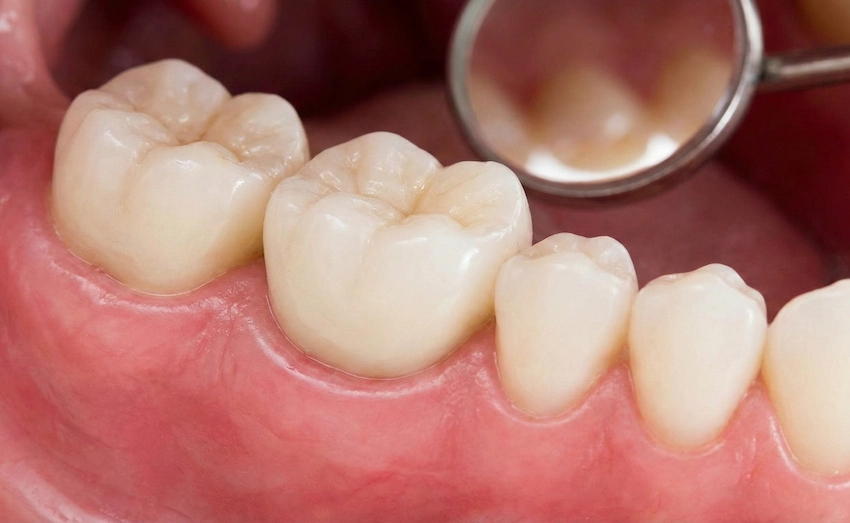
Do you think a tooth can still live for a good time and have root canal therapy? If you agree then most probably, you are imagining a big oak tree in your yard. When the inside of a tree gets sick, we cut out the diseased part. The tree is still there; its bark is still there, and it still looks like a tree. But it no longer has the sap flowing inside it. It’s hard, dry and somewhat more vulnerable than the trees that still have their life around them.
Think For One Second, A Tooth After A Root Canal Treatment Is Exactly Like That Tree. We have removed the “sap” (the pulp, nerves and blood vessels). The “structure” still exists, but the tooth has lost its nutrient supply.
Dentist Polen Akkılıç and her team keep on presenting this argument to our patients: No news is better than cleaning the roots; it’s how we make that fragile compartment strong afterward that matters. As long as the foundation is stable, that “hollow wooden figure” can resist being mauling and grinding quite well over many years, even decades.
Reality Of Success Rates
Scientific experiments have provided numerous examples that indicate that around 85% to 95% of patients who received root canal treatment were successful for at least 10 years. However, people are still living a lifetime after them. However, have you realized that difference? The 5% to 15% of teeth that have failed are usually the three big reasons people blame:
- The Seal Has Been Broken: In cases where the last restoration (filling or crown) fails to provide the perfect airtight seal, bacteria from your saliva can penetrate the roots. This is just like a situation when a house roof leaks; water slowly, over time, rots the wooden beams.
- It Could Be That There Are Some Unseen Canals: Teeth are not straight pipes; instead, they are intricate river deltas. If one exceptionally tiny branch canal is missed during the initial cleaning, the infection can remain hidden there and cause a flare-up after a number of years.
- Vertical Root Fracture: Since the tooth is brittle, it might develop a very fine crack running down the root. This is usually the last, ‘game over’ scenario after which the tooth must be extracted.
Crown Is Your Insurance Policy
A lot of people believe that the root canal treatment is where the treatment ends. It isn’t. In fact, it is barely even the halftime of the match. The crown is that which… Seals the deal.
At Lema Dental Clinic, we do not leave a molar (back tooth) treatment without a crown ever. Molars undergo the greatest bite forces—a pressure of up to 70kg. An uncrowned molar that has undergone a root canal treatment is more likely to fracture than a crowned one. Essentially, the “helmet” or “armour” for a weakened tooth is the crown.
Comparison: Root Canal Vs. Implant
These days, some patients wonder if it wouldn’t be better just to have the tooth pulled and then immediately get an implant. This is what the decision-making process looks like from our perspective:
| Feature | Root Canal Treatment (RCT) | Dental Implant |
| Primary Goal | Save the natural biological structure | Completely replace the missing tooth |
| Lifespan | 10+ years to lifetime (≈90% survival at 10 years) | 20+ years to lifetime (≈95% survival) |
| Procedure Time | 1–2 visits, completed in days | 3–6 months, requires osseointegration |
| Biological Feel | Maintains the natural periodontal ligament (shock absorber) | Rigid feeling, fused directly to bone |
| Main Risk | Breakage or re-infection | Peri-implantitis (inflammation and gum disease around the implant) |
| Cost | Usually less expensive, including the crown | Usually more expensive |
When Good Teeth Go Bad: The Surgical Solution
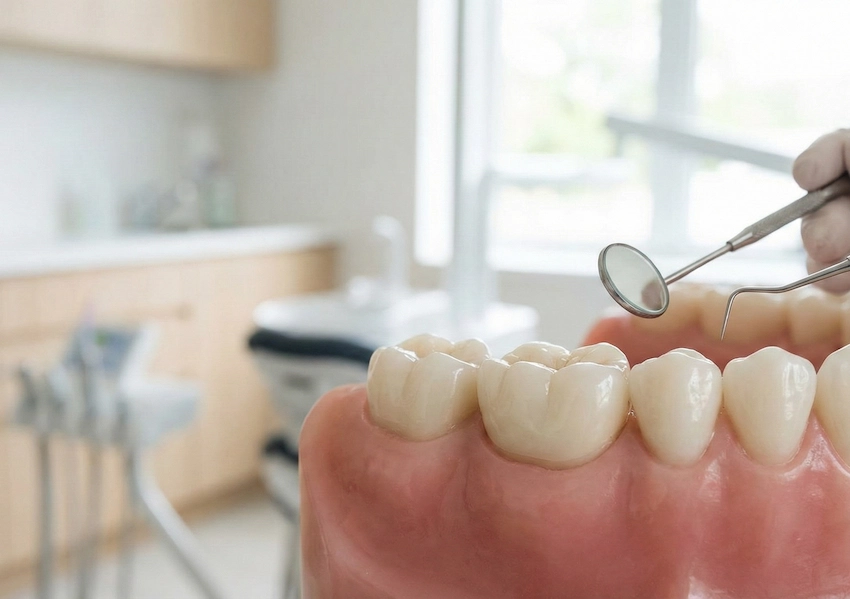
If after five or ten years the root canal is a failure, it does not have to mean the end of the story or the loosening of your tooth. And so the tremendous knowledge of Professor Dr. Coşkun Yıldız becomes highly valuable.
Apicoectomy is a simple surgical operation that, under local anesthesia, can be done even at home with the patient. Apart from that, a root canal does not need to be done through the crown of the tooth. After making a very small incision in the epithelial lining of the gum, exposing the apex tip, with the help of instruments, the infected tissue is removed, and then the apex tip is sealed from the inside. It’s the same tooth, but a little different, fresh, and the old treatment won’t be repeated .
If the tooth is fractured vertically, then we have to be very frank with you: the only safe way to keep your jawbone healthy is by tooth extraction. In cases like these, our clinic in Turkey is always at hand to get an implant restoration ready so that the gap in your smile will only be temporary.
Frequently Asked Questions
Dr. Response: With modern techniques, this is rare. Darkening usually comes from leftover residue inside the tooth. If it happens, we can easily fix it with “internal bleaching” or a high-aesthetic zirconia crown that matches your smile perfectly.
Dr. Response: Yes, a tooth that has undergone root canal treatment can also get a cavity and it might turn out to be a rather risky thing because you won’t be able to feel the cavity! Removing the nerve means that there won’t be any pain signal. You can get a cavity underneath the crown which will keep on expanding without you noticing it until either the crown falls off or the tooth breaks
Dr. Response: It’s not supposed to be like that. Pain that comes from a tooth which had root canal treatment previously is mostly caused by bacteria getting in again or a tooth breaking. It might be a phantom pain but more often than not the bacteria have found a way in. Don’t delay your visit. Antibiotics don’t solve mechanical problems and infections that can be treated may get worse over time.
Dr. Response: Absolutely nothing can replace your own natural tooth. Your own natural tooth is connected to the bone via a ligament which acts as a shock absorber and also gives you a tactile sensation when biting. Even though an implant is a fantastic restoration, it is as rigid as it is fused to the bone. We make an effort to keep a tooth that much. Whenever we refer our patients to implants, it is because the tooth is beyond saving due to its condition.
Dr. Answer: There is a period of vulnerability until your permanent crown is fixed. This means that you should try very hard not to eat hard, crunchy, or chewy sticky types of foods (e.g., nuts, ice, or taffy) on the side of the mouth that has just been treated. Only after the member of Dentist Polen Akkılıç’s team has bonded your crown will you be able to return to your normal diet—steak, apples, and all.
- Ng, Y. L., Mann, V., & Gulabivala, K. (2010). Tooth survival following non-surgical root canal treatment: a systematic review of the literature. International Endodontic Journal, 43(3), 171-189.
- Salehrabi, R., & Rotstein, I. (2004). Endodontic treatment outcomes in a large patient population in the USA: an epidemiological study. Journal of Endodontics, 30(12), 846-850.
- Aquilino, S. A., & Caplan, D. J. (2002). Relationship between crown placement and the survival of endodontically treated teeth. The Journal of Prosthetic Dentistry, 87(3), 256-263.
- Torabinejad, M., Anderson, P., Bader, J., et al. (2007). Outcomes of root canal treatment and restoration, implant-supported single crowns, fixed partial dentures, and extraction without replacement: a systematic review. The Journal of Prosthetic Dentistry, 98(4), 285-311.
- Friedman, S., & Mor, C. (2004). The success of endodontic therapy—healing and functionality. Journal of the California Dental Association, 32(6), 493-503.

