


Loose crown, screw, or bone infection.
That unexpected, gut-wrenching, shaky sensation. You might be having dinner or maybe just checking out your face in the mirror, and there it is – that feeling, a slight movement where there should be absolute, rock-solid stability. If you are having this sensation, the first thing I would like to say to you is: don’t panic. Even though a loose dental implant is definitely a clinical priority, the implant failing is not always the case. Our team in Lema Dental Clinic, Turkey, shares our clinical experience through the patients referring to us that most so-called “loose” implants are actually a simple mechanical problem and can be solved quickly. However, the right moment is the main…
The Bolt and the Wall: A Helpful Metaphor
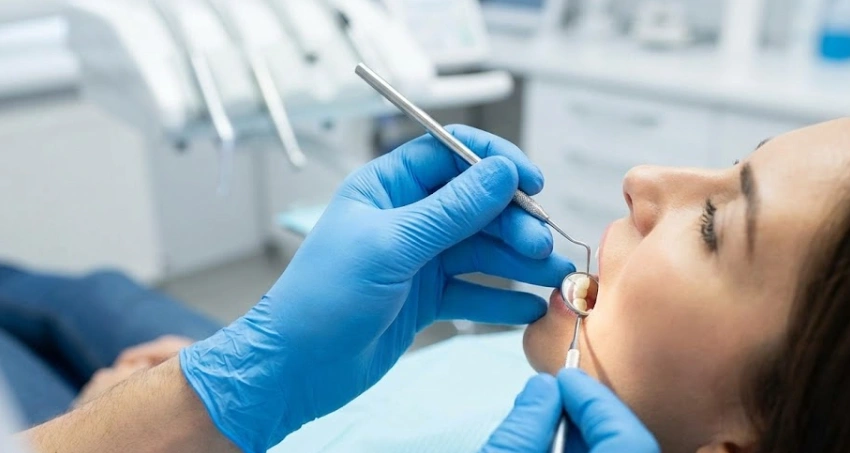
You can equate your dental implant to a high-quality titanium bolt which is used for hanging a heavy shelf on a wall, in order to understand the situation. If the shelf begins to wobble, two things can be the case. The screw that holds the shelf to the bolt may have come loose, or the wall may be disintegrating around the bolt.
In dentistry, the “wall” is the jawbone, and the “shelf” is your prosthetic crown. Professor Doctor Coşkun Yıldız writes that figuring out if the problem lies with a loose component or a loose fixture is the key to saving your smile.
Is it the Crown or the Implant?
Most patients are not able to distinguish a loose crown from a failing implant. This is what we observe most often in the clinic:
1. The Loose Crown or Abutment
This is the “best-case scenario”. An implant is a system made of several parts. There is a screw in the bone (the implant), the connector (the abutment), and the tooth you see (the crown). Due to the enormous force of chewing, the microscopic screw linking these parts can come loose over time just by vibrating.
- The Fix: Dr Polen Akkılıç and her team at the clinic just retighten the screw or re-cement the crown. It is painless and takes a few minutes.
2. Peri-implantitis (The Infection)
However, let’s examine the serious culprit in more detail. Peri-implantitis is an inflammatory disease that attacks the bone as well as the tissue around the implant. It is in fact the implant–version of gum disease. Once bacteria have made their way below the gum line, they start to “chew up” the very foundation.
- Signs of the Warning: When brushing you notice redness, bleeding, or you also experience a bad taste in your mouth.
3. Failed Osseointegration
Generally, it is related to the situation at the very beginning. It could be a complicated term but it means that the bone didn’t “marry” the titanium surface of the implant. This is something that can occur as the result of corresponding health problems, smoking, or implant overload.
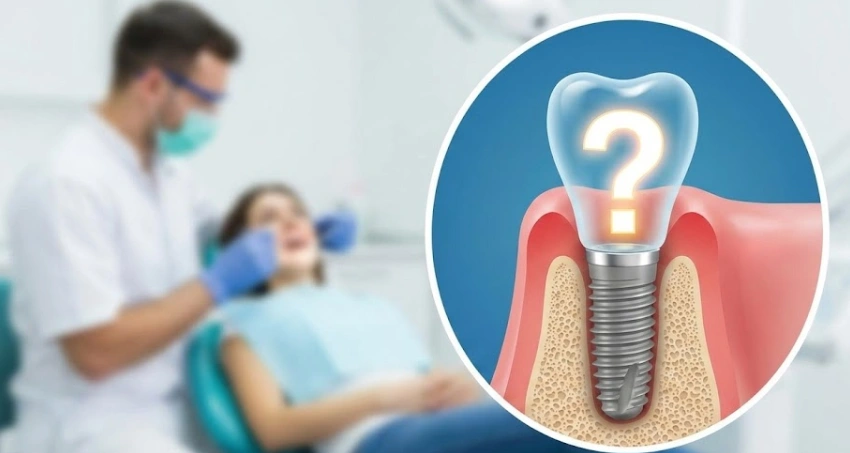
Troubleshooting Your Symptoms
| Symptom | Likely Cause | Severity | Immediate Action |
| Wobble but no pain | Loose Crown/Abutment | Low | Call your clinic for a tightening. |
| Movement + Bleeding | Peri-implantitis | High | Requires deep cleaning or antibiotics. |
| Visible bone loss on X-ray | Advanced Infection | Critical | May require bone grafting. |
| Pain when biting | Overloading/Loose screw | Medium | Avoid chewing on that side immediately. |
What You Must Do Right Now
The question remains: what should you do if you’re currently in Turkey or have just returned home from Lema Dental Clinic?
- Stop Wiggling It: It is tempting to “test” the looseness with your tongue or finger. Don’t. Every wiggle can cause micro-trauma to the surrounding bone.
- Soft Diet Only: Switch to shakes, soups, and soft foods. If the crown is loose, chewing can cause it to act like a lever, potentially damaging the internal threads of the implant.
- Keep it Clean: Use an antimicrobial mouthwash (without alcohol) to keep bacteria at bay, but do not brush the area aggressively.
Why Expertise in Turkey Matters
When patients visit us at Lema Dental Clinic, we don’t just look at the tooth; we look at the biology. Professor Doctor Coşkun Yıldız utilizes 3D imaging to see exactly where the stability has been lost. Our goal is always “Implant Rescue”—using laser therapy or specialized cleaning protocols to save the fixture whenever possible.
Direct from the Doctor: FAQ
The reality is no. Unlike a natural tooth that might tighten up after a minor injury, an implant relies on mechanical integration. If the bone connection is lost, it requires clinical intervention to stabilize.
Not at all. If it’s just the crown or the abutment screw, we simply tighten it. Even with early-stage infection, we can often save the implant with targeted treatments.
If it’s a mechanical tightening, you won’t even need anesthesia. If we are treating an infection, we ensure the area is fully numbed. Most ‘fixes’ are significantly less uncomfortable than the original surgery.
Yes. Smoking constricts blood flow to the gums, which slows down bone healing. In our clinic, we’ve seen that smokers have a significantly higher risk of the bone failing to grip the implant properly.
We use digital X-rays or CBCT scans. If we see a ‘dark halo’ around the screw in the image, it tells us that bone has been replaced by soft tissue or infection.
- Albrektsson, T., & Zarb, G. A. (1993). Current interpretations of the osseointegrated response: Clinical significance. International Journal of Prosthodontics.
- Esposito, M., et al. (1998). Biological factors contributing to failures of osseointegrated oral implants. European Journal of Oral Sciences.
- Jepsen, S., et al. (2015). Primary prevention of peri‐implantitis: Managing peri‐implant mucositis. Journal of Clinical Periodontology.
- Lang, N. P., & Berglundh, T. (2011). Peri-implant diseases: Workshop on Periodontology. Journal of Clinical Periodontology.
- Mombelli, A., & Lang, N. P. (1998). The diagnosis and treatment of peri-implantitis. Periodontology 2000.

