


Swollen sinuses from your cold press directly against your upper tooth roots.
Being ill is challenging. Your head feels like lead. Your nose is running. Then, your teeth start to ache. This double pain situation can really get on one’s nerves. We experience it frequently at Lema Dental Clinic in Turkey. It’s an occurrence that is not unusual during the flu season.
Many times, patients come to our clinic distressed. They think they are going to need extensive dental procedures. Nevertheless, the issue is not their teeth. It’s the sinuses that are causing the trouble.
The Sinus and Tooth Connection
Professor Doctor Coşkun Yıldız explains it like this. The cranial cavity is extremely small. Therefore, one needs to imagine this setup in order to understand the pain.
To explain, compare the upper jaw to the foundation of a house. The sinuses correspond to the basilar membrane right above it. An incredibly thin bone lies between the floor of the sinus and the roots of the upper teeth. It is as thin as an eggshell. When a virus causing a cold enters, the sinus lining gets swollen with mucus. This swelling pushes that bone that is so thin downwards. It then presses the tooth nerves. It is this pressure that your brain interprets as a toothache.
Sinus Pain vs. Real Tooth Decay
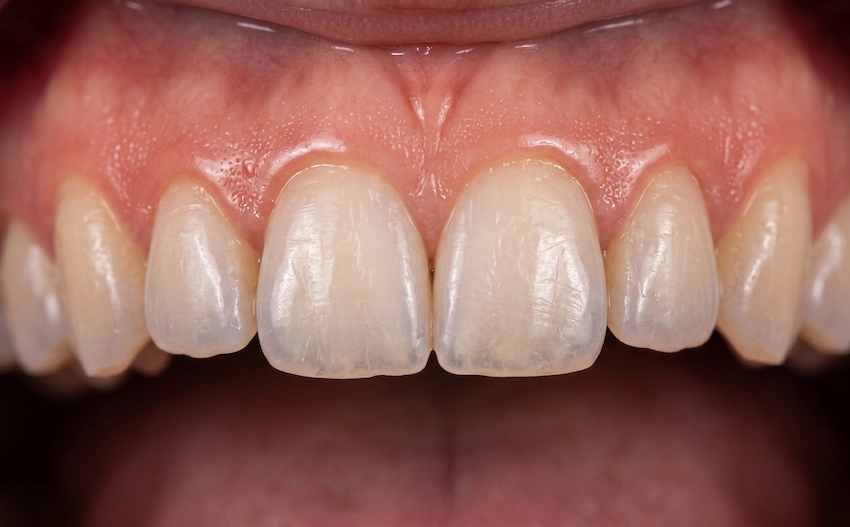
On the other hand, let us consider that more deeply. Do you want only cold medicine? Or, is it a dental emergency that requires making an appointment with the dentist?
Dentist Polen Akkılıç and her team have been helping patients with such issues for a long time. Tooth infection in the dental matter is associated with pain in one particular tooth only. The pain is persistent. A visit to the dentist is a must. A sinus toothache is quite a different situation. It is a sort of low-level, broad pain. You actually feel it in the top back teeth area.
Here is what we see in the clinic:
| Sign | Sinus Toothache | Real Dental Problem |
| Where it Hurts | The majority of the upper back teeth. | A single, specific tooth only. |
| Type of Pain | A dull, constant pressure. | A sharp, throbbing pain. |
| Movement | Bending over worsens it. | Movement does not affect pain. |
| Hot or Cold | Eating does not affect the pain. | Extreme pain from hot or cold food. |
| Other Signs | Congested nose, headache. | Swollen gums, fractured tooth. |
How to Find Relief
What really happens is that if you get rid of the cold, you will also be getting rid of the tooth pain. Stay hydrated. Take steam inhalations. Use a warm towel on your cheeks. Kind nasal sprays are also a good option. All this will help in decreasing the swelling of the mucous membrane. It means less pressure on your teeth.
If your cold symptoms disappear but the pain remains, then you should have your teeth examined. Your whole body’s health depends on your smile. We are capable of helping, whether it is a simple inspection or a complete makeover. The first step is always the maintenance of oral health.
Frequently Asked Questions
The reason for this is that the roots of your upper teeth lie just under the sinus areas. When the sinuses become inflamed, they will press on the roots and cause pain.
Sinus pressure alone will not make your teeth fracture or wear down your enamel. Once your nose is clear, the pain will be gone as well.
In fact, since viruses cause most colds, antibiotics are generally ineffective in relieving symptoms. You really only need antibiotics when there is a serious bacterial infection, and that is only something a doctor can determine.
You might also use a warm, wet towel as a kind of facial mask to soothe the tremendous pressure and discomfort. Medication containing painkillers that you can get without a prescription is one way to relieve the swelling.
If your pain persists even after you’ve gotten over a cold, then a visit might be the right thing to do. If just one of your teeth causes you pain, do not delay in asking for help.
- Aring, A. M., & Chan, M. M. (2016). Acute Rhinosinusitis in Adults. American Family Physician, 94(2), 97-105.
- Deeb, W. A., & Surer, R. (2018). Odontogenic Sinusitis: A Review of the Current Literature. Journal of Oral and Maxillofacial Surgery, 76(11), 2341-2346.
- Lanza, D. C., & Kennedy, D. W. (1997). Adult rhinosinusitis is defined. Otolaryngology–Head and Neck Surgery, 117(3), S1-S7.
- Patel, N. A., & Ferguson, B. J. (2012). Odontogenic sinusitis: an ancient but under-appreciated cause of maxillary sinusitis. Current Opinion in Otolaryngology & Head and Neck Surgery, 20(1), 24-28.
- Renton, T., & Yilmaz, Z. (2011). Profiling of patients presenting with posttraumatic neuropathy of the trigeminal nerve. Journal of Orofacial Pain, 25(4), 333-344.

