


Yes, denture adhesives can improve chewing and eating by adding extra hold and stability.
Actually, losing your natural teeth totally changes your relationship with food. Patients often come to us, and we can see in their faces that they are really tired from the daily struggle. The anxiety of a simple family dinner calculation causes you to bite your apple cautiously while thinking about the possibility of making a fool of yourself. You start thinking if a more generous layer of paste will help you get through this.
If you are one of those people who have relied on their old removable dentures, then you may have given dental glues a try in the hope of seeing a miracle. You spread the paste, press the acrylic against the gums, and hope the bond lasts.
But let’s analyze your oral structure a bit more closely. Are those adhesive pastes really giving you back your chewing abilities, or are they just hiding the fact that your oral structure is failing you?
How Dentures Deceive You Regarding Bite Force
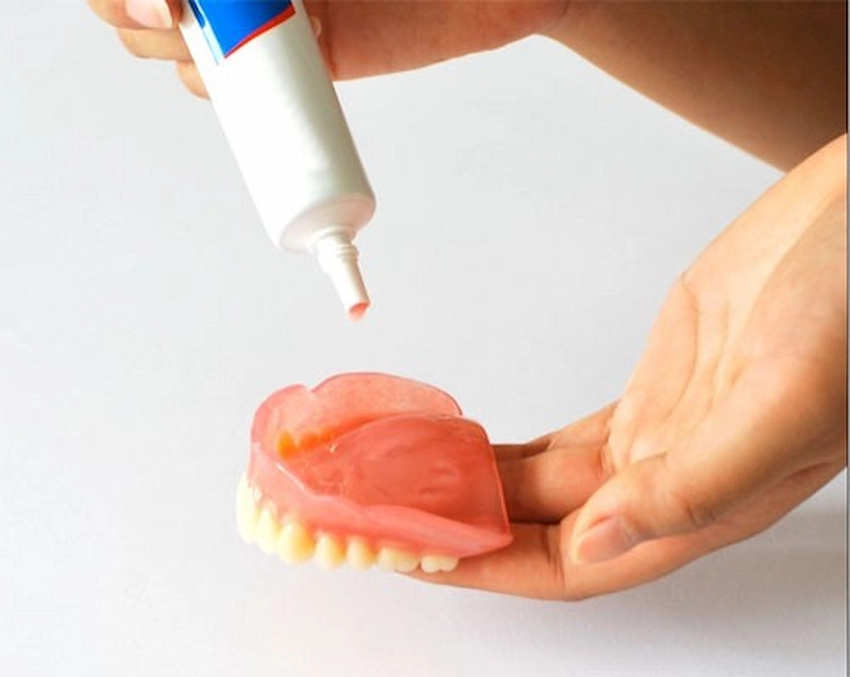
In order to figure out why the traditional dentures are so weak when it comes to biting tougher foods, we will first have to talk about bite force. Teeth naturally grow deeply into the jawbone. So, when you take that crunchy carrot, the biting pressure is safely directed down the root, which then stimulates and keeps the bone healthy.
Extraordinarily, regular dentures, which lie on your gums, are like a cutting board on a soft mattress when it comes to chewing,g since both of them are unstable. So, the analogy is accurate.
In fact, denture adhesives only provide a very weak binding for a short period of time. They only make a very weak suction between the gum tissue and the hard acrylic plate. They don’t actually enhance your bite strength at all. Instead, they merely make the plastic less prone to the very violent rocking motions. So, while that might work for soft foods, you can instantly forget about mechanically heating the steak, for example.
That is the typical situation in our practice. Dentist Polen Akkılıç and her team see patient after patient who has suffered dental issues silently for years. Often these patients resort to using dental adhesives several times over simply to get through a meal. Using the dentures contributes to pain and the progressive loss of the jawbone due to constant irritation.
The Risks of Daily Use of Adhesives
The discussion still stands: if they do produce barely noticeable improvements in chewing, why are the denture adhesives being used so widely? Besides the fact that dissatisfaction and desperation are powerful forces that end up pushing people to the use of these pastes, there are several risks, which are hidden and severe, that come with this habit.
Most denture adhesives contain zinc in order to be able to stick well. When you apply zinc on a very small scale, it is safe. However, because the chewing gum cannot be effectively achieved, the patients end up using way too high an amount of the paste. The glue is subsequently swallowed, which over time can result in zinc poisoning. This condition is very dangerous, and it can cause nerve damage, numbness of limbs without explanation, and copper deficiency in its severe form.
Adding insult to injury, there is also a loss of the pleasure of sensory enjoyment of food. Food gets trapped under the plastic, and the unpleasant mixing between food and glue happens. The upper denture completely blocks the taste buds,s and even the heat of the food is masked, effectively turning eating into a survival chore instead of a reason for living.
Creating the Support Structure: The Only Real Solution
At Lema Dental Clinic, we see it as a matter of human rights that no one should have to glue their teeth into their head first thing every morning.
Professor Doctor Coşkun Yıldız frequently makes the analogy that treating tooth loss with adhesives is akin to repairing a crumbling building using double-sided tape. The only medically sound solution to regain genuine chewing ability is to restore the root system.
This is the point where implant dentistry steps in to have a profound effect on one’s life. The All-on-4 or All-on-6 systems, for instance, do not use your gums at all. Through placing titanium implants into the jawbone in specific locations, permanent, non-removable pillars are created. These pillars are used for the direct attachment of a highly durable, custom-made Zirconium bridge.
Even if you have been experiencing a severe loss of bone resulting from years of glued dentures, you should not despair. The Zygomatic implant method, for example, involves the anchoring of the implant in the very dense cheekbone, and this approach eliminates the need for an extensive bone à grafting. This will allow you to return to a normal life with a permanent smile that you never need to take out.
Comparing Your Chewing Options
| Feature | Traditional Dentures + Glue | Implant-Supported Prosthetics (All-on-4/6) |
| Bite Force Restored | 15-20% | 85-95% |
| Dietary Limits | Extensive (Soft foods only) | None (Can eat anything) |
| Palate Coverage | Full (Blocks taste and heat) | Minimal (Upper palate left entirely open) |
| Bone Health | Accelerates bone loss | Stimulates and preserves the jawbone |
| Daily Routine | Complicated application, removal at night | Brushing and flossing as if natural teeth |
| Long-Term Risks | Gum irritation, possible zinc toxicity | High success rate, lifetime structural support |
The Journey to Istanbul, Turkey
You should not accept a lifetime of dietary restrictions. Lema Dental Clinic, Istanbul, Turkey, has combined state-of-the-art maxillofacial surgery together with digital smile design in order to bring you back to life. Patients come to us from all over the world. Besides the accessibility of the care, our high standards of clinical excellence, and the guarantee that you will never need a tube of denture glue again are other reasons why people choose us.
FAQ
Does a thicker layer of adhesive allow me to eat a steak?
Absolutely not. First of all, adhesive should be treated as a suction cup that is not very strong, not as cement which is structural. When you chew your steak, you will break the suction force, and your denture will start pinching your gums. Only implants will give you the sturdiness you need to tear the meat apart.
Swallowing denture glue daily: are there health risks?
This is one of the greatest issues in clinical dentistry. A lot of the adhesives contain zinc. Since the fit of traditional dentures keeps on deteriorating, big quantities of glue are used in order to compensate. Swallowing this paste every day can cause zinc poisoning, a condition that can damage your nervous system and cause the depletion of important nutrients in the blood.
Exactly how much bite force gets lost with traditional dentures?
This is a huge drop indeed. Adults with natural teeth use about 200 pounds of force when biting. On the other hand, dentures alone, even with glue, cannot provide more than about 30 to 40 pounds of force – which is the biological limit of laying hard plastic on soft and sensitive gums.
What are the actual differences between All-on-4 and simply gluing my current dentures?
Working with adhesives, you only get the support of your gums, which are soft and very vulnerable. However, the All-on-4 system is an implementation of four small titanium posts, which are attached very securely and deeply to your jawbone. New teeth screw tightly into those posts without any contact with your gums. The implants work just as natural teeth.
But what is the reason for me coming to Turkey for this TED?
Those patients deciding to visit our Lema Dental Clinic do this because they want the surgical skills of some of the highest experts, especially in cases of do with Zygomatic implants and All-on-6, which is very exclusive. Also, they can expect the ceramic and titanium of the highest European quality being used at all times. In addition, all of the surgical procedures are going on under the direct supervision of Professor Doctor Coşkun Yıldız, yet the fee is a fraction of what you would pay in your country.
Academic References
- Carlsson, G. E. (2014). Implant and root-supported overdentures – a literature review and some data on bone loss in edentulous jaws. Journal of Advanced Prosthodontics, 6(4), 245-252.
- De Rossi, S. S., & Greenberg, M. S. (1998). Taste sensation in patients wearing complete dentures. Journal of the American Dental Association, 129(3), 361-366.
- Fontijn-Tekamp, F. A., Slagter, A. P., Van Der Bilt, A., Van ‘T Hof, M. A., Witter, D. J., Kalk, W., & Jansen, J. A. (2000). Biting and chewing in overdentures, full dentures, and natural dentitions. Journal of Dental Research, 79(7), 1519-1524.
- Nations, S. P., Boyer, P. J., Love, L. A., Burritt, M. F., Butz, J. A., Wolfe, G. I., … & Trivedi, J. R. (2008). Denture cream: an unusual source of excess zinc, leading to hypocupremia and neurologic disease. Neurology, 71(9), 639-643.
- Pjetursson, B. E., Thoma, D., Jung, R., Zwahlen, M., & Zitzmann, N. U. (2012). A systematic review of the survival and complication rates of implant-supported fixed dental prostheses (FDPs) after a mean observation period of at least 5 years. Clinical Oral Implants Research, 23(s6), 22-38.

