


Eating with dentures without adhesive is possible when dentures fit well and you choose softer foods at first.
Truth be told, the majority of patients encounter the very same issue. After getting your new dentures, you’ll be going home, but quickly you’ll find that eating a simple meal is comparable to relearning how to walk. In fact, grabbing a tube of denture paste would be your very first reaction.
Nevertheless, if we focus more closely on that overriding habit, outpatient records at Lema Dental clinic in Turkey reveal that a quick reliance on adhesives or pastes is a superficial remedy to a much deeper problem. Or rather, you could be displeased with the unpleasant flavor of the product or the messy texture. Alternatively, you may be concerned about the health hazards. No matter what your reasons are, perseverance is the main ingredient to be able to eat without a glue. The trick is to come to grips with the physics of your own mouth.
Working of an Unsecured Bite
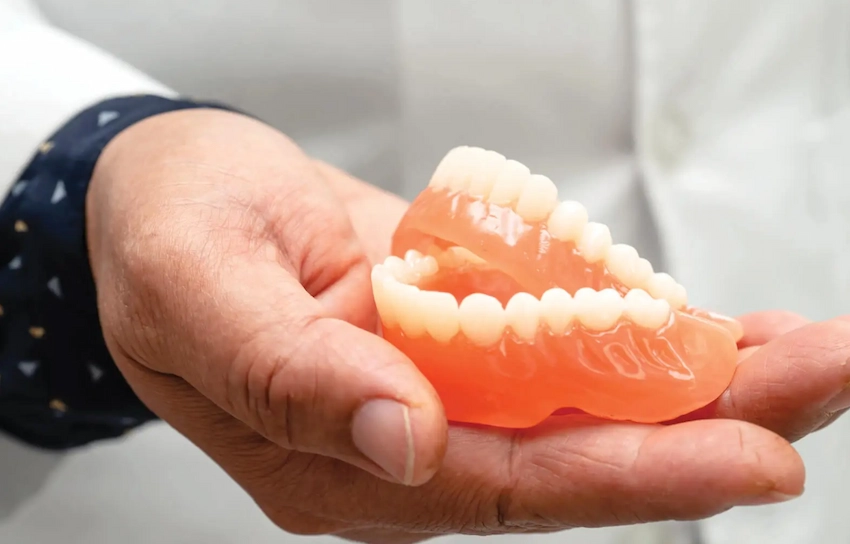
Imagine a conventional upper denture as a suction cup stuck to a smooth glass ceiling. If the pressure is just right, it stays firmly attached. A lower denture is an entirely different story. Imagine it as a canoe on a turbulent river. The denture only rests upon a narrow ridge of bone. Your tongue and cheeks frequently nudge it.
The physics involved in chewing change completely in the absence of any adhesive. For instance, if you bite an apple with your front teeth, it is a fact that the back part of the denture not only acts like a lever but also simply falls.
Professor Doctor Coşkun Yıldız often points out that the whole trick to eating without adhesive is weight distribution only. You have to exert control over your own bite force.
Technique 1: Bilateral Chew
You forget about chewing on just one side, at least for a while. To maintain a denture without glue in place, you have to divide your meal into two identical parts. Chew simultaneously on both sides of the mouth. This equal and opposite force provided by your jaws will press the acrylic base evenly against your gums.
Technique 2: Re-Teaching Your Bite Zone
Do not rip food apart with your front teeth. The front teeth of the denture are mainly for aesthetics and speech. Thus, for biting soft foods, instead push the food back to the corners of your mouth. Bring it close to your canine and premolar teeth. While biting, apply pressure in backward and upward directions.
Why Do Without The Paste? The Hidden Clinical Realities
This is what the clinic notices in patients who have been using glue for years. A little adhesive will definitely provide a relatively quick confidence boost. Yet, heavy and daily use will bring with it several hidden health risks – risks that many patients overlook.
The main concern is chemical exposure. To reinforce their hold, a considerable amount of store-bought adhesives contain zinc. Overusing it over the years may lead to zinc overexposure. This means blocking your body’s capability of absorbing copper, which could result in nerve damage and numbness.
On top of systemic risks, adhesives cause a jawbone that is gradually shrinking. Does your denture require more and more adhesive to stay in place? That is a very serious clinical indication. It reveals the fact that your jawbone is disappearing. If you disregard this atrophy, your bone structure will be destroyed. Consequently, future dental procedures will be much more difficult.
Your Permanent Solution: Changing the Material of Your Denture
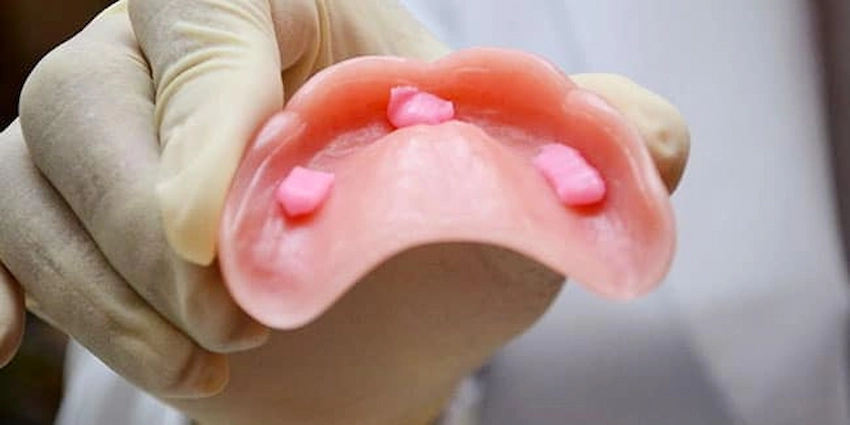
The puzzle remains: why do we limit our diet and resist modern dentistry that gives us a permanent foundation?
If glue-free eating is your daily fight, it is time to consider the structural aspects. Dentist Polen Akkılıç and her clinical team are on a mission to help patients say goodbye to removable acrylics. We have very advanced devices such as Zygomatic implants, All-on-4 and All-on-6 protocols at our disposal. Our major piece is the fixed Zirconium bridge, which we implant into your jaw.
This transforms your bite from a floating canoe into a completely grounded, strong building foundation. Fixed implants can restore up to 95% of your natural bite force. There will never again be a need for you to use adhesives, plastic palates, or exhausting chewing maneuvers.
Clinical Comparison of Restorative Options
| Feature | Traditional Denture (No Adhesive) | Traditional Denture (With Adhesive) | Fixed Implant Bridge (All-on-4/6) |
| Biting Force | Low (~10-20% of natural) | Moderate (~20-30% of natural) | High (Up to 95% of natural) |
| Dietary Limits | Soft foods only, bilateral chewing required | Medium textures, cautious biting | None (apples, steak, etc.) |
| Systemic Risks | Minimal | High (Zinc toxicity with overuse) | Minimal (Biocompatible titanium/zirconium) |
| Bone Preservation | None (Bone continues to resorb) | None (Masks rapid bone loss) | Excellent (Implants stimulate jawbone) |
| Palate Coverage | Full upper palate covered | Full upper palate covered | Roof of mouth remains completely open |
Patient FAQs: Straight From the Doctor’s Desk
Is it typical for my lower denture to be loose without glue?
Definitely. The lower jaw only has a limited surface area for suction. So your lower denture depends completely on gravity and your cheek muscles for retention. It usually takes weeks before your facial muscles are able to figure out the new role and support the denture.
What foods should I definitely stay away from if I am not using adhesive?
Just avoid any sticky food like caramel and gum. Likewise, you should avoid the consumption of hard food items such as raw carrots and nuts since these are certain to break the suction seal and dislodge your denture.
Will the fit be affected by drinking hot beverages?
Yes. High temperatures impact several properties. For example, they can temporarily soften certain acrylics. Most importantly, however, hot beverages cause your gum tissues to relax, which destroys the microscopic fit of a denture that relies on surface tension.
What are the signs of jawbone disappearance?
Does your denture that fit you perfectly just half a year ago start rocking from side to side? Your bone is changing its shape. Unfortunately, this kind of change is irreversible. No amount of relining will be able to stop bone resorption.
What is the duration of the switch to a fixed implant bridge?
Our surgical phase at Turkey-based, specialized facilities is very quick. Usually, patients get their dental implants and a temporary fixed bridge all in the same week. This way, you enjoy eating without fear while the implants are healing and adhering to the bone
Academic References
- Carlsson, G. E., & Omar, R. (2010). The future of complete dentures in oral rehabilitation. A critical review. Journal of Oral Rehabilitation, 37(2), 143-156.
- Felton, D., Cooper, L., Duqum, I., Minsley, G., Guckes, A., Haug, S., … & Sweitzer, B. (2011). Evidence-based guidelines for the care and maintenance of complete dentures: a publication of the American College of Prosthodontists. Journal of Prosthodontics, 20(s1), S1-S12.
- Nations, S. P., Boyer, P. J., Love, L. A., Burritt, M. F., Butz, J. A., Wolfe, G. I., … & Trivedi, J. R. (2008). Denture cream: an unusual source of excess zinc, leading to hypocupremia and neurologic disease. Neurology, 71(9), 639-643.
- Misch, C. E. (2014). Dental Implant Prosthetics. Elsevier Health Sciences.
- Papaspyridakos, P., Chen, C. J., Chuang, S. K., & Weber, H. P. (2014). Implant loading protocols for edentulous patients with fixed prostheses: a systematic review and meta-analysis. The International Journal of Oral & Maxillofacial Implants, 29(Suppl), 256-270.

