


Impacted teeth are extracted if they cause pain, infection, or damage.
When Is It the Right Time to Extract Impacted Teeth?
Some people describe the pressure as coming from a point deep inside the jaw and being kind of a dull pain that lasts. Such pain from an impacted tooth is not really similar to the usual tooth decay but rather the feeling you get when the tooth structure is changing. At Lema Dental Clinic, we have a handful of patients, who, after multiple consultations, have spent several months or even years “waiting out” the discomfort without really figuring out the cause. In fact, we can say that the stop of one tooth by another is basically a biological traffic jam. The problem is, when the tooth has not come out completely through the gum, it doesn’t just stay there silently; rather, it starts pressing the neighboring teeth, the bone and the delicate nerve pathways in the face.
Nevertheless, what we get asked most often at our Istanbul outpatient clinic is not if the tooth is impacted but rather: “Is it really necessary to remove it now?”
Structure of an Impacted Tooth
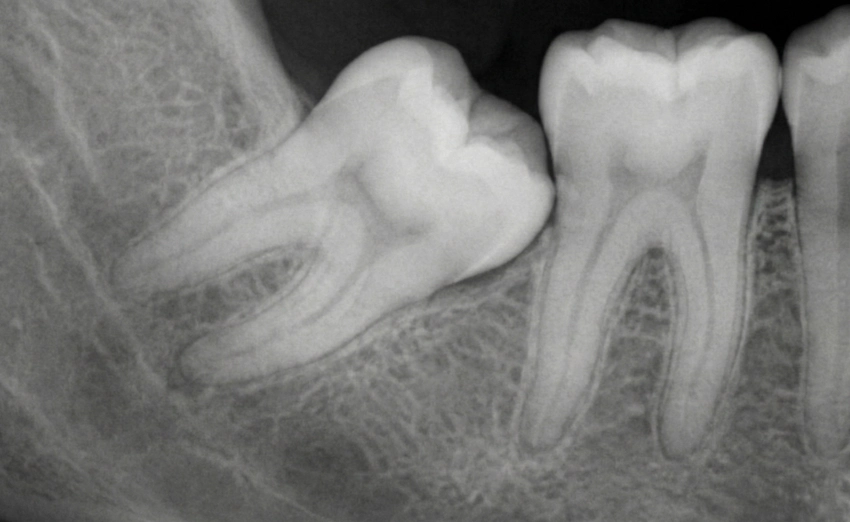
Imagine the inside of your mouth bones as the base for a house that has been really well designed. Every tooth is a part of the body thus it has its own allocated “plot” of land. The impacted tooth, usually the wisdom tooth or canine, would be the beam of the house which was put at a 45-degree angle. Not only does it affect the visual pleasure; but it also threatens the structural integrity of the whole row.
Dentist Polen Akkılıç and her team put forward that “impacted” doesn’t always have to mean “completely covered by gum only.” It can be that the tooth has partially erupted showing the very tip of it through the gum like a periscope. Because of that, a very tiny pocket that is hard to reach is formed which becomes a great hiding place for bacteria.
What Is the Turning Point? “Wait and See” Becoming a Risk
The extraction is not a decision that we can take easily at Lema Dental Clinic but there are unchangeable points that make a “wait and see” period not possible.
1. The Threat to Neighboring Teeth
The impacted tooth tries to put more and more pressure on you and thus it may start getting rid of the roots of the healthy teeth next to it. Professor Doctor Coşkun Yıldız points out that usually the patient will only get to know about the damage in the neighboring tooth when a great deal of destruction has already taken place.
2. Cyst Formation and Bone Health
Each tooth is indeed surrounded by a sac. However, if the tooth is left to stay hidden, the sac can gather fluid and thus a cyst would be formed. Initially, these cysts can take up some space from the jawbone and eventually, the nerves may be damaged. This is no longer a question concerning only the teeth but also a situation involving the bones.
3. Chronic Pericoronitis
As the tooth is partially damaged, the gum tissue over the tooth can become inflamed for a long time without healing. Such a condition is recognized as pericoronitis and is characterized by swollen gums, halitosis, and trismus. If tending to painkillers is your habit by which you quickly get relief every other week, then your organism is rightly telling you that there’s a problem.
Comparing the Scenarios: To Extract or To Monitor?
Here is what we see in the clinic when evaluating the necessity of surgery:
| Condition | Common Symptoms | Recommended Action |
| Full Impaction (Asymptomatic) | None; discovered via X-ray. | Monitoring or preventative extraction if roots are close to nerves. |
| Partial Impaction | Food trapping, swollen gums, and bad taste. | Extraction is recommended to prevent decay and infection. |
| Horizontal Impaction | Pressure pain, shifting of front teeth. | Urgent Extraction to save the roots of neighboring teeth. |
| Cystic Impaction | Visible swelling, bone thinning on X-ray. | Immediate Surgical Intervention and cyst removal. |
The Lema Approach: Precision in Turkey
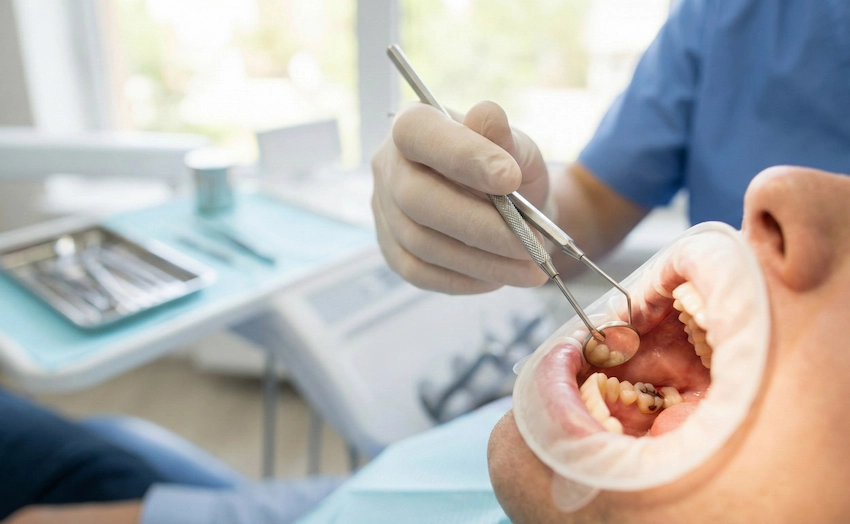
Choosing to have surgery abroad can feel daunting, but the clinical environment in Turkey—specifically at Lema Dental Clinic—is designed to bridge the gap between high-tech precision and patient comfort.
But let’s look closer at the process. We don’t just “pull” a tooth. Professor Doctor Coşkun Yıldız utilizes advanced 3D imaging to map the exact location of the mandibular nerve. This ensures that the extraction is performed with microscopic accuracy, minimizing post-operative swelling and ensuring a faster return to your daily life.
The question remains: Is it ever too late? While it is never truly “too late,” extracting impacted teeth is significantly easier in your late teens or early twenties. At this stage, the roots aren’t fully formed, and the bone is more flexible. For our adult patients, the process is still highly successful, though it requires the specialized surgical touch that Polen Akkılıç and her team provide.
Frequently Asked Questions
With us, you will be comfortable during the whole time that the extraction is happening. We provide local anesthesia and if you want, sedation. What most people mean by “pain” is the sensation of pressure that they had before the surgery. Any pain that you may have after the surgery will be controlled with a recovery plan that fits your needs.
Most of our patients who come from abroad recover fully within 3 to 5 days. We generally recommend that you stay in Istanbul for about a week so that we may do a follow-up check before you leave.
Sometimes nothing indeed. However, in many cases, it causes “crowding” when your newly aligned teeth begin to overlap each other, and an even worse infection that reaches the jaw and the neck. You are taking a risk on your oral health.
The removal of an impacted tooth is a surgical procedure involving the bone and the tooth not the facial muscles or fat pads on the surface of your face. Therefore, your face shape will be unchanged although you will definitely lose that “swollen” appearance resulting from long-term gum inflammation!
The main reason is that we blend cutting-edge technology with extensive experience. To ensure a unique patient experience, we combine the surgical master’s skills of Professor Doctor Coşkun Yıldız with a clinic philosophy that puts the patient first and treats you as a guest rather than a chart number.
- American Association of Oral and Maxillofacial Surgeons. (2023). Management of Impacted Third Molar Teeth.
- Lombardi, T., & Budtz-Jørgensen, E. (2021). Pathological conditions associated with impacted teeth: A clinical study. International Journal of Oral & Maxillofacial Surgery.
- Yıldız, C., et al. (2022). Advanced Imaging in Oral Surgery: Navigating the Mandibular Canal. Turkish Journal of Dental Research.
- Journal of the American Dental Association (JADA). (2024). Evidence-based clinical practice guideline on the management of third molars.
- British Dental Journal. (2020). The impact of early intervention on impacted canines and molars.

