


High Dental Implant Success Rates
When you enter a consultation room at Lema Dental Clinic in Istanbul, the data is very convincing. According to research, dental implants worldwide have a success rate of 95% – 98%. However, the truth is that you are not a statistic. You have a past health medical history, your own bone density, and a way of life that either facilitates or obstructs biological healing.
The question is still valid: what will be your success rate?
From our clinical work at Lema Dental Clinic, achieving mere “integration” is not our only goal, but we want a lifetime of function for the implant. Professor Doctor Coşkun Yıldız remarks that the titanium post is a technical wonder, but the real success of the operation is contingent upon the “biological hug” between your implant and jawbone.
Your Role: Osseointegration and You
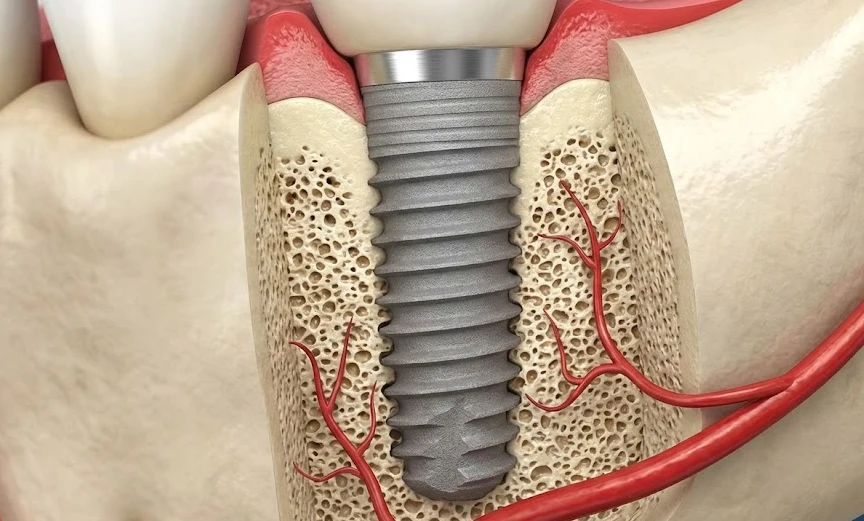
The key to success is the understanding of osseointegration. It is the phenomenon wherein your living bone cells fuse to the surface of the titanium. Just like when you plant a tree, the healthiest sapling (the implant) won’t survive if the soil (your bone) is not nutrient-rich or stable enough for the roots of the tree to grow.
So what exactly makes that “soil” perfect? Before making the first cut, we use the latest 3D technology in Turkey to analyse our client’s condition. Dentist Polen Akkılıç, together with her team employ these images to locate the areas of highest bone density in the patient’s mouth, thus they can make sure that the implant can be anchored very effectively in the bone.
Some Less-Obvious Factors That Influence the Results
Actually, it’s common for clinics to only focus on the surgery, however, success is generally a matter of the patient’s condition prior to and after the operation. Here is what is going on in the clinics that can make or break a patient’s implant:
- Fit Precision: Implantologists say that implants that are only a millimeter off cause “micro-motions.” Such tiny movements inhibit the bone from effectively attaching. It is similar to trying to stick two pieces of wood together where the surface you are working on is constantly moving.
- Good circulation is where the lifestyle argument is. The vessel network that holds the blood is the delivery system where the nutrients and the cells are, which are needed for the new tissue.
- At Lema, we have a strict policy on using high-quality titanium with implants because the metal’s purity influences how strongly your body will accept the new implant.
Success Rate Breakdown: A Clinical Comparison
Success isn’t one-size-fits-all. Based on our surgical observations, we can categorize the typical success paths:
| Patient Profile | Success Rate (approx.) | The Primary Challenge |
| Healthy, Non-Smoker | 98.5% | Maintaining long-term hygiene. |
| Controlled Diabetic | 94% – 96% | Managing the body’s slower healing response. |
| Smoker (Active) | 85% – 90% | Restricted oxygen in the blood slows bone growth. |
| Previous Bone Grafting | 95% – 97% | Waiting for the “new” bone to become fully alive. |
| History of Periodontitis | 92% – 95% | Preventing bacteria from attacking the implant site. |
The Lema Protocol: Engineering Success in Turkey
We don’t leave success to chance. Professor Doctor Coşkun Yıldız has developed a specific protocol that prioritizes the health of the soft tissue (the gums) just as much as the bone. Why? Because the gums act as a biological seal—a “gatekeeper” that prevents bacteria from reaching the bone-implant interface.
But the work doesn’t end when the crown is placed. Dentist Polen Akkılıç and her team focus heavily on post-operative education. If the foundation is a building, your oral hygiene is the maintenance crew. Without it, even the best engineering will eventually fail.
Why Do Implants Fail? (The Honest Truth)
The question remains: if they are so successful, why do some fail? Most failures happen for two reasons. First, “early failure” usually means the bone didn’t integrate, often due to smoking or uncontrolled systemic health issues. Second, “late failure” is almost always due to peri-implantitis—the implant version of gum disease.
In our experience in Turkey, early detection of these issues keeps the success rate high. We don’t just see you as a surgery case; we see you as a long-term partner in health.
FAQ: Direct Insights from Our Doctors
Not as much as you’d think. As long as your bone is healthy and you don’t have uncontrolled systemic diseases, a 75-year-old can have the same success rate as a 25-year-old. It’s about biology, not the birth certificate.
No, but you are at higher risk. We ask our patients to stop smoking at least two weeks before and six weeks after surgery. This gives your blood vessels a chance to deliver the ‘repair crew’ your jaw needs.
Absolutely. Premium brands have decades of research behind their surface textures. These textures are designed to ‘trick’ your bone into growing faster. We use these elite brands at Lema to ensure we are giving your body the best chance.
The reality is that a failure isn’t always permanent. We can usually remove the failing implant, let the area heal (perhaps with a bone graft), and try again. The second attempt often has an even higher success rate because we’ve optimized the environment.
A healthy implant should feel like nothing. It should just be there. If you feel a dull ache, see redness that doesn’t go away, or feel any ‘wobble’ when you chew, you need to see us immediately. Early intervention is the key to saving the implant
- Albrektsson, T., Zarb, G., Worthington, P., & Eriksson, A. R. (1986). The long-term efficacy of currently used dental implants: A review and proposed criteria of success. The International Journal of Oral & Maxillofacial Implants, 1(1), 11–25.
- Buser, D., Sennerby, L., & De Bruyn, H. (2012). Modern implant dentistry based on osseointegration. Periodontology 2000, 60(1), 13–39.
- Levin, L., & Roccuzzo, M. (2013). Ideal implant spacing and soft tissue care. Journal of Clinical Periodontology, 40(S14), S124-S134.
- Moraschini, V., Poubel, L. A., Ferreira, V. F., & Barboza, E. S. (2015). Evaluation of survival and success rates of dental implants reported in longitudinal studies with a follow-up period of at least 10 years: a systematic review. International Journal of Oral and Maxillofacial Surgery, 44(3), 377–388.

