


Gum graft surgery is the best treatment for receding gums.
How to Restore Your Gums: A Guide to Dental Procedure
Usually, when people come to Lema Dental Clinic, their thinking centers around the “whiteness” of their teeth. However, the fact is that your smile is more like a valuable painting; even the most beautiful work of art looks incomplete without a suitable frame. In dental terminology, your gums are the frame.
Gum recession or gum shrinkage is one of the most common problems we have seen in Turkey. You can’t expect gums to be like skin that can grow back, so don’t worry if you’ve lost some gum tissue. Nevertheless, modern periodontics has at its disposal several advanced techniques for restoring the lost tissue.
So, Can You Restore Gums?
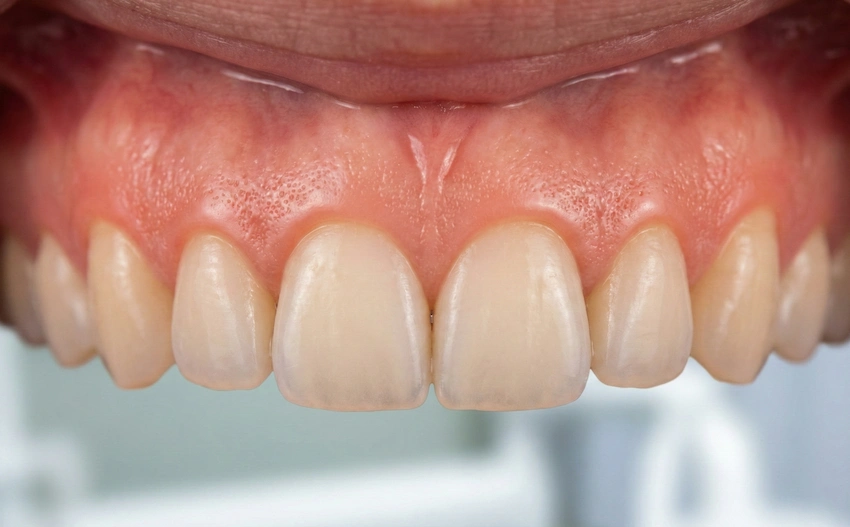
Well, if we want to give a simple answer it will be yes but the treatment depends entirely on the cause of the lost tissue. Imagine your gums as a cozy protective sweater for your tooth roots. When that “sweater” is damaged or stretched, your roots which are very sensitive get exposed, thus causing pain and eventual loss of teeth.
Professor Doctor Coşkun Yıldız frequently says that gum reconstruction is more than just a beautifying process. In fact, it is a structural necessity. We are not only “fixing a look”; we are restoring a biological barrier.
Typical Treatments for Gum Reconstruction
Based on each patient’s specific condition, Dentist Polen Akkılıç and the rest of the staff choose from a variety of highly effective treatment procedures to return a person’s natural, healthy gum line.
- Gingival Grafting (Gum Graft): This is the most trusted method. A small piece of tissue is taken usually from the roof of your mouth or, in some cases, from a donor and then it is sewn together at the place where your gum has become thin. It can be compared to a high-end reupholstery job.
- The Pinhole Surgical Technique (PST): This is a less invasive “no scalpel” approach option. A very small opening is created in the existing gum tissue and then, with the help of specially designed instruments, the gums are carefully pulled over the root.
- Guided Tissue Regeneration (GTR): If the bone has been lost in addition to the soft tissue, then the use of biocompatible membranes can help direct the body to regenerate new bone and soft tissue in the particular area.
Comparing Your Restoration Options
At Lema Dental Clinic, we believe in transparency. Not every procedure is right for every patient. Here is how the most common restoration methods compare:
| Procedure | Best For | Recovery Time | Key Benefit |
| Connective Tissue Graft | Severe recession/root exposure | 1–2 weeks | Extremely high success rate and durability. |
| Pinhole Technique | Multiple teeth with mild recession | 24–48 hours | No incisions or traditional sutures required. |
| Pedicle Graft | Patients with plenty of nearby gum | 1 week | Uses tissue from right next to the tooth, keeping blood flow high. |
| Gingivoplasty | Reshaping uneven gum lines | 3–5 days | Enhances the “symmetry” of the smile. |
Why Patients Pick Turkey for Gum Restoration
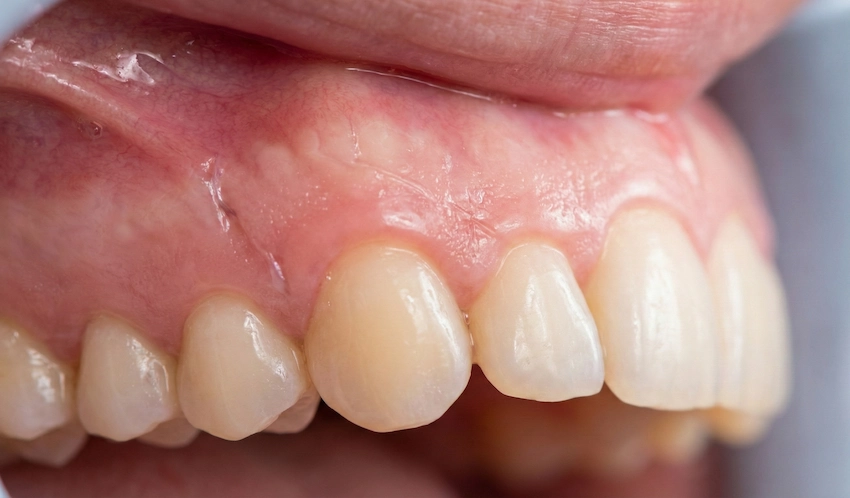
Thriving clinical experience is the main draw of Lema Dental Clinic in Turkey besides the low price of dental treatments. We constantly improve our surgical techniques as we are exposed to a large number of foreign cases every day.
We are worthy to be trusted with your gum restoration after all the years of experience that we have gained. We start a microscopic evaluation and diagnosis with the utmost precision. The patient does not bear the pain of gum disease for a long time without treatment. First of all, it is necessary to get rid of the infection present in the gingival tissues and treat the inflammatory periodontal condition. Only then, a gingival graft beneficial for the healing.
The “Lema” Method to Healing
We would provide the same loving care that we would give our own family. Dentist Polen Akkılıç and her team are gentle and very much concerned with making the patient comfortable. They perform gas induction before local anesthesia, and even after the operation, they follow some anti-fear protocols so that the “fear” of a dental procedure is totally eradicated.
Frequently Asked Questions
We have actually confirmed this with our referrer that even the procedure itself is completely painless as we use an advanced local anaesthetic. You may feel some tightness or a “pizza burn” type of sensation in the palate after the operation, but such little discomforts can be very quickly taken care of with standard over-the-counter medications.
Consider a gum graft as a newly planted garden. If you take care of it well and keep the weeds away, it will definitely be there for you all your life. So, gum restoration basically is a permanent treatment if you maintain good oral hygiene and visit your dentist regularly for check-ups.
Actually, we can only advise you to eat soft food in the first week only – think smoothies, pasta, or yogurt. It is very much advised not to poke the wound with a crunchy diet like chips or nuts when the new tissue is forming.
Usually, it is not about being “too late” but the level of difficulty rises. In case of bone loss, a bone graft may be required on top of your gum restoration so the newly formed tissue will have a sufficiently solid base to adhere to.
Even though we provide first-class care at prices considerably lower than those in the UK or the US, a few international insurance companies still partially cover the expenses for “medically necessary” periodontal treatments. We supply you with all the clinical paperwork you need for the claim form.
- Bernardi, S., et al. (2020). Clinical and Patient-Centered Outcomes of Root Coverage Procedures: A Systematic Review. Journal of Periodontology.
- Löe, H., & Silness, J. (2022). Periodontal Disease in Man: The Role of Gingival Recession. Acta Odontologica Scandinavica.
- Zucchelli, G., & Mounssif, I. (2015). Periodontal Plastic Surgery. Periodontology 2000.
- Chao, J. C. (2012). A Novel Pinhole Surgical Technique for Gum Recession: A Case Series. The International Journal of Periodontics & Restorative Dentistry.
- Pini Prato, G. P. (2023). The Evolution of Mucogingival Surgery: From Gingival Augmentation to Root Coverage. Journal of Clinical Periodontology.

