


A fissure sealant is a coating that protects tooth grooves from cavities.
Fissure Sealants: Protecting Your Child’s Smile Early
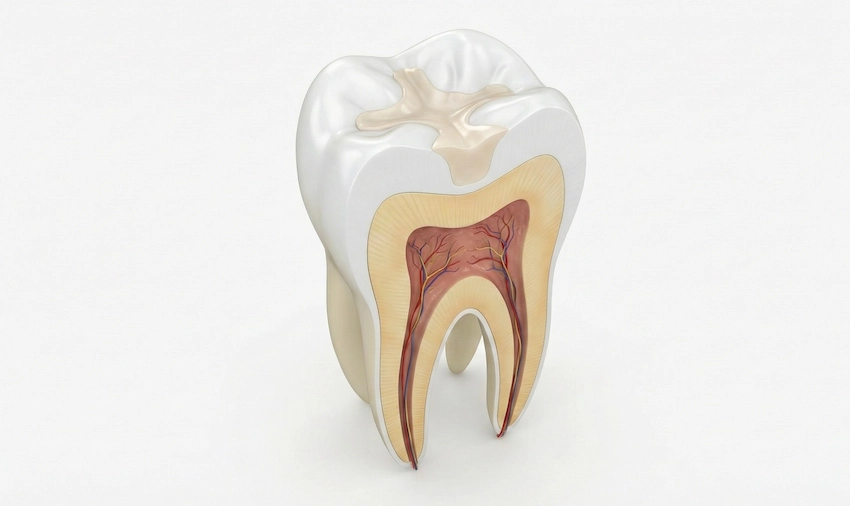
For starters, human teeth, especially molars, hardly ever have completely flat surfaces. These teeth are the ones that primarily assist you in grinding the food very efficiently. Should you get a moment to look, you will notice that the surface of the tooth is not without a pattern of peaks and valleys. In a more technical language, dentists refer to the grooves as “fissures”.The truth is that it is these very fissures that contribute to the great efficiency of chewing but, at the same time, due to their form, they can be the perfect little spots where food particles and bacteria can get trapped and accumulate.
The sad truth is that no matter how well you brush, some of these deep fissures will still escape your toothbrush. The bristle of a toothbrush is usually thicker than the depth of a very narrow fissure thus the bristle can’t get to the bottom of it. This is why fissure sealants have been introduced.
What are Fissure Sealants?
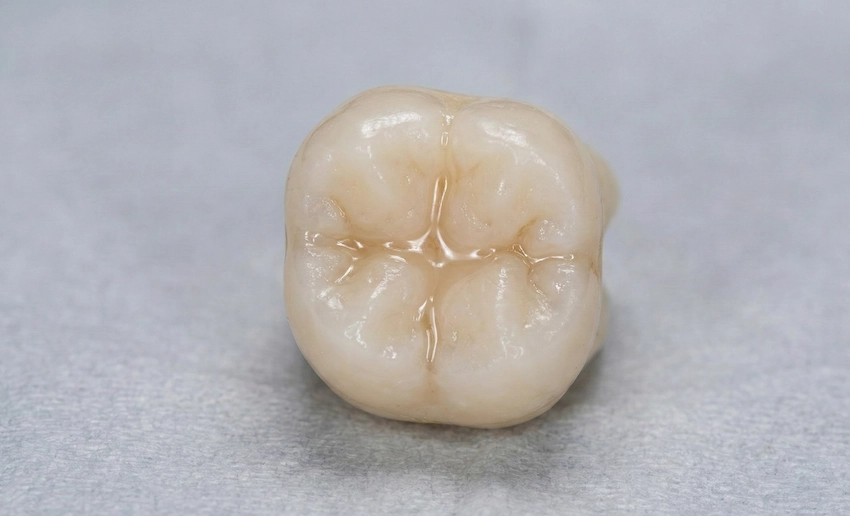
Picture a fissure sealant as a special kind of dental raincoat for your teeth. It is a very thin, plastic-like covering—generally a biocompatible resin—that is placed on the chewing surfaces of the permanent back teeth. What we do is, by filling up these deep “valleys” we establish a smooth, easy-to-clean surface that becomes a barrier to plaque.
In our day-to-day clinical practice at Lema Dental Clinic, we regard this as one of the most effective preventive measures in contemporary pediatric dentistry. Professor Doctor Coşkun Yıldız is known to say that cavity prevention today is far better than getting a filling five years later. The idea is to save the natural tooth structure even before the first sign of decay appears.
The Entire Process: Simple, Fast, and Comfortable
Just hear what most parents say when they come to us: “Isn’t the process painful?” We give a definite no. It’s also that there is no drilling, anesthesia, or discomfort. Dentist Polen Akkılıç and her team adhere to a method that is patient-friendly and at the same time ensures a perfectly bonded sealant:
- Preparation: The tooth is cleaned thoroughly to remove any remaining debris.
- Conditioning: A gentle solution is put on the enamel to “roughen” the surface a bit, so that a strong bond is ensured.
- Application: The liquid resin is brushed onto the grooves.
- Curing: By a special blue light, we instantly harden the material.
Why is it important? A tricky question a lot of parents might be asking. On average children’s permanent molars come out between the ages of six and twelve. These are very significant periods. Since the enamel on new teeth is still developing, it is highly susceptible to sugar and bacteria-generated acid attacks.
Comparing Preventive Options
While sealants are a powerhouse for prevention, they work best alongside other treatments. Here is how they compare to typical fluoride applications:
| Feature | Fissure Sealants | Fluoride Varnish |
| Primary Function | Physical barrier (shuts out bacteria) | Chemical strengthening (hardens enamel) |
| Target Area | Chewing surfaces (pits and fissures) | All tooth surfaces |
| Durability | Lasts several years | Applied every 3–6 months |
| Application | Permanent molars & premolars | All teeth |
| Primary Goal | Prevents deep-groove cavities | Prevents smooth-surface decay |
Why Is Turkey The Best Place For Dental Treatments?
At our Lema Dental Clinic, we are not just delivering dental procedures but rather to a very high standard of care. We mix state-of-the-art European technology with a boutique patient experience. When a family decides to get dental treatment from us, we are not the first to just providing the service, but a partnership for their long-lasting oral health.
So, the question is: when to begin? Most authorities in the field agree that sealants must be put on as soon as the permanent molars have fully grown. The longer you delay, the more you give bacteria the time to start the process of decay.
Common Questions from Our Patients
On average, we get up to five to ten years out of sealants. That being said, they certainly don’t have to be discarded after merely 10 years of use. At Lema Dental, as part of your regular examinations, we will also inspect your sealant for any evidence of wear and tear. Should a small fragment come off, we will be able to repair it promptly to keep the seal intact.
Even though they are most typical for kids, adults with deep pits and no fillings can also use them. A healthy, cavity-free tooth that is covered with a protective layer will have a much smaller chance of developing a problem later on, no matter how old you are.
Absolutely not. The resins we select are either totally transparent or the color of the natural tooth. They mix very well with the natural enamel. If somebody is not staring inside your mouth using a dental mirror and a light, they will not even be aware that the sealant is there.
We are committed to making sure our patients are safe. Even though some resins might have tiny traces of BPA derivatives, the amount is extremely low- far less than the exposure that happens through your everyday food packaging. We utilize premium, state-of-the-art materials that are deemed safe by health organizations worldwide.
When the decay is at the very early stage and it is only in the enamel, we may still go ahead and put a sealant to ‘starve out’ the bacteria. But if the decay has gone down to dentin, it’s a must to get a traditional filling. That’s why it’s so crucial to act fast.
- Ahovuo-Saloranta, A., Forss, H., Walsh, T., Nordblad, A., Mäkelä, M., & Worthington, H. V. (2017). Pit and fissure sealants for preventing dental decay in permanent teeth. Cochrane Database of Systematic Reviews, (7).
- Beauchamp, J., et al. (2008). Evidence-based clinical recommendations for the use of pit-and-fissure sealants: A report of the American Dental Association Council on Scientific Affairs. The Journal of the American Dental Association, 139(3), 257-268.
- Hiiri, A., Ahovuo-Saloranta, A., Nordblad, A., & Mäkelä, M. (2010). Pit and fissure sealants or fluoride varnishes? A systematic review. American Journal of Dentistry, 23(1), 54-56.
- Kühnisch, J., et al. (2014). Longevity of materials for pit and fissure sealing—Results from a meta-analysis. Dental Materials, 30(3), 253-269.
- Wright, J. T., et al. (2016). Evidence-based clinical practice guideline for the use of pit-and-fissure sealants. The Journal of the American Dental Association, 147(8), 672-682.

