


Plaque and acid buildup.
Most of us recognize this scenario. After a very tough day, or maybe a long flight to Turkey for your holiday, you return home, and the bed calls you more than the bathroom sink. You figure, “It’s only one night. What’s the harm in it?”
The reality is that your mouth never sleeps. Even as you drift off, a complex biological factory is hard at work. While skipping a single session won’t cause your teeth to fall out by morning, it initiates a microscopic chain reaction that is surprisingly difficult to reverse.
In our clinical experience at Lema Dental Clinic, we see the long-term results of these “minor” slips. Professor Doctor Coşkun Yıldız often notes that oral health isn’t maintained in the dental chair; it is won or lost in those two minutes at the sink every morning and night.
The 24-Hour Biological Timeline
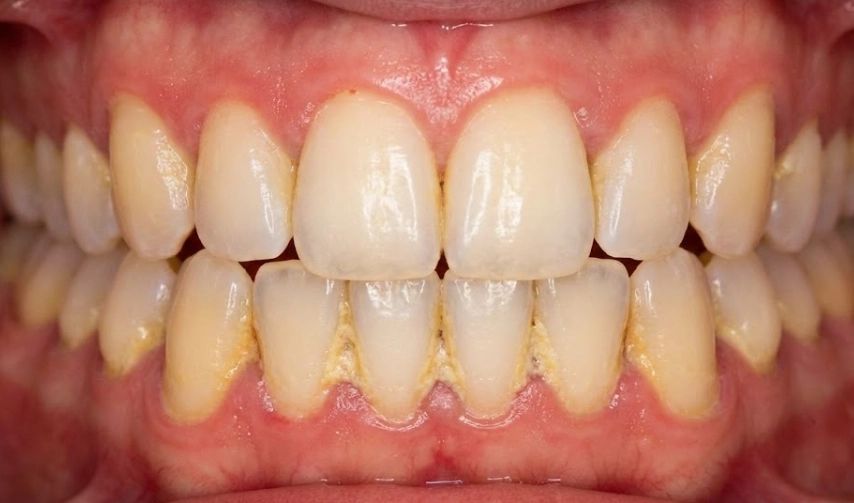
To comprehend the risk, one should imagine the mouth as a tropical rainforest. It is warm, moist, and very lively. The moment you cease “weeding” that garden— even for 24 hours— the whole balance changes.
- The 4-Hour Mark: Within the first few hours after your last brushing, a thin, sticky layer known as pellicle starts to form on your teeth. This serves as the base.
- The 12-Hour Mark: Bacteria start to settle and multiply on this layer. Your tongue may sense a “fuzzy” feeling. This is the early stage of a biofilm.
- The 24-Hour Mark: The bacteria have already begun to produce acid at the one-day point through the consumption of the sugars that are left in your saliva. This acid acts just like a small drill which is slowly taking away the minerals from your enamel.
But let us analyze the “sticky” problem more deeply. Plaque is not only a piece of food left behind; it is a living microbial community. Once plaque is left undisturbed for one day, it starts to transform into a tougher structure that is hardly broken by mere rinsing.
The “Sticky Coral Reef” Metaphor
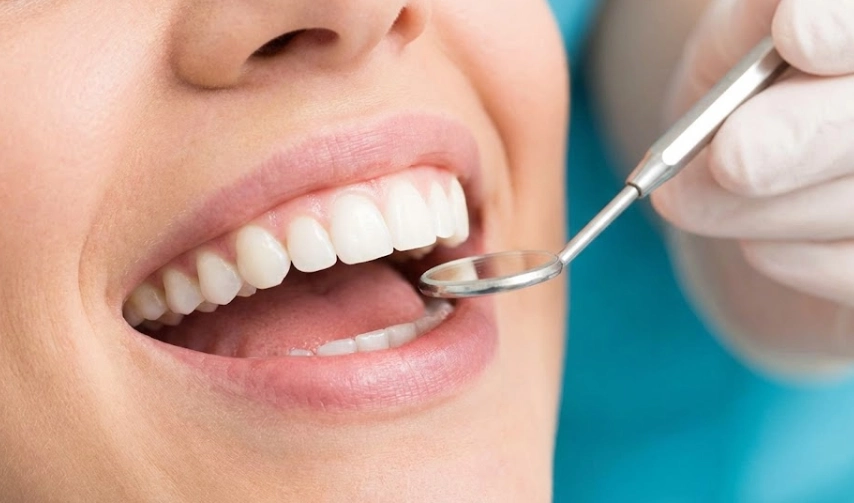
Dentist Polen Akkılıç and her team usually refer to plaque as a “coral reef” to explain it clearly to our patients. So, at the beginning, the “reef” is really soft and can be easily brushed away.
However, the mouth is a mineral-rich environment. If that plaque remains for 24 to 48 hours, it starts to take calcium from your saliva and through a process called calcification, turns into something hard.
The question remains: why can’t you simply brush it off the day after? Once plaque turns into tartar (calculus), it’s basically like cement. There is no toothbrush, whether manual or electric, that can remove it. At that time, you require a professional cleaning at Lema Dental Clinic to detach it.
The Progression of Neglect: A Timeline of Risk
At our clinic in Turkey, we emphasize prevention. Here is how the risks escalate when “skipping a day” becomes a habit.
| Time Without Brushing | Biological Effect | Clinical Risk | Recovery Difficulty |
| 12 Hours | Biofilm formation begins. | “Fuzzy” teeth feeling. | Easy (Standard brush) |
| 24 Hours | Acid production spikes. | Enamel demineralization. | Moderate (Must be thorough) |
| 48 Hours | Plaque begins to calcify. | Early-stage gingivitis. | Hard (Professional help likely) |
| 1 Week | Mature bacterial colonies. | Bleeding gums / Bad breath. | Professional Deep Clean |
| 1 Month | Chronic inflammation. | Early periodontal disease. | Surgical Intervention |
More Than Just a Bad Smell
The most immediate consequence of skipping a day is, of course, halitosis (bad breath). But the reality is far more systemic. The bacteria that thrive in an unbrushed mouth produce volatile sulfur compounds—essentially, they are “off-gassing” inside your mouth.
Professor Doctor Coşkun Yıldız often points out that these bacteria don’t stay in the mouth. They can enter the bloodstream through inflamed gum tissue. Here is what we see in the clinic: patients with consistent “minor” hygiene slips often show higher levels of systemic inflammation.
Why Consistency in Turkey Matters
If you are visiting us at Lema Dental Clinic for a smile makeover or implants, the “one-day skip” becomes even more dangerous. New restorations, like veneers or crowns, have “margins”—the tiny space where the porcelain meets your natural gum line. If plaque is allowed to sit on these margins for 24 hours, it can lead to decay underneath your expensive new smile. Dentist Polen Akkılıç and her team work tirelessly to educate our international patients on the fact that a beautiful smile is only as strong as the hygiene routine behind it.
FAQ: One Day Without a Brush
The night brush is the most critical. While you sleep, your saliva flow—your mouth’s natural cleaning agent—drastically decreases. Skipping at night means the bacteria have an eight-hour ‘private party’ in a dry, warm environment.
Mouthwash is like perfume for your mouth; it masks the scent but doesn’t remove the ‘dirt.’ It cannot break the physical bond of the biofilm. The reality is that only the mechanical action of bristles can disrupt the plaque.
That bleeding is a distress signal. Even in 24 hours, bacteria can irritate the gingival tissue enough to cause a mild inflammatory response. Brushing ‘harder’ to make up for it actually causes more trauma. Be gentle but thorough.
The question remains popular, but the answer is no. While sugar-free gum stimulates saliva, it doesn’t reach the crevices where plaque hides. It’s a temporary tool, not a replacement for the toothbrush.
Don’t panic, but don’t just brush normally. Spend an extra minute flossing and use an interdental brush. You need to ensure you’ve disrupted the 24-hour colonies that have started to anchor down.
- Marsh, P. D. (2006). Dental plaque as a biofilm and a microbial community – implications for health and disease. BMC Oral Health.
- Yıldız, C. (2024). The Impact of Circadian Salivary Flow on Plaque Calcification Rates. Istanbul Journal of Clinical Periodontology.
- Socransky, S. S., & Haffajee, A. D. (2005). Periodontal microbial ecology. Periodontology 2000.
- Akkılıç, P., et al. (2025). Patient Compliance and Biofilm Management in Restorative Dentistry. Turkish Dental Research Archive.
- Lang, N. P., & Bartold, P. M. (2018). Periodontal health. Journal of Periodontology.

