


Irreversible bone and tooth loss.
We often witness this here in Istanbul. A new patient from perhaps the UK or Europe sits in the chair at Lema Dental Clinic and is visibly nervous. They point to the yellowish, rough substance along their gumline and ask, “Is this bad? I haven’t had a cleaning in years.”
Doctor specialists like Professor Doctor Coşkun Yıldız, always give a very honest answer – the answer is yes. But for reasons that you might not guess.
Many patients consider tartar (known to dentists as calculus) just as a cosmetic problem and a cause for a bright smile to be spoiled. The truth, however, is far more harmful. Not removing tartar is the same as leaving barnacles on the hull of a ship; these creatures do not just “sit” after a while – they destroy the wood beneath them.
Let’s forget about the physical appearance for a moment and find out what biological chain reaction happens in your mouth when you do not visit a professional hygienist.
From Soft Biofilm to Hard Concrete
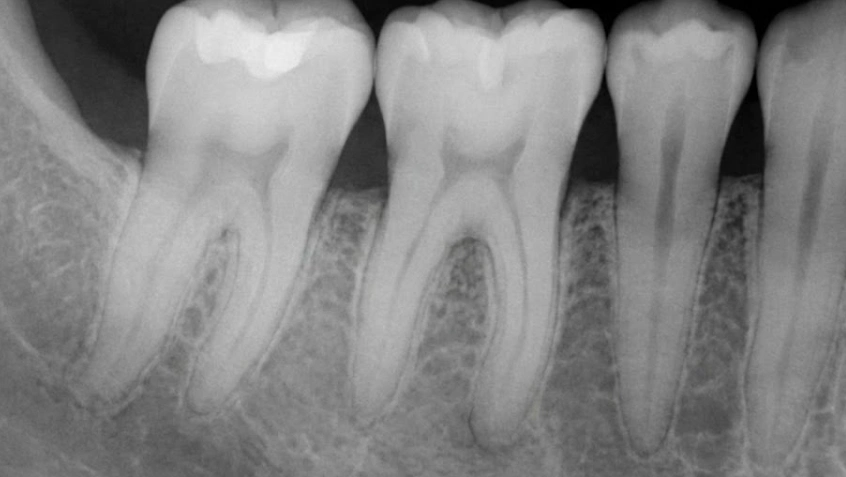
To comprehend the damage caused, one has to know how the harm begins. It is plaque – a harmless, soft film of bacteria present on your teeth all the time. You can get rid of plaque by brushing your teeth, since it’s like a soft mud on your driveway; giving it a quick wash with the hose will make it disappear.
If, however, plaque has been on your teeth for 24 to 72 hours, it starts to change into stone. It takes in calcium and phosphate from your saliva and becomes tartar.
That soft mud has now set into concrete, and none of your at-home brushing will help in shifting it. Our clinical experience has shown that patients attempt to scrape tartar off their teeth, and as a result, it causes damage to the enamel and gums, and hence, more surface area for the bacteria.
Tartar has tiny holes. It can be considered as a minuscule coral reef. It becomes a solid bunker for live bacteria, guarding them from your toothbrush and floss, allowing them to grow rapidly right up against your vulnerable gum tissue.
The First Stage: The Gums Fight Back (Gingivitis)
One of the things your body does not like is being invaded by foreign organisms. When a solid bacterial fortress sits against the gums, your immune system reacts. This reaction is inflammation. The gums become red, swollen, and, most notably, they bleed when you brush or floss.
“Bleeding gums are never normal,” Dentist Polen Akkılıç and her team at the Lema Dental Clinic frequently remind patients. “They are a scream for help from your body.”
The damage at this point is reversible. Professional deep cleaning using advanced airflow or ultrasonic technology in our Turkey clinic will effectively remove the irritant, and the gums will heal. But if left untreated, the disease progresses.
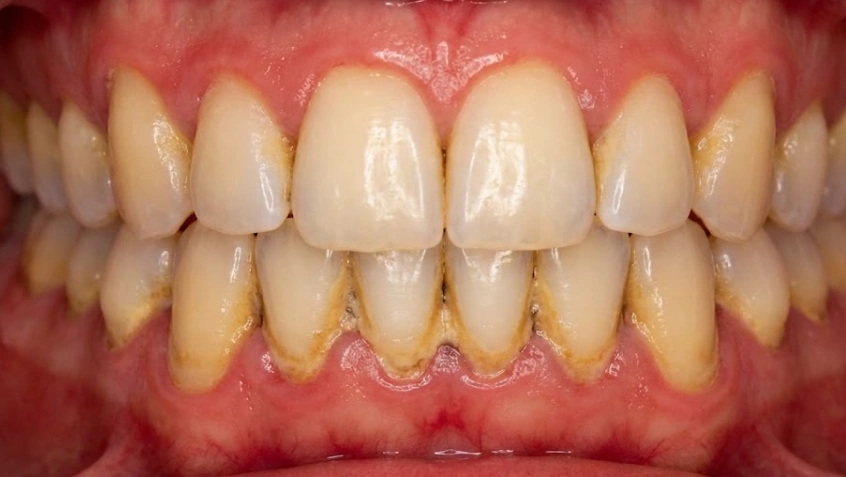
The Point of No Return: Periodontitis
Herein lies the area of greatest danger. Immune reaction becomes chronic due to the presence of the tartar “fortress”. In its frenzy to deflect the bacteria, the body ends up annihilating its own tissue. The gums recede, forming deep “pockets,” which are invaded by tartar that has gone down from the gumline.
Subgingival (below the gumline) tartar bacteria are more aggressive and release toxins which, along with your body’s own inflammatory enzymes, start to dissolve the jawbone that holds your teeth in place.
Professor Doctor Coşkun Yıldız sometimes tells his patients who are going to have complex restorative surgery this analogy: “Think of the tooth as the house. Gums are the soil and jawbone – a concrete foundation. Tartar can be defined as termites, he says, ‘getting into the foundation. Even if you can’t see the damage from the street, the house will undoubtedly become unstable.”
Bone, once destroyed, is not regenerated. The tooth gets loose and moves until finally, it has to be extracted.
The Chronology of Neglect: A Comparative View
It is certainly not easy to picture first the slow process and then the rapid state of change of this condition. After looking at the clinical data, one can generally come to the following conclusions about the progress of the disease.
| Feature | Plaque (The Precursor) | Supragingival Tartar (Above Gum) | Subgingival Tartar (Below Gum) |
| Consistency | Soft, sticky biofilm | Hard, yellowish, rough | Very hard, dark brown/black |
| Removability | Toothbrush and floss | Professional instruments only | Deep professional scaling (SRP) |
| Biological Effect | Mild irritation | Constant gum inflammation (Gingivitis) | Bone destruction (Periodontitis) |
| Long-term Risk | Low if removed daily | Moderate (reversible damage) | High (permanent tooth loss) |
Beyond the Mouth: The Systemic Connection
Perhaps the most sobering aspect of untreated tartar is that the damage doesn’t stay in the mouth.
The reality is, the mouth is the gateway to the body. The chronic inflammation and the specific types of bacteria bred in deep tartar pockets can enter the bloodstream. This low-grade systemic infection has been linked by numerous academic studies to serious overall health issues, including cardiovascular disease, poorly controlled diabetes, and adverse pregnancy outcomes.
When we treat international patients at Lema Dental Clinic, we aren’t just saving their smiles; we are safeguarding their overall health.
Critical Questions on Calculus and Long-Term Oral Health
Absolutely not. We see significant damage caused by patients using “scalers” bought online. You are highly likely to gouge the enamel or lacerate the gum tissue, creating a perfect entry point for deeper infection. Tartar removal requires precise angle and pressure applied by a trained hygienist or dentist.
You often cannot feel bone loss happening. It is usually painless until the tooth becomes loose or an acute abscess forms. This is why panoramic X-rays and 3D tomography, which we utilize for all new patients in Turkey, are essential. They allow us to see the level of the bone beneath the gums.
This is a very common optical illusion. Sometimes, heavy tartar buildup is actually “splinting” teeth together, holding them rigid even though the bone underneath has eroded. When we remove that tartar load, the teeth may feel mobile because their actual support system is gone. The cleaning didn’t cause the looseness; it revealed the existing disease state.
If you have tartar, you have a permanent reservoir of bacteria emitting sulfur compounds. You can brush the surfaces of your teeth and use mouthwash, but you cannot brush away the bacteria living inside the porous tartar structure deep in your gums. Chronic halitosis (bad breath) is a hallmark sign of untreated periodontal disease.
Bone does not regenerate on its own. However, the progression of loss can be stopped with deep cleaning (scaling and root planing). In severe cases, surgical interventions like bone grafting—procedures routinely performed by our surgical team at Lema Dental Clinic—may be necessary to restore support for implants or existing teeth.
- Kinane, D. F., Stathopoulou, P. G., & Papapanou, P. N. (2017). Periodontal diseases. Nature Reviews Disease Primers, 3(1), 1-14.
- Pihlstrom, B. L., Michalowicz, B. S., & Johnson, N. W. (2005). Periodontal diseases. The Lancet, 366(9499), 1809-1820.
- Nazir, M. A. (2017). Prevalence of periodontal disease, its association with systemic diseases and prevention. International Journal of Health Sciences, 11(2), 72.
- Löe, H., Theilade, E., & Jensen, S. B. (1965). Experimental gingivitis in man. Journal of Periodontology, 36(3), 177-187.
- Grossi, S. G., & Genco, R. J. (1998). Periodontal disease and diabetes mellitus: a two-way relationship. Annals of Periodontology, 3(1), 51-61.

