


A tooth infection is a severe, throbbing pain with swelling and extreme temperature sensitivity.
Usually, it may start as a faint, fleeting sensation. You might initially notice a sudden stab of pain when having a cold drink or a slight twinge when biting, which is completely tolerable. Nevertheless, these small troubles can, within a matter of days, intensify into a severe, agonizing, throbbing pain. This is the kind of pain that can keep you awake at night and make you miserable all day long.
The problem with the patients coming to the dental office is the fact that they neglect small pains for quite a long time. They simply expect the pain to disappear by itself. Only after that, and when the pain is at an unbearable level, they come to our office almost as an emergency. Knowing what a tooth infection feels like is a great way to safeguard yourself from serious problems.
Pain Analysis: Inflamed Tooth Inside a Rigid Shell
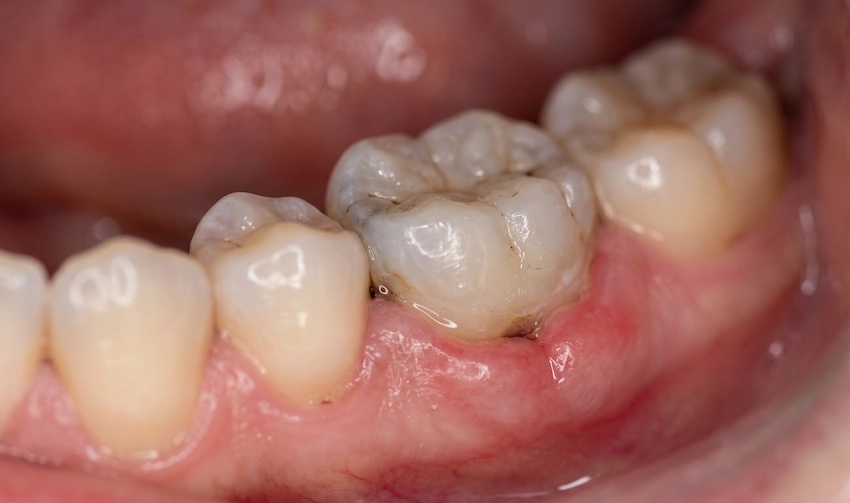
Seeing that it is quite painful, you may want to really understand a tooth’s anatomy in great depth. A healthy tooth is, after all, quite similar to a well-fortified fortress. The outermost parts, enamel and dentine, are exposed to the environment, enamel being the harder one. They act as a protective shield, safeguarding the living part or the pulp of the tooth.
Sometimes, decay reaching the pulp or even a very thin crack can allow bacteria to get to the pulp, which will become inflamed, and the pain will be caused by the swelling. Nevertheless, the outermost layers of the tooth are very hard and cannot expand. Consequently, when the pulp swells and presses the nerves, the pain that is felt is very sharp. Indeed, this is the type of pain caused by a tooth infection that is intolerable, and an instant painkiller is required.
Professor Doctor Coşkun Yıldız has spoken of how he is occasionally amazed when he realises that, in fact, the patients themselves hardly ever mention an infected tooth as a “surface scratch.” On the contrary, they narrate, with great compassion, a deep, pulsating pain that almost seems to be in rhythm with the beating of their heart.
Signs of Dental Infection Exceeding the Simple Toothache
Generally, a dental infection should not be confined solely to the tooth; in fact, it will seek an outlet. Most commonly, it will penetrate the Jaws and soft tissue.
Several signs could be evident, such as:
- Non-stop pain: This pain can be so severe that he is experiencing pain in the jaw, neck, ear,s etc.
- Heat and cold sensitivity are becoming unbearable: A sharp sensation coming from hot or cold foods that lasts long after the meal is over.
- Chewing may hurt: If you only bite the tooth or, even more simply, touch it.
- Facial swelling: A puffiness that may be accompanied by a tender feeling in one cheek or gum.
- Unpleasant odor or taste: After the infected area has healed, an unpleasant bitter taste is detected. Also, the pain disappears very quickly after this incident.
The Systemic Tipping Point
But what exactly happens when the local infection starts to spread? Ignoring it for some time, the bacteria will make their way to your bloodstream, and then you may suffer from fever, an enlargement of the lymph nodes under the jaw, a general feeling of malaise, and fatigue.
| Clinical Condition | How It Feels | The Root Cause | Typical Treatment |
| Reversible Pulpitis | Cold or sweet food can trigger a mild, sharp pain that disappears pretty rapidly. | Decay that has not reached the nerve. | Simple filling. |
| Irreversible Pulpitis | Persistent, deep ache almost every time. It even awakens you during the night sometimes. | Severe bacterial attack that causes irreversible nerve damage. | Root canal or extraction. |
| Periapical Abscess | Sharp burning sensation, swollen, tender, and pain may be accompanied by fever. | Pulp tissue that had died is now leaking infection into the bone. | Drainage, root canal treatment, or extraction followed by an implant. |
Expert Care and Resolution
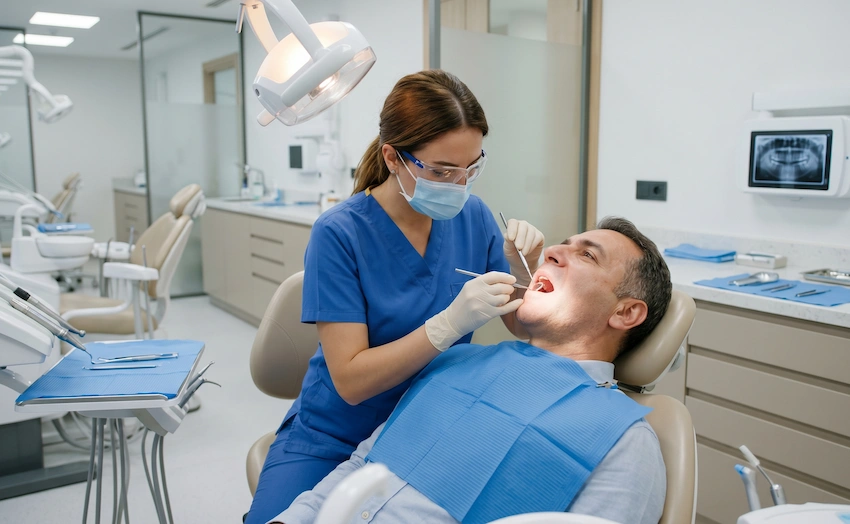
The question is still: how can we stop the pain and prevent bone loss in your jaw?
At Lema Dental Clinic, we consider fast diagnosis as the most crucial thing, supported by our clinical experience. Dentist Polen Akkılıç and her staff are using cutting-edge 3D imaging to unveil the exact size and position of the infection in the bone.
After diagnosing the problem, our main concern is to relieve the pressure and remove the dead tissue. If there is sufficient time and space left after the removal of the infection, a well-executed root canal treatment can save your natural tooth for a long time. But if the tooth is beyond repair, we not only ensure its extraction without causing you any pain but also offer you a dental implant that will maintain your bone’s health and provide you with a brand-new smile. Receiving these highly trained, updated services in Turkey is worth it since the result is a long-lasting solution rather than merely a temporary fix.
Frequently Asked Questions
Not really. Initially, it may not produce any symptoms at all. Besides, if the nerve is completely dead, you may not even have pain, whereas a sharp one is sensed at the same time. However, no pain does not mean that the infection has been eliminated. Actually, it is most probably still progressing into your jawbone.
No. Antibiotics are only able to kill the bacteria that have entered your body beyond the tooth. They may be able to somewhat decrease the inflammation for a short period of time. On the contrary, they cannot enter the dead tooth and the source.
Normally, it is warm, hard, and very soft to the touch. First of all, it might look like a little spot on the gum; a pimple analogy is relevant. Then, it can get larger and cause swelling on one side of your face.
Immediately. A dental infection continues to deteriorate with time. Small repair work done at first can very quickly lead to complex surgery. Swelling that blocks the airway can lead to a life-threatening situation.
Acting fast is the key. We can clean the infection and restore the tooth with a custom crown if you have enough healthy tooth structure left. If the tooth is beyond saving, extracting it and installing a premium implant is still the safest long-term plan.
- Abbott, P. V. (2020). Classification, diagnosis, and clinical manifestations of apical periodontitis. Endodontic Topics, 8(1), 36-54.
- Cohen, S., & Hargreaves, K. M. (2021). Pathways of the Pulp (12th ed.). Elsevier Mosby.
- Fouad, A. F. (2019). Microbial pathogenesis of apical periodontitis. In Endodontic Microbiology (pp. 227-250). Wiley-Blackwell.
- Siqueira, J. F., & Rôças, I. N. (2022). Clinical implications and microbiology of bacterial persistence after treatment procedures. Journal of Endodontics, 40(8), 1109-1121.
- Yıldız, C., & Akkılıç, P. (2023).Volumetric analysis of periapical lesions before surgical intervention: A clinical review. International Journal of Clinical Dentistry, 15(2), 112-120.

