


Removable acrylic false tooth retainer.
Experiencing the loss of a single front tooth could trigger one of the most intense panic attacks. This is not merely a dental problem but a social disaster. During such crises, numerous patients inquire us about “flippers“—the quick and easily removable devices that temporarily cover the space while waiting for a permanent restoration.
However, if you have never been handed one, it is challenging to imagine. Every day in Lema Dental Clinic in Turkey, we describe a single-tooth flipper simply as a “retainer with a secret” while explaining it to our patients. Think of a transparent or pink plastic retainer that you might have worn after braces. Now, visualize a single acrylic denture tooth secured to that plate. This dental prosthesis is basic, lightweight, and, to be honest, a little delicate.
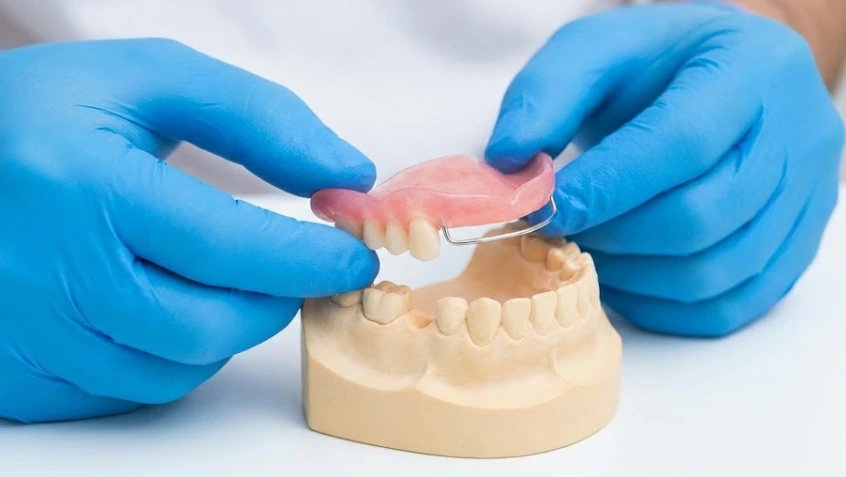
The Anatomy of a Flipper: Visualizing the Device
When Professor Doctor Coşkun Yıldız gives a flipper to a patient, he explains it has three major parts. Thus, it is not just a “false tooth”; in fact, it is a whole prosthetic system.
- The Acrylic Plate forms the foundation of the device. It is generally a gum-colored pink plastic that, if it is an upper tooth, lies against the palate (the roof of your mouth) and if it is a lower tooth, behind your lower teeth. It is as smooth as a hard contact lens, only it is for your mouth.
- The Pontic (The Tooth) is the visible element. It’s an acrylic tooth specially chosen to match the color of your natural teeth. It is secured to the plate and fills the gap left by your missing tooth.
- The Clasps (Optional) are there for extra stability; tiny metal wires are used to clasp neighboring teeth. However, for a single front tooth, we usually depend on suction and the close fit of the acrylic against your palate for the retention, and that way, we keep the metal out of sight.
Imagine it is like a theatrical prop. From the audience’s point of view (or from a person standing next to you), everything looks perfect. But behind the scenes (in your mouth), you know very well that it is only a temporary stage set and not the real structure.
Why “Looks” Deceive: The Comfort Factor
In terms of look, a properly constructed flipper by Dentist Polen Akkılıç and her team can appear quite real. We pick the shade, translucency, and shape of your adjacent teeth.
In contrast to that, it is the “touch” where the trick most often shows up. Because it is detachable and laid on the gums only, a flipper slightly shifts when you are eating or talking. This is not inserted into the bone like an implant. The patients often describe that it is like having a small stone or a piece of hard candy stuck to the top of their mouth.
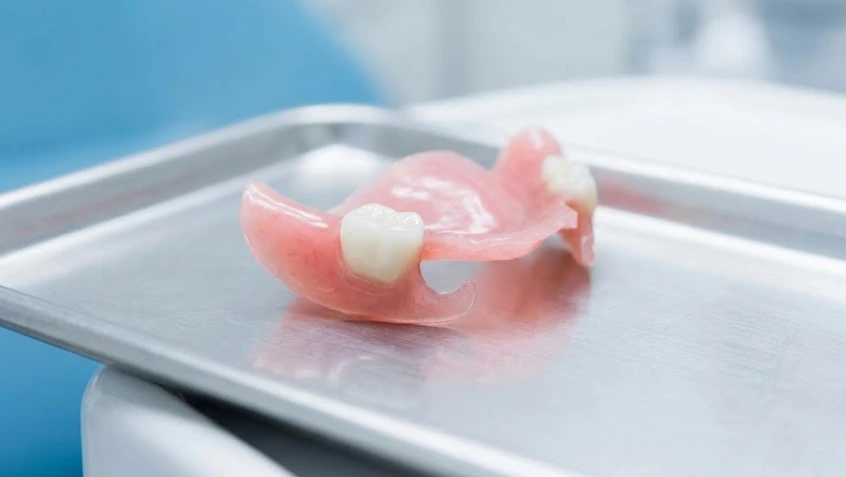
Comparing the Flipper: Temporary vs. Permanent
To give you a clearer picture of the flipper’s role in tooth replacement, consider the figures. We use a similar comparison chart at Lema Dental Clinic quite frequently to assist those who want to make the proper choice between a flipper and other permanent treatments such as implants or bridges.
| Feature | Single-Tooth Flipper | Dental Implant (Lema Standard) | Dental Bridge |
| Visual Appearance | Good (Acrylic) | Excellent (Porcelain/Zirconia) | Excellent (Porcelain/Zirconia) |
| Stability | Low (Removable, can shift) | High (Fused to bone) | High (Cemented to teeth) |
| Comfort | Bulky (Covers roof of mouth) | Natural (Feels like a real tooth) | Natural (No palate coverage) |
| Chewing Force | Minimal (Soft foods only) | 100% Bite Force | 90-100% Bite Force |
| Lifespan | 6–12 Months (Temporary) | Lifetime (Permanent) | 10–15 Years |
| Bone Preservation | None (Bone loss continues) | Stops bone loss | None |
The “Turkey Advantage”: Why Settle for Temporary?
Here is the hard truth we see in the clinic: A flipper is a “Band-Aid,” not a cure. In the UK or US, the high cost of implants often forces patients to wear flippers for years, risking gum infection and bone loss.
At Lema Dental Clinic in Turkey, the economics are different. Because of our operational scale and location, we can often provide a permanent Titanium Implant or Zirconia Bridge for a cost comparable to what you might pay for high-end temporary maintenance back home.
Dentist Polen Akkılıç often advises: “Don’t get comfortable with a flipper. It puts pressure on your gums and can actually damage the neighboring teeth you are trying to save. Use it for healing, not for living.”
Top Queries on Living with a Temporary Tooth
Not exactly. We recommend taking it out for heavy meals. If you must eat with it, stick to soft foods. Biting into an apple or a crusty baguette with a flipper is a recipe for disaster—it can snap the acrylic plate or dislodge the device mid-chew.
It is unlikely to fall out during normal conversation if it is well-fitted. However, aggressive coughing, sneezing, or—yes—passionate kissing can dislodge it. It relies on passive retention, not a cement bond.
Treat it like fine jewelry. Take it out at night and brush it gently with a soft toothbrush and mild soap (not abrasive toothpaste, which scratches acrylic). Soak it in a denture cleaner to keep it fresh. Never use hot water, as it can warp the plastic.
We strongly advise against it. Your gums need to “breathe” and recover from the pressure of the plate. Sleeping with it also increases the risk of fungal infections (like thrush) on the roof of your mouth.
Acrylic is porous. Over time, it absorbs saliva, bacteria, and food particles. If you don’t clean it religiously, it will develop a distinct odor. This is often a sign that it is time to consider a permanent solution like a bridge or implant here at Lema.
- Carr, A. B., & Brown, D. T. (2010). McCracken’s Removable Partial Prosthodontics (12th ed.). Elsevier Mosby.
- Davenport, J. C., Basker, R. M., Heath, J. R., & Ralph, J. P. (2000). A Atlas of Removable Partial Denture Design. British Dental Association.
- Misch, C. E. (2007). Contemporary Implant Dentistry. Mosby Elsevier.
- Pjetursson, B. E., & Lang, N. P. (2008). Prosthetic treatment planning on the basis of scientific evidence. Journal of Oral Rehabilitation, 35, 72-79.
- Zarb, G. A., & Hobkirk, J. A. (2013). Prosthodontic Treatment for Edentulous Patients: Complete Dentures and Implant-Supported Prostheses. Elsevier.

