


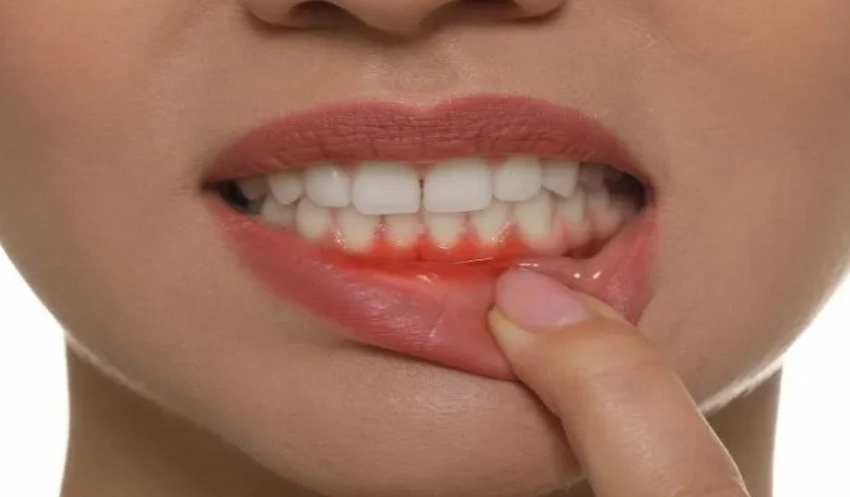
Seeing an area that is swollen, painful, or red on your gums around a single tooth is a kind of problem that is very common but has to be solved immediately. The swelling that is limited to a small area is the clearest and most direct signal of your body that the trouble is located right there. Inflammation of the gums, which is most commonly caused by gingivitis, is quite different from swelling that is noticed around only one tooth and that is a result of a local infection, trapped garbage, or injury, in all likelihood.

Knowing the reason for the inflammation of the gums is the most important step in getting the correct treatment, easing the pain, and maintaining good oral health over time. This comprehensive guide acquaints you with the different diseases that can cause swelling of the gums around a tooth, starting with common gingivitis and going further to abscesses, and provides you with clear, feasible, and safe instructions for treatment as well as prevention.
Why Are the Gums Swollen Around the Tooth?
Gums that are swollen around only one tooth show that the inflammation is a response of the body to infection or irritant. Swelling is your body’s signal that it is sending there blood and immune cells to fight the menace.
The most common cause is bacterial plaque a sticky, colorless film that is most frequently found in the very small area where the tooth meets the gum. If plaque is not taken off by brushing and flossing, it hardens into tartar (calculus), which is a thing that only a dentist can remove.
This tartar buildup becomes a source of continuous irritation that makes you call the redness, puffiness, and tenderness that you see. Besides that, a piece of food stuck in the interdental space, the malfunction of a dental restoration, or an injury to the gum tissue might also be the cause of swollen gums around a tooth.
Knowing exactly which one of these triggers causes the problem is very important so that your doctor will prescribe the right medicine for the fastest and cleanest recovery and the prevention of getting more severe problems.
Recognizing the Symptoms: More Than Just Swelling
Swelling is the major sign that can be seen; however, other symptoms are usually present as well. These associated symptoms recognition and reporting to the doctor will give him a better understanding of the problem and will lead to a more accurate diagnosis. The main symptoms that one should keep an eye on are:
- Visible Inflammation and Redness: The gums around the tooth that causes the problem are very inflamed. They are swollen, extending, and when checking the color of the other teeth’s regular pink gums, they are red or even purplish.
- Tenderness and Pain: Usually, the area is painful when you touch it, and, what is more, it can give a continuous, throbbing kind of pain. The pain can be only slightly irritating or extremely sharp and severe, and it can happen when you bite.
- Bleeding: Inflamed gums will bleed without a doubt, even if you gently brush or floss around that particular tooth.
- Pus Drainage: he existence of a fistula (a small bump) that can discharge pus is a very clear indication of a dental abscess, which is an infection that is serious and needs care.
- Persistent Bad Breath or Unpleasant Taste: A chronic bad taste in the mouth or bad breath that does not get better with brushing may be caused by bacteria and pus, which are parts of the infection.
- Gum Recession: Sometimes, extremely long periods of inflammation may result in the gum tissue separating from the tooth and thus the tooth looking longer.
What Causes Swollen Gums Around the Wisdom Tooth?

Pericoronitis is by far the most typical cause of swollen gums around a wisdom tooth. It is a situation when a molar, or third molar, is just partially emerging from the gum layer, so an operculum is the term for the piece of gum that covers the tooth, thus making a close and hard-to-clean place, which most probably becomes infected.
Food leftovers and bacteria are easily caught under this gum flap. The reason why the area becomes a place where bacteria live and thus, a painful and local infection, is that it is nearly impossible to clean it properly with a toothbrush. Pericoronitis symptoms include severe pain, difficulty opening your mouth, and a bad taste. The sooner you visit a dentist, the better, as a dental professional is the only one who can help you get rid of the infection via cleaning and irrigation and also, find out whether wisdom tooth removal is the best long-term solution to prevent recurrent episodes.
Navigating Swollen Gums Around a Tooth After an Extraction
Some swelling can be felt after a tooth has been removed and is a part of the body’s normal healing reaction. The inflammation is, in fact, a reaction to the operation and usually the peak of it is within the first 48 hours and then it slowly subsides.
You can get this swelling controlled pretty well by putting an ice pack on your cheek for 15 minutes at a time for the first day. Still, differentiating between this normal recovery and the complication signs is very important. An extremely aggravated swelling after the third day accompanied by a sudden, sharp, and throbbing pain, foul taste, or pus that can be seen, may suggest dry socket (alveolar osteitis) or post-operative infection.
The pain known as dry socket is caused by an empty space, which results when the protective blood clot at the extraction site is rubbed off, thus, the bone and nerves become exposed. The surest way to provide for a smooth, comfortable, and complication-free convalescence after your extraction is to closely follow the aftercare instructions of your dentist, thereby not allowing yourself to rinse vigorously, smoke, or drink through a straw.
Managing Swollen Gums After Wisdom Tooth Extraction

Unveiling a third molar is much more complicated and invasive than a basic extraction; thus, swelling is usually more evident and pronounced. Gum and bone tissues that have been surgically manipulated trigger a big inflammatory response. How to overcome this swelling and lessen your pain depends solely on you being proactive and diligent.
The doctor will suggest you are on a regimen that consists of placing an ice pack to your cheek during the first 24 hours, taking anti-inflammatory drugs if prescribed, and resting. On the other hand, a warm compress can be used after the first day to help blood circulation and get rid of the remaining swelling. Besides that, following a soft food diet and practicing gentle oral hygiene at the surgical site are equally important factors of a quick and successful recovery progression that leads to your return to the usual routine in no time.
Swollen Gums Around a Tooth That Needs a Root Canal
If around a tooth that has been hogged with decay or has a deep filling, there is swelling, then very often it is a sign of infection of the inner pulp of the tooth, which later died (necrotic). The latter condition is referred to as pulp necrosis and it is very likely to lead to periapical abscess.
The infection spreads to the bone marrow through the root apex, where the nerve bundle and blood vessels are located, coming from the inside of the tooth canal. The body’s immune system, which is working against this emergency, finds pus and thus, pressure is created in that place, also, a swelling that is like a pimple on the gums appears – this swelling is called a fistula. The fistula is a kind of vent for the pus.
The root canal is the final and saving-the-tooth operation that is actually designed to solve this problem. The dentist takes out the infected pulp during the root canal, thoroughly cleans, disinfects, and then closes the inside part of the tooth to make sure that it cannot get infected again.
Understanding Swollen Gums Around One Tooth After Flossing
Swelling that occurs right after flossing in the area of a particular tooth can only be explained by either one of two situations: method or already existing condition. If you forcefully snap the floss into the gum sulcus, you can bring about a sudden, sharp trauma of the very sensitive gum tissue, thus, instant pain and swelling will follow.
The right way of doing it is taking the floss, and with a gentle just a little sawing movement, you put the floss between the two teeth, then make a “C” shape with the floss around one tooth and very softly slide it under the gum line. The other explanation could be that you have not been flossing regularly, so when you start flossing, your gums, being they are clogged, temporarily get inflamed because it is the removal of the plaque that is the cause of the rare weapon.
Such swelling should go away within a week as your oral hygiene gets better. In case the swelling still exists, it points to a deeper trouble, for example, a caries or a wrongly shaped filling which causes the area to be dirt-trapping.
The Sign of Swollen Gums Around a Tooth With Pus

The occurrence of pus around a tooth is a very clear indication of a dental abscess – a collection of bacteria, white blood cells, and dead tissue that is localized. It is the hall mark of an active infection that has progressed to an advanced stage, therefore, it would not disappear unless a professional helps out.
Periapical abscess (the one that is caused by the pulp of the tooth) and periodontal abscess (originating from the gum and bone tissues around the tooth) are the two types that are most commonly referred to.
If the abscess is left untreated, it can be very risky as the infection can get into the bone around the abscess area, the soft tissues of the face and neck, or even the bloodstream, which then can cause a general health problem. Treatment for a dental abscess is timely and typically includes the drainage of pus to alleviate the pressure, a short course of antibiotics to get rid of the infection, and, as a last resort, a root canal or removing the tooth, the main cause, to be followed.
Managing Swollen Gums Around a Tooth With Braces
Although they are necessary for getting a perfect smile, orthodontic appliances are a big obstacle to oral hygiene. Brackets and wires make many tiny spaces where food particles and plaque can very easily build up, the most common reason for swollen gums around one or more teeth. This condition is localized gingivitis.
In order to keep the gums healthy while undergoing orthodontic treatment, you have to be very thorough in your cleaning routine. Besides that, certain tools can be very helpful: an interdental brush is good for cleaning around brackets and under wires, while a water flosser uses a directed water jet to remove the debris from places that are hard to reach with string floss.
If you maintain this strict hygiene routine, not only will your gums stay healthy and free from swelling, but also your orthodontic treatment will be able to progress without any breaks due to the occurrence of dental problems.
Investigating Swollen Gums Around a Capped Tooth
When the natural tooth is badly damaged, a dental crown (or cap) is the solution that is meant to fully cover the tooth and bring back its working function. However, the swollen gums around a crowned tooth show that there is a problem which needs to be evaluated by a professional.
Most commonly the reason for compromised margin is that – the place where the crown meets the natural tooth. If the border is open, uneven or joins the parts in a bad way it lets the bacteria go under the crown where they lead to decay of the support part of the tooth and thus, the gums get inflamed.
The other potential reasons may be the crown is too heavy for the gums or it goes too deep and, thus, is causing irritation all the time, or normal gum recession that has exposed the margin of the crown making it easier for bacteria to accumulate. Dentists will find out the problem by taking an X-ray to see the bone level and the condition of the margin under the gum and then, they will figure out the best way which might entail replacing the crown.
Treatment of Swollen Gums Around a Tooth
The suitable treatment for swollen gums depends fully on the diagnosis made by your dentist. Trying to figure it out on your own and using some over-the-counter products may give you short-lived relief but they will not solve the problem at its source.
- Professional Dental Cleaning: The First thing to be done is professional prophylaxis (cleaning). This is when your dentist or dental hygienist will go with their instruments and remove all the plaque and tartar that are built both above and below the gum line in your mouth, which is the main cause for the swelling.
- Scaling and Root Planing: In the case of more severe gum disease (periodontitis), a thorough procedure known as scaling and root planing is done. This method implies dirt removal from the roots of your teeth and is aimed at releasing bacteria and tartar in deep periodontal pockets and, thus, also helps the gums to get reattached.
- Root Canal Therapy: Is this intervention to be performed when the cause of the swelling is an infection that is located in the interior of the tooth? By taking out the infected nerve tissue and sealing the canals, root canal therapy is the procedure that completely eradicates the source of the trouble, thus, the accompanying gum swelling and fistula heal and disappear.
- Antibiotic Therapy: In case of infection or abscess, the dentist may give you a prescription for oral antibiotics that should be used to carry the fight against bacteria or put a periodical antibiotic gel in the periodontal pocket, thus aiding the immune system to get rid of the bacteria.
- Surgical Intervention: For severely infected cases that are stubborn or of a complex nature, there may be a necessity in surgical procedures. Those surgeries might include periodontal flap surgery for cleaning deep pockets, an apicoectomy (removal of the tooth’s root tip) if a prior root canal is not successful, or the extraction of a tooth that can no longer be saved.
- Correction of Dental Work: When the issue originates from a crown, a filling a bridge that is defective, the problem’s ultimate solution will be replacement or adjustment of the restoration so as to create a proper seal and contour that is easy to clean and good for the gums.
Treatment and Solutions at Lema Dental Clinic

Lema Dental Clinic is the place where we realize the importance of both healthy gums and a lovely smile. Gums that are swollen around a tooth may be a signal of some hidden dental problem needing professional care. Whatever be the cause of it, the disease, the infection, or even the trauma, our clinic provides with the treatment options that would not only solve these problems but also restore your oral health.
The team of specialists that we have, full of experience and up-to-date with the latest technology, is in a position to effectively diagnose and treat gum problems. We also provide treatment options that are tailored to individual needs and may comprise professional cleanings, root canal therapy, periodontal treatments, and surgeries in a rare event.
Don’t keep your troubles to yourself if you are suffering from swollen gums or some other dental issues. Come to Lema Dental Clinic for an in-depth examination and pragmatic solutions that will not only help your gums to regain their health but also beautify your smile. The main goal of ours is to make sure that every patient gets the optimum care which is specially designed for his/her unique needs leading to a smile full of confidence and of long duration.
Sources:
- American Dental Association. (n.d.). Gingivitis.
- American Academy of Periodontology. (n.d.). Types of Gum Disease.
- American Association of Endodontists. (n.d.). Abscessed Teeth.
- Kandasamy, M., Rinchuse, D. J., & Rinchuse, D. J. (2009). The Wisdom Behind Third Molar Extractions. Australian Dental Journal.
- Chopra, A., et al. (2021). Postoperative Management in Tooth Extraction: A Review of Literature. Journal of Pharmacy and Bioallied Sciences.
- American Dental Association. (n.d.). Flossing.
- Bock, N. C., et al. (2020). Efficacy of oral hygiene with fixed orthodontic appliances: a systematic review. Journal of Orofacial Orthopedics.
- Wilson, Jr., R. D. (2019). The Relationship Between the Margin of a Restoration and the Periodontium. Decisions in Dentistry.
FAQ’s: What Causes Swollen Gums Around a Tooth?
Swollen gums around a tooth can be caused by the four major factors of bad oral hygiene, gum disease, infection, and trauma. Moreover, the problem may be caused by dental abscesses, cavities, or impacted teeth.
To treat swollen gums, maintaining proper oral hygiene is essential. Brushing, flossing, and using an antibacterial mouthwash can help reduce inflammation. If an infection is present, a dentist may prescribe antibiotics or recommend treatments like a root canal or cleaning.
Swollen gums around a fake tooth, such as a dental implant or crown, can result from infection at the site, improper fit, or irritation caused by food particles. It may also occur due to underlying gum disease.
If swollen gums surround a broken tooth, immediate dental attention is necessary. A broken tooth can expose the inner layers of the tooth, making it susceptible to infection. A dentist will assess the damage and may recommend treatments such as a filling, root canal, or tooth extraction.
Swollen gums around a decayed tooth indicate that the infection may have spread to the surrounding tissues. The decay allows bacteria to enter the tooth, which can cause the gums to swell, bleed, or become tender. Immediate dental intervention is needed to prevent further complications.

