


Retainers can cause plaque buildup or discomfort if poorly cleaned or ill-fitting.
Understanding the Negative Effects of Retainers
You may have endured the ordeal of braces or clear aligners for several months or even years. Getting your braces off is definitely one of those big moments in life. Still, as Professor Doctor Coşkun Yıldız regularly points out to patients at Lema Dental Clinic, the work is not finished once the brackets have been removed. That is why the retainer is brought to the foreground.
Retainers have been described as the “invisible protectors” of your teeth after the final alignment. Nonetheless, just like any health device used over an extended period, they come with certain disadvantages. While their main role is to prevent the so-called “relapse” – the time when teeth want to return to their former crooked positions – they may inadvertently cause some oral health problems.
The Invisible Burden: Common Side Effects
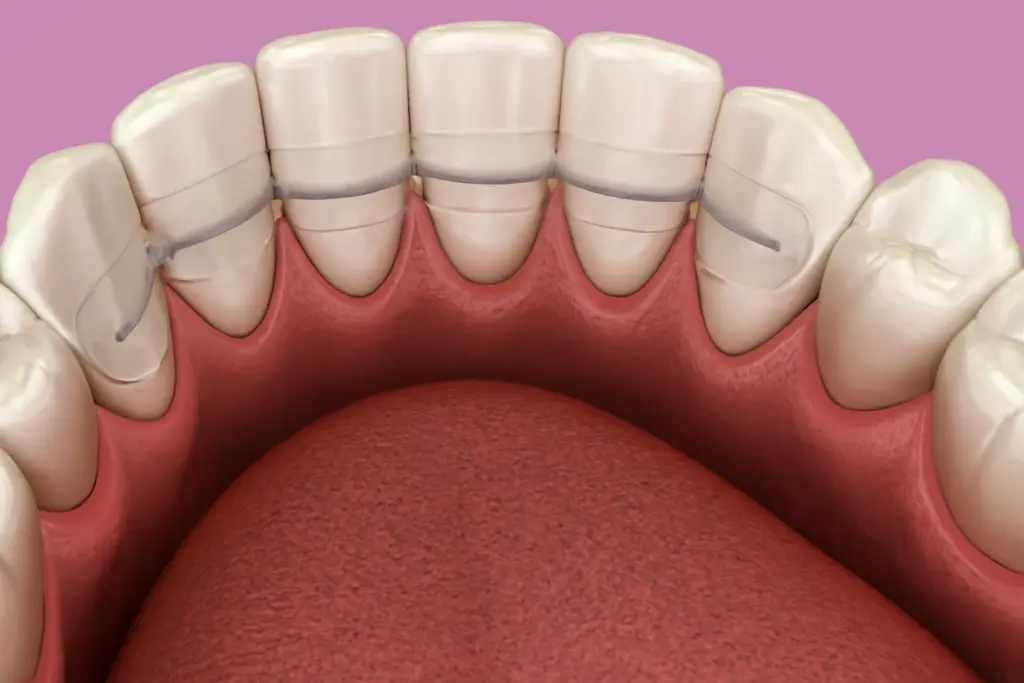
What’s really going on is that putting something in your mouth 12 to 22 hours a day alters the microenvironment. Here’s a list of things we observe at the clinic that result from poor retainer care.
1. The Bacteria Trap
Consider a removable retainer as being similar to a sponge. It may appear spotless; however, its microscopic pores can harbor bacteria, plaque, and tartar. Without good personal hygiene, the retainer simply becomes a vehicle for transmitting tooth decay and gum ddisease Dentist Polen Akkılıç along with her team keep stressing that the healthiness of a retainer depends entirely on the hygiene standards of the one who cleans it.
2. Speech Impediments and Salivation
When you initially put on a Hawley or Essix retainer, it feels as if your tongue is trapped in a space where the furniture has suddenly been changed. You might develop a slight speech impediment. Or you may notice an increase in your saliva production. It is the brain’s natural reaction that treats the retainer plastic or wire as if it were food and therefore needs to be swallowed.
3. Allergic Reactions
Apart from the fact that it does happen occasionally, it is quite uncommon. In some cases, individuals might be allergic to the nickel in the metal wires or to the acrylic in the retainer base. The symptoms in this case can be the formation of sores inside the mouth, erythema, or a burning sensation on the palate.
Fixed vs. Removable: A Comparison of Risks
Choosing the right retention strategy involves balancing lifestyle with biological risk. At our center in Turkey, we tailor this choice to each individual’s bone density and oral habits.
| Feature | Removable Retainers (Essix/Hawley) | Fixed Bonded Retainers |
| Hygiene Risk | High (if not cleaned daily) | Very High (difficult to floss) |
| Speech Impact | Moderate (temporary) | Minimal |
| Durability | Easy to lose or break | Can snap without the patient noticing |
| Comfort | Bulky | “Invisible” feel |
| Relapse Risk | High (if the patient forgets to wear it) | Low (it’s always working) |
When the “Foundation” Shifts: Structural Issues
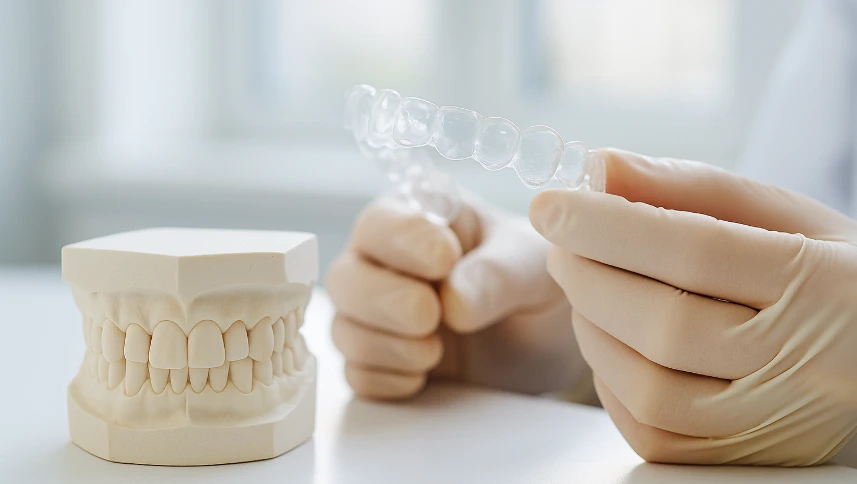
It is still not clear whether a retainer can really hurt your bite. If a retainer gets distorted – maybe by washing it in very hot water – it can apply what is called “pathological pressure”.
Instead of keeping the teeth stable, a broken retainer works as if it were a slow, accidental orthodontic treatment. We have also seen a fitting retainer that resulted in jaw joint pain (TMJ) and even caused root resorption which is when the root of the tooth gets reabsorbed by the body due to continuous pressure that is incorrect. It is like putting on a shoe that is one size too small; after a while, it is not just your toes that hurt, but your whole walking pattern.
Maintaining Your Investment at Lema Dental Clinic
The clinical team of Lema Dental Clinic has never ceased to be amazed by how virtually all “negative effects” are really a result of negligence and carelessness only.
Whether you are a visitor from abroad or a resident of Istanbul, our strategy is thorough through follow-ups. We don’t only give you a plastic piece and wave goodbye. We make sure the fit is biometric and the material is biocompatible.
FAQ: Straight Talk from Our Surgeons
Well, that’s kind of your body’s way of communicating. If the retainer feels tight, then it means that your teeth have tried to move during the day. In fact, being tightly fitted isn’t necessarily ‘bad,’ it is just a sign that your dental ligaments are still flexible. Of course, if the tightness is so severe that it causes you a headache then we are going to have to readjust the retainer.
Not at all. Your tongue is very flexible, and it has an extraordinary capacity for adaptation. Normally, it takes a few days (three to seven days) for your brain to adjust and for your speech to get back to normal. In case your speech does not get back to normal, the acrylic could be unnecessarily thick.
Most of the time, the soreness is due to the formation of ‘calculus bridge.’ Since you cannot floss the normal way, plaque turns into tartar. Dentist Polen Akkılıç and her team have suggested that bridge threaders or water flossers could be used to remove the debris.
In fact, we provide plastic, clear retainers that contain no metal at all. They are safe to use and are almost invisible. Therefore, they are perfectly suited for people with nickel allergy.
With a retainer itself you cannot get a cavity, nevertheless, it can keep sugar and acid close to your enamel. When you have a soda or juice for a drink with your retainer, you are actually ‘soaking’ your teeth in acid. Besides water, always take out your retainer before you eat or drink anything.
- Littlewood, S. J., & Millett, D. T. (2019). Contemporary Orthodontics: Retainers and Stability. British Dental Journal.
- Nanda, R., & Kapila, S. (2023). Retention and Stability in Orthodontics. Elsevier Health Sciences.
- Renkema, A. M., et al. (2015). Gingival recessions and labial orthodontic retention: A 10-year follow-up. European Journal of Orthodontics.
- Johnston, C. D., & Littlewood, S. J. (2015). Retention in Orthodontics. Dental Update.
- Al-Moghrabi, D., et al. (2016). Compliance with removable orthodontic retainers: A systematic review. American Journal of Orthodontics and Dentofacial Orthopedics.

