


Long-term Impact of Smoking on Gum Bleeding and Oral Health
The prolonged use of smoking has a very significant and very long kind of impact on the health of a person’s gums. It puts a person at risk of bleeding thus being the first symptom of the injured gums. One of the major reasons for this is the cigarette smoke chemicals that meet and directly cause the inflammation of the gums. Since the tissues are already damaged due to the smoke these weaken the process of healing and the regeneration of what is lost.
The results of the research conducted by Prof. Dr. Coşkun Yıldız and his team show that smoking leads to the narrowing of blood vessels resulting in less oxygen and other nutrients reaching the gums. The lower supply of oxygen and other nutrients leads to less healing of the inflamed gums and infection gets a chance to establish in these areas. On the other hand, the infected, inflamed, and bleeding gums are the most common symptoms of gingivitis as the final stage that the impaired tissues have caused, which cannot effectively fight off bacteria as the disease progresses.
The tar in cigarettes that causes the tissues of the mouth to recede is the ones that usually lead to the receding of the gums, teeth becoming loose, and oral cancer. Moreover, lowered blood circulation will lead to a weakened immune system which will then cause the body to be more prone to infections. Dentist Polen Akkılıç and her team state that due to the body’s lack of ability to heal itself, smokers’ gums are in a state of constant bleeding, which, in general, is one of the very first signs of periodontitis. The ailment’s advancement occurs continuously and, as a result, professional intervention is not only a necessity for treatment but also for the prevention of further issues.
Essential Long-Term Impacts of Smoking on Gums:
- The blood supply to the gums is lessened, hence the healing and regeneration processes get weaker.
- More plaque and tartar deposits are formed, which inflame the gums and make them bleed.
- The risk of periodontal disease is significantly heightened, as a consequence, the loss of teeth and extreme gum recession will take place.
- The immune system is weakened, therefore the incidence of gum disease and other oral infections is elevated.
The Role of Smoking in Increasing Gum Bleeding Risk
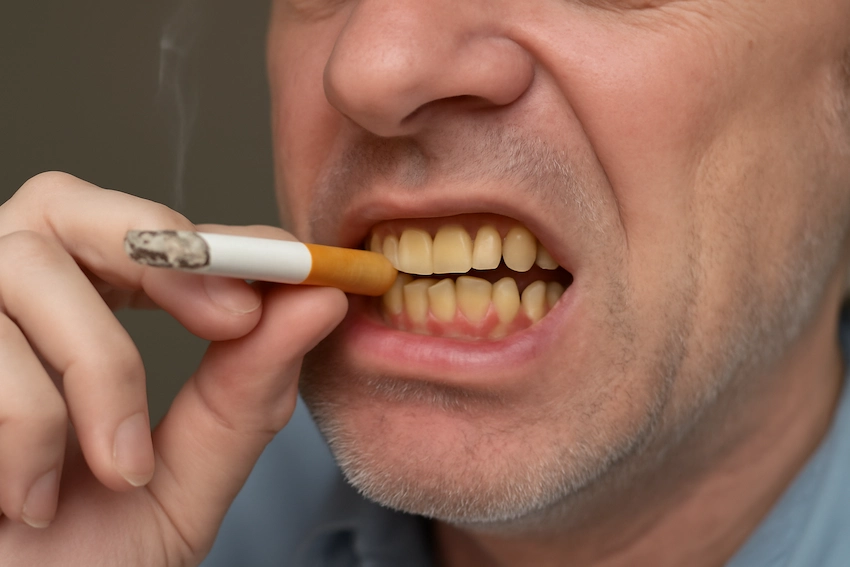
One of the foremost smoking factors responsible for increasing the risk of gum bleeding is the influence that smoking has on blood circulation and the immune system. It is well-known that blood is the source of oxygen, and the same applies to gums which are oxygenated by blood. Nevertheless, if a person smokes, the nicotine in the cigarettes will cause the blood vessels in the gums to constrict (narrow), thus limiting the delivery of oxygen and nutrients to the gum tissues. The tissues become less able to regenerate as a result of this insufficient blood supply and so, they become more susceptible to bleeding. Professor Doctor Coşkun Yıldız and his team reveal that in the case of smokers, very minor injuries caused by brushing or flossing which normally do not show can actually result in bleeding.
Moreover, smoking weakens the immune system, which means that the body is less capable of fighting off bacterial infections which lead to gum diseases. Smokers, therefore, become at risk for diseases and infections such as gingivitis and periodontitis, ultimately, causing bleeding gums. Dentist Polen Akkılıç with her team, highlights that bleeding gums caused by ill treatment of gum disease are the first symptoms only, later there will be permanent damage, such as tooth mobility and even tooth loss. Moreover, smokers, due to the intake of cigarette smoke, are more prone to severe forms of gum disease as the smoke chemicals make it difficult for the body to eliminate the bacteria that cause infections in the mouth.
How Smoking Raised the Risk of Gum Bleeding:
- One reason for this is that nicotine is the element that causes the blood vessels in the gums to narrow and as a result, there is less blood flow and the process of healing is done in a weakened way.
- Smoking a cigarette weakens the immune system of the body, and hence, it becomes more difficult to fight the bacteria that cause infections of the gums.
- Those who smoke are at a higher risk of developing periodontal disease which is the main reason for frequent and heavy bleeding of the gums.
- Bleeding of the gums that is not followed by proper healing is a condition that recurs frequently and is hard to handle.
Why Smokers Are More Likely to Have Gum Recession?
Gum recession is common among smokers, a condition where the gums loosen their grip on the teeth and the roots of the teeth become visible. Professor Doctor Coşkun Yıldız says that smoking causes the blood flow in the gums to be very limited, as a result, the tissue becomes weak and is more susceptible to getting damaged. The roots of the teeth, which are the most vulnerable parts, can easily decay or become infected when the gums recede. Thus, the occurrence of tooth sensitivity and bleeding gums becomes more probable.
Smoking effect on the immune system is the major one out of several factors that may cause gum recession in smokers. Dentist Polen Akkılıç and her team explain that smoking impairs the immune system, thus, the gums become less capable of fighting off infections which result in gum recession. The decreased immune response also favors plaque and tartar formation which causes gum inflammation and hence, speeds up the process of recession. At the stage when the gums are very much receded, smokers can lose a lot of teeth and this can happen, in particular, if they are careless with their oral hygiene.
Why Gum Recession is More Common in Smokers:
- Continued smoking habit can damage the gum tissue and eventually the gums will start to recede.
- Blood circulation to the gums is hampered so the gums get little nourishment and can hardly heal, thus the problem of recession becomes more frequent and serious.
- By smoking it becomes easier for plaque to accumulate along the teeth, thus the gums get inflamed and recede.
- Gum tissue in smokers is highly compromised due to the immune system that has been weakened by smoking thus they are more prone to suffer severe gum loss.
Smoking and Its Connection to Periodontal Infections

Periodontal infections figure among the most significant consequences of smoking. They have been identified as the leading factors directly associated with the risk of gum bleeding. The bacteria that cause periodontal disease get an ideal environment in the mouths of smokers. This is because smoking impairs the immune system and thus, the body is less capable of fighting bacterial infections. Professor Doctor Coşkun Yıldız states that smokers may exhibit higher rates of gingivitis and periodontitis, which are the main causes of gum inflammation and bleeding. These diseases not only damage the gum tissue but also may result in tooth mobility and even tooth loss if the patient remains untreated over time.
Moreover, smoking speeds up the process of plaque and tartar accumulation which in turn attracts the growth of evil bacteria. Cigarette smoking gives rise to plaque through the release of several toxic substances thus the teeth become dirtier and the gums are less resistant than before. Polen Akkılıç, DMD, and her team state that those who smoke have a greater chance of developing serious periodontal infections which are difficult to cure due to their immune system’s insufficient response resulting from smoking. Cleanings from the dental office performed regularly along with a good oral care routine are the minimum requirements that should be met by smokers if they want to stay away from periodontal infections and protect their gums against excessive bleeding.
How Smoking Contributes to Periodontal Infections:
- Smoking impairs the immune system, thus the body’s capability to resist the bacteria which cause gum infections is reduced.
- The obstruction of the teeth by plaque and tartar becomes very serious, so that the bacteria that cause diseases have a perfect place to reproduce.
- It has been found that smokers develop more severe periodontal infections that cause them to have bleeding gums frequently.
- By smoking, the body’s internal defense system is weakened, therefore, the infections become more difficult to treat.
Smoking and the Increased Risk of Oral Cancer in Smokers with Gum Bleeding
Smoking is the main factor that leads to an increase in oral cancer risk and its combination with bleeding gums or periodontal disease has the highest effect. Professor Doctor Coşkun Yıldız points out that one of the reasons is that by this chain reaction of smoking gum disease, the chronic inflammatory process in the oral cavity is accelerated, and the very environment where malignant cells settle and develop is created. Smoke consists of several carcinogenic agents that will be breathed in and absorbed through mucosal membranes in the mouth, which definitely will cause DNA mutations of these tissue cells, the gums as the soft tissue having the highest exposure and the paramucosa;
Gum disease individuals who are also smokers become the highest risk group for oral cancer. The reason is/that irritants in former cases make the tissue infected while in the latter carcinogens make the irritated tissue predisposed to oncogenesis. Thereby tobacco + periodontal disease may cause or VOL amplify the incidences of precancerous lesions and oral cancer as a reality. Dentist Polen Akkılıç gives an opinion and she along with her staff believes that recognition of oral cancer in its earliest stages is quite important in the success of its subsequent treatment. We can say that early diagnosis of oral cancer in smokers with bleeding gums can be realized only if such people are diligent in dental check-ups where inspection and monitoring must be performed regularly.
Risk of Oral Cancer in Smokers with Gum Disease:
- While smoking, the tobacco-related cancer-causing agents are inhaled directly into the tissues of the mouth thus the area is biologically changed and cancer is more likely to arise there.
- Prolonged periodontal disease, by definition, is the condition that forms the most probable scenario for the development of cancer cells.
- Combustible smokers who also suffer from bleeding gums are those who have the highest risk of getting oral cancer as a result of the continuous inflammation.
- It is vitally important that smokers suffering from gingivitis make it a point to see their dentist regularly so the oral cancer signs can be examined and detected at an early stage.
How to Safeguard the Gums of a Smoking Person
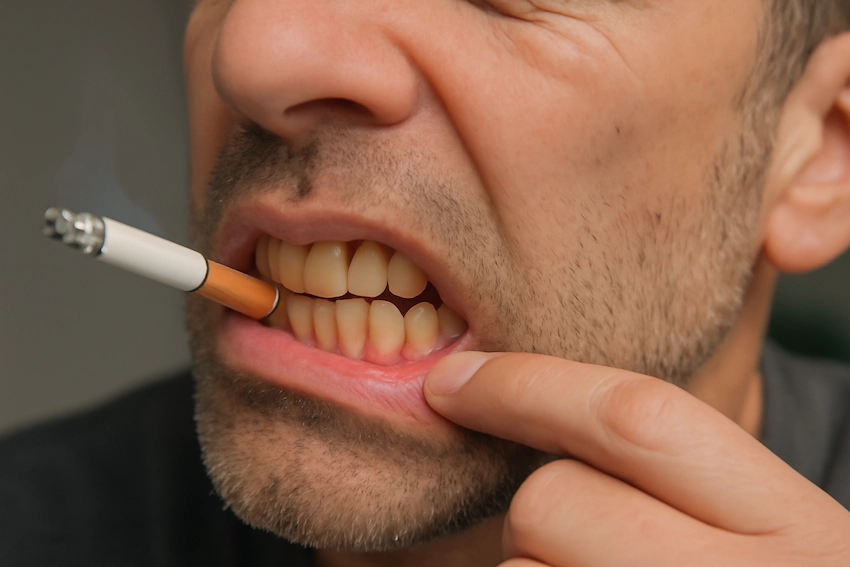
It’s a fact that smoking is bad for gums, but those who do can take some measures to lessen the risk of bleeding and keep their mouth in good shape. Dentist Polen Akkılıç and her team state that the best thing to do to save your gums is to stop smoking. When you give up smoking, your gums get their blood supply back and thus they can repair and renew themselves. Besides, smokers who quit will be less likely to get periodontal diseases, cavities, and oral cancer.
Moreover, smokers need to adhere to an extremely rigorous oral care regimen even after they have quit smoking. The tools for this are good brushing (twice per day using a fluoridated toothpaste), regular dental flossing, and the application of an antimicrobial mouthwash which is also helpful in plaque control. Also, getting dental care done regularly is the only way to keep the teeth clean and healthy for a smoker. This is because professional tooth cleaning is the only way to get rid of the hard deposits (plaque and tartar) that are formed on the teeth. Professor Doctor Coşkun Yıldız even says that smokers should nourish themselves properly with foods rich in vitamins and minerals in order to build strong gums and speed up the healing process.
Important Prevention Steps for Smokers:
- Stop Smoking: This is by far the best method to restore gum health and stop gum bleeding.
- Use an Effective and Thorough Oral Hygiene Method: Brushing twice a day, flossing, and using a mouth rinse are all ways to keep the plaque buildup at bay.
- Dental Visits Regularly: Cleanings by the dental hygienist to get rid of plaque and tartar and check gum condition.
- Follow a Nutritious Diet Plan: Foods loaded with nutrients to help the body heal and make the gums strong.
Tips for Quitting Smoking and Enhancing Gum Health
Giving up smoking is the single best thing to renew your gum health. After quitting smoking, your gums get a better blood supply which lets the damaged areas due to smoking heal. Dentist Polen Akkılıç and her team advise the use of nicotine replacement therapies like gum or patches to help the cravings. A support group or counseling session can also be a source of indispensable help during the quitting process.
Besides quitting smoking, it is equally important to have a solid oral hygiene practice. Professor Doctor Coşkun Yıldız indicates that smokers who quit within a few months notice the improvement of their gum condition, less bleeding, and inflammation. Besides, quitting smoking lessens the risks of tooth decay and oral cancer along with improving gum health.
Tips for Quitting Smoking
- Professional Help: Using nicotine replacement therapy or talking to a counselor might be a nice experience for your detachment from nicotine.
- Do Not Quit Caring for Your Mouth: Never forget to brush your teeth two times a day, floss regularly, and use mouthwash to keep your gums healthy.
- Invest in Your Health: After just a few months of being tobacco-free, you can certainly enjoy healthier gums that are less bleeding and reddened.
- Support Your Willpower: To be more connected with your goal and to have more strength of will, you may attend support groups or find a quitting partner.
Effects of Smoking on Gum Health
| Effect | Description | Impact on Gum Health |
| Reduced Blood Flow | Nicotine constricts blood vessels, reducing oxygen supply. | Delays healing and increases gum inflammation, leading to bleeding. |
| Weakened Immune System | Smoking weakens the body’s ability to fight infections. | Makes gums more susceptible to bacterial infections and gum disease. |
| Increased Plaque Buildup | Smoking accelerates plaque formation on teeth. | Leads to gum irritation, bleeding, and periodontal disease. |
| Gum Recession | Smoking weakens gum tissues, causing them to pull away from teeth. | Exposes tooth roots, leading to sensitivity and a higher risk of decay. |
| Higher Risk of Oral Cancer | Smoking irritates the gums, making them vulnerable to cancerous cells. | Increases the risk of oral cancer, particularly in smokers with gum disease. |
References
- American Dental Association. (2020). The effects of smoking on oral health. Retrieved from https://www.ada.org/en/member-center/science-and-research/health-policy-institute
- Aldo, M., & Silva, M. (2019). The impact of smoking on periodontal disease: A comprehensive review. Journal of Periodontology, 90(3), 344-358. https://doi.org/10.1002/JPER.18-0198
- Cheng, B., Lian, C., & Wang, F. (2018). Nicotine exposure and its effects on periodontal tissues: An overview. Journal of Clinical Periodontology, 45(7), 639-648. https://doi.org/10.1111/jcpe.12988
- Dye, B. A., & Thornton-Evans, G. (2019). Dental caries and periodontitis in US adults: Trends in prevalence and treatment. National Institute of Dental and Craniofacial Research. Retrieved from https://www.nidcr.nih.gov
- Garcia, R. I., & Henshaw, M. (2017). The relationship between smoking and periodontal disease. In M. S. Gould (Ed.), Textbook of Periodontics (pp. 456-467). Elsevier. https://doi.org/10.1016/B978-0-323-47400-1.00052-X
FAQ: Effects of Smoking on Gum Health
Smoking reduces blood flow to the gums, making it harder for them to heal and increasing the risk of gum disease and bleeding. It also promotes plaque buildup, which aggravates inflammation and causes further damage to the gums.
Yes, smoking weakens the immune system and reduces the body’s ability to fight infections, making the gums more vulnerable to bleeding. The nicotine in cigarettes also constricts blood vessels, preventing the gums from receiving essential nutrients.
Smoking accelerates plaque buildup on teeth, which can lead to tooth decay and structural damage. The toxins in cigarettes also contribute to enamel erosion, making teeth more susceptible to cavities and other issues.
Yes, smoking promotes plaque accumulation, which leads to tooth decay and cavities. It also reduces the production of saliva, which helps neutralize acids and prevent the buildup of harmful bacteria in the mouth.
Quitting smoking significantly improves blood circulation to the gums, which promotes healing and reduces inflammation. Many smokers who quit notice healthier gums and less bleeding within a few months.
Yes, smoking increases the risk of gingivitis by impairing the body’s immune response, which allows bacteria to thrive in the gums. This leads to gum inflammation, swelling, and bleeding.
Smoking after a tooth extraction can delay healing and increase the risk of complications such as dry socket, infection, and prolonged bleeding. It is best to avoid smoking during the healing process to promote faster recovery.

