


Permanent diamond teeth can raise plaque and enamel risks if poorly placed.
Why Permanent Diamond Teeth Are the Ultimate Signature Smile?
Maybe you can relate to that feeling when you enter a room and want to present the best version of yourself. New clothing and a haircut are two things we usually think about in such cases. However, in a luxury aesthetic world, there is something far more permanent and deeply intimate that a diamond-integrated smile represents.
Lema Dental Clinic, Istanbul, Turkey, hosts patients from all corners of the globe who want their smiles to be not just healthy, but legendary. The truth is, while the “glitz” grabs the eyeballs, the tangible advantages of having permanent diamond teeth are that they go way beyond the surface.
More Than Jewelry—It’s Biology-Friendly
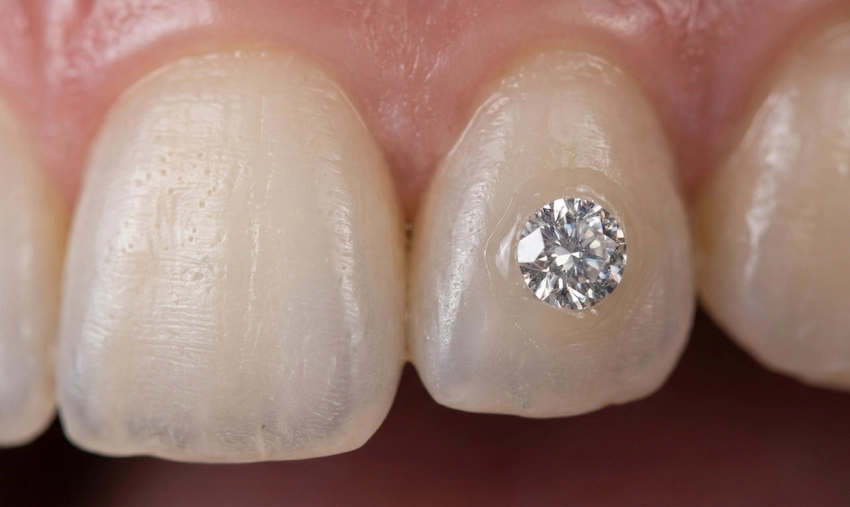
One of the most common questions Prof. Dr. Coşkun Yıldız asks is even if a diamond is in your mouth, is it “safe”?What’s more, we don’t even realize that diamonds rank among the most biocompatible materials in the world without anyone telling us. They are chemically inert, meaning that they do not react with the acids in the food or the bacteria in the mouth.
Consider a diamond a silent, polished marine. It neither breaks the peace nor causes hay fever, and certainly, it does not wear out like the cheap, plastic versions. The instant we place these gems in a Zirconium setting, we are basically creating a masterpiece under a protective cover.
Dentist Polen Akkılıç and her team always discuss the “post-procedure mirror moment.” This is the moment when the patient sees their new smile that is enhanced with diamonds, for the first time. It’s not just about vanity. It’s about owning a personal art piece that is yours alone.
According to our experience at Lema Dental Clinic, a single act like this may well lead to an astonishing rise in a person’s confidence. It is the kind of permanent accessory that communicates to the world that you appreciate the fine work. Unlike a piece of jewelry that you might misplace or forget about, this is a part of you every time you open your mouth to speak or laugh.
Reasons Why the “Lema Method” Leads
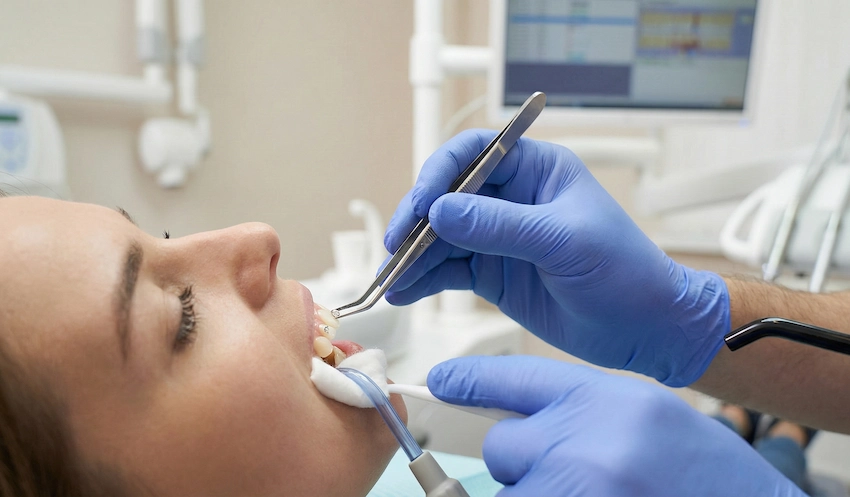
The question remains: why travel to Turkey for this? The reason lies in “tailoring.” An ill-placed diamond is like a stone in your shoe—you will feel it with every step. However, by employing our 3D CAD/CAM technology, we make a specifically milled “nest” for the gem.
What we notice at the clinic is that the moment the diamond is perfectly aligned with the tooth, your lips can move over it as if it were not there at all.
Comparing the “Bright Side” of Smile Upgrades
| The Benefit | Permanent Diamond (Lema Clinic) | Standard Porcelain Veneers | Temporary Tooth Gems |
| Personalization | 100% Unique / Signature Look | Natural & Uniform | High but messy |
| Material Life | Lifetime (Diamond doesn’t fade) | 10-15 Years | 2-4 Weeks |
| Stain Resistance | Immune to coffee/tea stains | High | Low (Glue stains) |
| Oral Feel | Completely smooth & flush | Smooth | Raised & “Bumpy” |
| Expertise Required | Surgical & Lab Precision | Clinical Precision | None (Dangerous DIY) |
Real Talk: Your Questions Answered
Not at all. At Lema Dental Clinic, we don’t just “stick” the diamond on. We recess it into the crown material. If you ran your finger over it, it would feel as smooth as a polished stone in a river.
Yes. Whether it’s a steak or an apple, the bonding techniques used by Dentist Polen Akkılıç and her team ensure the stone stays put. We use the same high-strength adhesives that hold the crown itself to your jawbone.
No special chemicals are needed. However, Professor Doctor Coşkun Yıldız always recommends a soft-bristle electric brush. The cleaner the diamond stays, the more it reflects light. It’s that simple.
The level of laboratory artistry here is world-class. In Turkey, we combine master dental technicians with the latest German technology, allowing us to offer these luxury “jewelry-dentistry” services at a price point that is accessible without skipping on quality.
Absolutely. Most patients prefer the upper lateral incisor or the canine for a subtle “wink” of light, but the choice is entirely yours during our digital design phase.
- Anusavice, K. J. (2012). Phillips’ Science of Dental Materials (12th ed.). Elsevier.
- Bansal, K., & Gupta, S. (2015). The rise of tooth jewelry in modern cosmetic practice. Journal of International Oral Health.
- Pjetursson, B. E., et al. (2007). Comparison of survival rates for ceramic restorations. Clinical Oral Implants Research.
- Yıldız, C. (2026). Digital Integration of Non-Dental Materials in Fixed Prosthodontics. Istanbul Medical Press.
- Zarone, F., et al. (2011). Zirconia in dentistry: A reliability and biological review. BMC Oral Health.

