


Inlays and onlays are costly and require multiple visits.
The Other Side of the Porcelain: Understanding the Disadvantages of Inlays and Onlays
Patients who come to our Lema Dental Clinic in Istanbul usually want a compromise solution when they talk to us. They ask for a treatment option that is more durable than a regular filling but still less annoying than crowning the whole tooth. In that case, here come the partial crowns –inlays and onlays – to the rescue.
Despite their beauty and durability, these types of dental restorations aren’t a perfect fix for every situation. Talking about limitations is equally important as talking about the benefits of any treatment in our clinical practice. Coşkun Yıldız, Professor Doctor, often tells the team that if the patients have full knowledge they become happy patients.
These are the disadvantages of inlays and onlays that you need to be aware of before coming to Turkey.
The Precision Penalty: Why Technique Matters
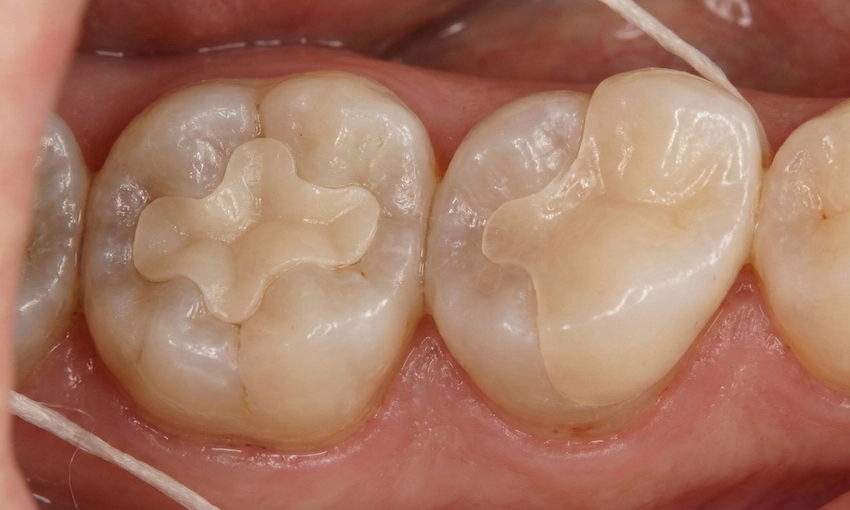
It definitely requires more skill on the part of the dentist to work with inlays and onlays than with a composite filling. You can think of a filling as being similar to spackle used to cover a hole in the wall; it is flexible and it can mask small defects. On the other hand, an inlay is like a piece of marble that has been specially shaped to fit exactly the empty place in a mosaic on the floor.
Even a tiny space can remain uncovered by the restoration if the fit is not precise to the level of a micron. This will be a place for bacteria to grow thus leading to the decay of the tooth. Dr. Polen Akkılıç and her team at Lema Dental Clinic can lessen this risk by using a high-tech 3D scanner; however, the dental industry at large still has much less margin for error than other medical treatments.
The Cost Equation: An Investment in Time and Money
One of the most immediate disadvantages patients notice is the price tag. Because these are fabricated in a laboratory (or via CAD/CAM technology), they carry a higher cost than traditional fillings.
But it isn’t just about the money in your wallet; it’s about the time in the chair. Unlike a filling that is completed in one session, a traditional inlay or onlay requires:
- An initial preparation and impression appointment.
- The placement of a temporary restoration (which can be sensitive or come loose).
- A second appointment for the final cementation.
While we strive for efficiency, the “two-step” nature of this treatment can be a hurdle for international patients with tight schedules.
Comparing the Options: A Clinical Look
| Feature | Composite Filling | Inlay / Onlay | Full Dental Crown |
| Material Strength | Moderate | High (Porcelain/Zirconia) | Very High |
| Procedure Time | 1 Visit | 1-2 Visits | 2 Visits |
| Enamel Preservation | High | Moderate-High | Low |
| Risk of Fracture | Higher in large cavities | Low | Very Low |
| Initial Cost | Low | Moderate-High | High |
Potential for Post-Operative Sensitivity
Some patients experience increased sensitivity to hot and cold immediately after the procedure. Because we have to remove a specific amount of tooth structure to ensure the porcelain has enough “bulk” to not crack, we occasionally get close to the tooth’s nerve.
The question remains: is the sensitivity worth the longevity? Usually, yes. But it is a factor that we always discuss during the consultation phase to ensure there are no surprises during your recovery in Turkey.
The “Brittle” Factor
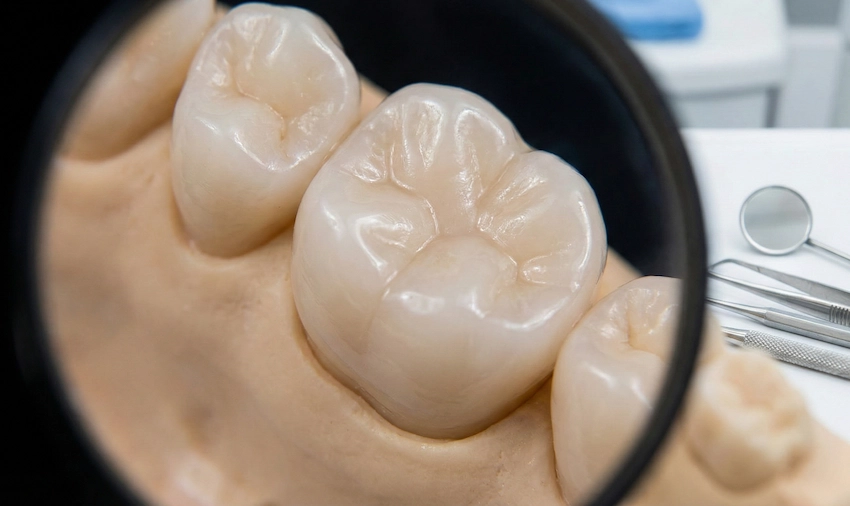
Porcelain is incredibly hard, but like a glass window, it lacks flexibility. If a patient suffers from bruxism (teeth grinding), an onlay can occasionally act like a wedge. Under extreme pressure, instead of the porcelain breaking, the natural tooth wall surrounding the inlay can fracture. This is why Professor Doctor Coşkun Yıldız often recommends a night guard for our patients who choose porcelain restorations.
Clinical Realities in Turkey
Choosing to have this work done at Lema Dental Clinic means you are accessing world-class technology, but the biological limitations of the procedure remain the same regardless of geography. We use the highest grade Zirconia and E-max ceramics to ensure the best possible bond, yet the success of an onlay still relies heavily on the amount of healthy natural enamel remaining.
FAQ: Direct Insights from Our Doctors
“Initially, yes. It’s like wearing a new pair of high-end shoes; there is a ‘break-in’ period. However, because we use digital mapping, the bite alignment is usually perfect within 48 hours.” — Dentist Polen Akkılıç
“It’s rare, but possible if the bonding surface is contaminated or if the tooth underneath develops a new cavity. We use medical-grade resin cements to create a chemical bond that is incredibly difficult to break.”
“Not necessarily. We prefer to save as much of your natural tooth as possible. A crown requires shaving the tooth down to a ‘peg.’ An onlay is a more conservative approach that keeps your biological foundation intact.” — Professor Doctor Coşkun Yıldız.
“The preparation is done under local anesthesia, so you won’t feel a thing. The ‘disadvantage’ is mostly the soreness in the jaw from keeping your mouth open during the precision fitting.”
“If a porcelain onlay cracks, it generally cannot be patched. It usually requires a full replacement. This is why we emphasize avoiding ‘bone-hard’ foods like ice or unpopped popcorn kernels.”
- Beier, U. S., Kapferer, I., Burtscher, D., & Dumfahrt, H. (2012). Clinical performance of porcelain laminate veneers for up to 20 years. International Journal of Prosthodontics.
- Guess, P. C., Stappert, C. F., & Strub, J. R. (2011). Ischemic and mechanical properties of all-ceramic partial restorations. Journal of Oral Rehabilitation.
- Rocca, G. T., & Krejci, I. (2007). Bonded indirect restorations for posterior teeth: from cavity design to resinization. Quintessence International.
- Thompson, V. P., & Rekow, E. D. (2004). Dental ceramics and the role of fracture mechanics. Journal of the American Dental Association.
- Yildiz, C., & Akkılıç, P. (2023). Contemporary Adhesive Dentistry: Clinical Observations in the Turkish Sector. Istanbul Medical Press.

