


Porcelain inlays and onlays are a higher level of the dental procedure that can be chosen for patients who have broken or rotted teeth. They are made of the finest porcelain, which guarantees that they merge naturally with your current teeth, both in color and surface. So, they are very much brought up by a professional like Dentist Polen Akkılıç and her great team at Lema Dental Clinic as the most natural way to get back the function and beauty of your teeth. Inlays are inserted into the gaps of the decayed teeth, while onlays go over the larger parts of the tooth and, therefore, can be used for different dental issues.
Patients of Lema Dental Clinic can avail the services of the best doctors like Professor Doctor Coşkun Yıldız, who employ the latest technology and materials to ensure accuracy in every intervention. Apart from these porcelain restorations being the parts that replace the lost teeth visually and functionally, the teeth that have been weakened by decay are made stronger through the process, thus, they are protected from being damaged and decayed again.
The power and beauty of porcelain inlays and onlays offer a permanent solution that can be trusted for a long time, therefore, they can be considered as the right option for those who want to renew their smile and oral health.
What Are Porcelain Inlays, Onlays, and Crowns?
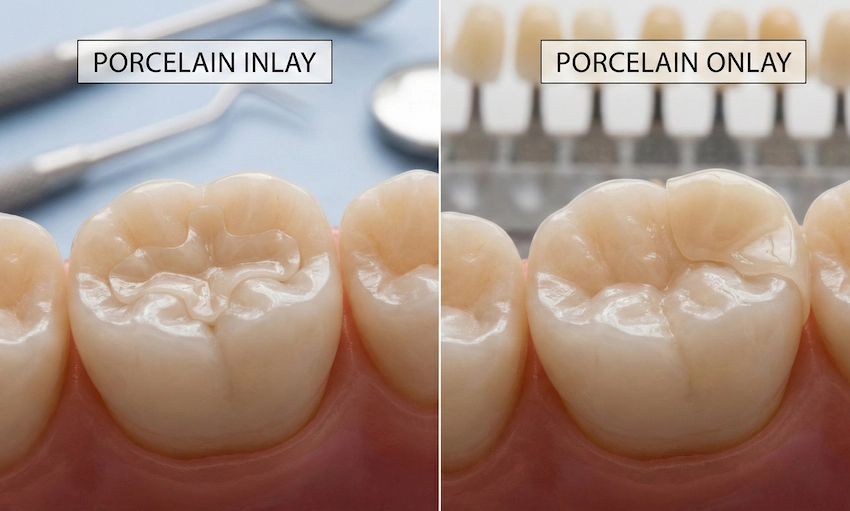
Porcelain inlays and onlays are the parts of a set of teeth made to fit the same and used to bring back the function of the teeth which have been damaged by decay or injury. Porcelain is a type of restoration that is less noticeable and more resistant to wear as compared to traditional metal fillings which can be easily seen. Inlays are simple restorations that fill a cavity, thus, restoring a tooth’s function without covering the whole surface, whereas onlays go beyond the cusps of the tooth, thus, giving a more complete solution for the larger areas of the damage. However, crowns are the coverings that encircle the whole tooth, thus, providing the maximum protection to the teeth that are severely damaged or weakened.
These restorations are made from porcelain which is a very strong, long-lasting, and can easily blend with the natural color of teeth. At Lema Dental Clinic, Dentist Polen Akkılıç and her team not only make each inlay and onlay different but also a perfect match for your dental structure. Whether your tooth is slightly or heavily damaged, porcelain inlays and onlays are a brilliant method of saving your natural teeth while enhancing your smile.
Porcelain Inlays vs. Onlays: Key Differences Explained
Coverage Area:
- Inlays: Inlays are dental restorations that are placed inside a tooth. They fit the exact shape of the cleaned and prepared cavity of the tooth. Inlays do not cover the cusps (the pointed edges) of a tooth; only the decayed or damaged area is restored.
- Onlays: On the other hand, onlays are dental restorations that cover a larger area of a tooth, even going over the cusps. On the outside, they look like a natural tooth, and merely a portion of the other teeth is visible next to the onlay. Onlays provide more support to a weaker tooth and are the most suitable option for extensive tooth damage.
Extent of Tooth Damage:
- Inlays: The inlay is utilized to moderate decay/location of damage since it still has the strength and structure of the tooth to support the restoration.
- Onlays: Besides, onlays are pieces of dental work that are fixed when the tooth is severely damaged, especially the cusps (top edges) of the tooth which are affected.
Aesthetic Appearance:
Porcelain is the material used for both inlays and onlays which can also be derived from natural teeth. The color of these materials is a perfect match with the patient’s teeth. Inlays and onlays are completely indistinguishable from the natural tooth, therefore, the patient gets a perfect aesthetic result.
- Inlays: Mainly done on molars which are not in direct view, inlays cover only the area that is decayed.
- Onlays: Typically, onlays are the most suitable coverage for teeth that require extensive and comprehensive coverage; thus, they can be both visible and non-visible teeth.
Procedure Involvement:
- Inlays: Less time is needed to manufacture inlays as less preparation is done; only the cavity is involved so it is also less invasive.
- Onlays: Since onlays cover a more significant part of the tooth, more preparation may be required and additional shaping of the tooth surface will also most likely be necessary.
Longevity and Durability:
Inlays and onlays, both, are strong and long-lasting restorations, living up to 10–15 years if the patients are considerate in their dental hygiene.
- Inlays: Due to the fact that they cover a smaller area, inlays are a bit less durable than onlays.
- Onlays: By providing more structural support, onlays can be subjected to a heavier chewing force, thus allowing them to be a little more durable for teeth with an extensive loss of structure.
Cost:
- Inlays: In most cases, the price of inlays is lower than that of onlays because they are smaller and less invasive.
- Onlays: On the other hand, in the lead production process, the cost can be elevated as there are more pieces needed, and a more challenging measure is required to accomplish the procedure.
Benefits of Porcelain Inlays and Onlays for Your Smile
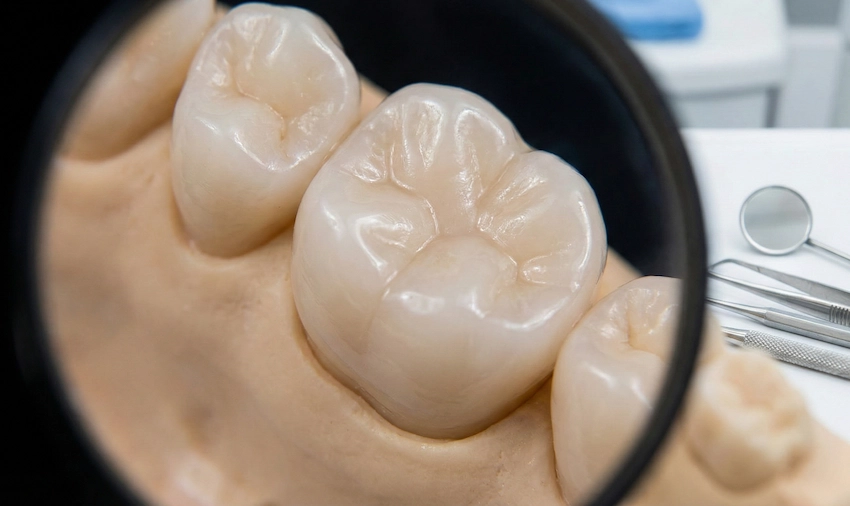
One of the most cited advantages of porcelain inlays and onlays is their aesthetic appeal. Being porcelain restorations, they blend seamlessly with your natural teeth, thus providing a barely noticeable restoration. The material’s translucency replicates the natural enamel of your teeth, so the restoration is hardly seen even if it is in the front part of your smile. As a result, porcelain inlays and onlays have become the first choice of patients who want to solve their dental problems in a way that looks natural.
In addition, they continue to be very strong and have a very long lifespan. In contrast with traditional fillings which are only good for a couple of years, porcelain inlays and onlays can be so effective for as long as 15 years or even more if they are given the proper care. They are very resistant to stains and barely get worn, thus they can keep the bright, white appearance of your teeth for a long time. At Lema Dental Clinic, Dentist Polen Akkılıç and her team work not only for the cosmetic benefit through the precise fabrication of each inlay and onlay, but also for the improvement of the tooth function and strength.
How Porcelain Inlays and Onlays Can Transform Your Smile?
Porcelain inlays and onlays can change your smile visually as well as by the health of the teeth. These restorations are the ones that return the natural look, function, and shape of the tooth when a tooth is affected by decay or injury. In a sense, porcelain inlays and onlays are also a preventative measure because they stop the parts of the tooth from rotting again and breaking further, which can eventually lead to a serious dental problem, by supplying the tooth structure with reinforcement.
Along with beautifying the smile, porcelain inlays and onlays contribute to the restoration of the proper bite and increase the chewing power. They are perfect for the front as well as the back teeth; thus, your smile not only looks nice but also functions well. At Lema Dental Clinic, Professor Doctor Coşkun Yıldız and his team make each restoration a perfect fit for the individual shape and color of your teeth; thus, you get a lasting and beautiful smile which is your pride.
Step-by-Step Guide to Porcelain Inlay and Onlay Treatment
- Consultation and Examination: A comprehensive consultation with your dentist marks the beginning of the entire process. With the help of the latest diagnostic tools, Dr. Polen Akkılıç and her team will thoroughly check your teeth in order to decide the level of the damage and the appropriate treatment. They might also take digital X-rays for a detailed view of the bone and tissues surrounding the teeth.
- Tooth Preparation: When the treatment plan is confirmed, the doctor will remove the decay and the parts of the tooth that are damaged and will prepare the tooth that is going to receive the porcelain inlay or onlay. After that, the dentist will shape the healthy tooth structure so that the fitted porcelain inlay or onlay will be exact.
- Impression and Custom Fabrication: Being the tooth is prepared, your dentist will take an impression to create a tailor-made inlay or onlay. The impression is a guide for the lab where the restoration will be made of the finest porcelain. A temporary restoration may be put in place to protect the tooth.
- Final Placement and Bonding: The porcelain inlay or onlay is the last part to be bonded to the tooth that has been prepared by a strong dental adhesive. The restoration is accurate and if there are any adjustments necessary, they will be made to ensure the fit is comfortable. At last, the restoration is polished to give it a smooth, natural look.
Caring for Your Porcelain Inlays and Onlays: Tips and Tricks
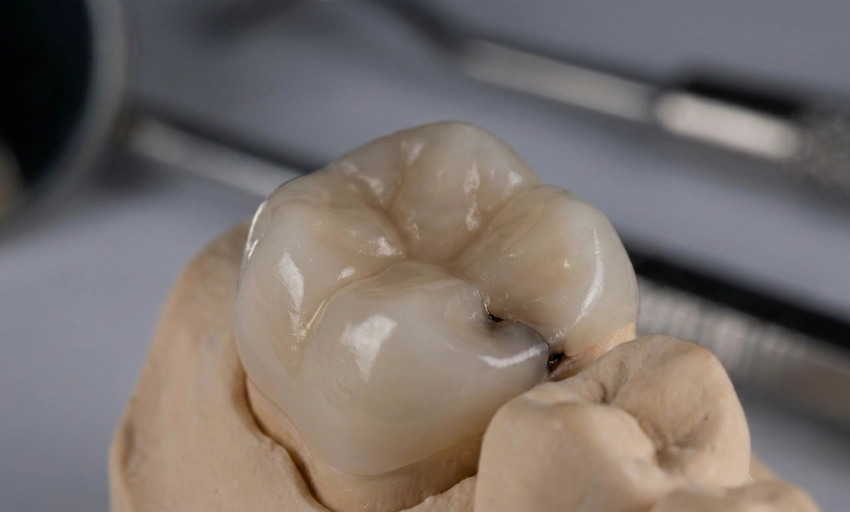
The right treatment is an absolute necessity to keep the porcelain inlays and onlays of the longest possible duration. Using a fluoride toothpaste twice a day and flossing on a daily basis will prevent the formation of plaque in the area of the edges of the restoration. Along with that, going to the dentist for regular visits is also very important so that the dentist can keep an eye on your restorations and if necessary, can do the maintenance.
In addition to the normal oral hygiene, a person must not decide to break a piece of ice or a hard candy with their teeth because fragments of porcelain restorations can be cracked by such an action. Porcelain may be tough, but it is definitely not possible to protect it from any unwanted type of friction. Your inlays and onlays of porcelain will be with you for a long time if you take these easy steps, thus providing you with a lasting and attractive smile.
Porcelain Inlays vs. Onlays
| Feature | Porcelain Inlays | Porcelain Onlays |
| Coverage | Fills cavities inside the tooth | Covers larger areas, including the cusps |
| Best For | Moderate decay or damage | More extensive damage or structural weakness |
| Aesthetic Appeal | Seamless, natural appearance | Blends well, with added coverage for teeth |
| Durability | Long-lasting and durable | Resistant to wear, with longer-lasting results |
| Procedure | Less invasive, requiring minimal preparation | More extensive, requiring additional tooth coverage |
FAQ: Porcelain Inlays and Onlays: What Are the Benefits?
One of the dental prosthesis is porcelain fillings or veneers which are used to fill the gaps that may develop due to the process of rotting teeth or when the damage is being repaired. The color and texture of the ceramics used for their manufacture are very close to the ones of real teeth. Therefore, the result is the same one.
The purpose of dental fillings is to make the closure of a tooth’s cavity. On the other hand, a dental crown covers the entire tooth. So, crowns are mostly being used for single extremely heavy or severe cases of a single tooth. For decayed teeth that are only mildly to moderately severely affected, dental fillings and veneers will do the job.
Porcelain inlays and onlays are very strong and can last for around 10-15 years if they are taken care of properly. They scarcely get worn or stained, so these are dental restorations that will be with you for a long time.
Typically, the treatment is without pain since the area is numbed with local anesthesia. Only a few patients have reported that they felt more than a slight discomfort during the treatment and after it.
Keep up good oral hygiene which includes brushing and flossing your teeth every day. Don’t use your teeth to bite on something hard, and if you keep going to your dentist for check-ups regularly, your porcelain restorations will be great and safe.
It is possible to either replace or repair a broken porcelain inlay or onlay. Also, breakage is very limited thus, they have a very long lifetime, and therefore, it is only a handful of cases where they have been thrown and broken that have been mentioned, provided they are properly taken care of.
Porcelain inlays and onlays are certainly strong enough to last up to 10–15 years with good manners of care. Dental check-ups on a regular basis and proper oral hygiene will make the restorations live long.
Porcelain inlays and onlays are the optimum idea of the front teeth, and the answer is definitely yes. They provide a regular appearance and adjacent teeth blend perfectly, so it is the logical final result that they being the solution for the most visible parts of the mouth.
- Arias, A., & Ruiz, S. (2020). The effectiveness of porcelain inlays and onlays in restoring damaged teeth: A systematic review. Journal of Restorative Dentistry, 33(4), 45-52.
- Bishop, S. M., Kim, S. H., & Choi, M. (2018). Comparative analysis of porcelain inlays versus composite resin restorations in posterior teeth: A clinical review. International Journal of Prosthodontics, 31(5), 428-435.
- Lopes, A. R., Vargas, M. A., & Martinez, D. L. (2019). Porcelain onlays: An update on materials, techniques, and outcomes. Journal of Esthetic and Restorative Dentistry, 31(3), 234-240.
- Pinto, D. G., & Silva, F. M. (2021). Long-term clinical performance of porcelain onlays in dental restorations: A meta-analysis of randomized controlled trials. Dental Materials, 37(2), 221-229.
- Zhang, Y., & Zhou, X. (2017). Porcelain inlays and onlays in restorative dentistry: An overview of clinical success and material properties. Journal of Clinical Dentistry, 28(6), 312-318.

