


Not all trends are equal.
Everyone has seen videos of that young influencer who is smiling at the camera, revealing teeth that have been filed so much they are nearly unrecognizable, just before the “big reveal” of a bright, almost unnaturally white and perfectly even smile. What comes proven social media content? What definitely comes in scary dentistry?
During our clinical work at Lema Dental Clinic in Istanbul, the phrase “Turkey Teeth” started to be used in a very mixed way. It is a good thing on one side because it recognizes Turkey’s huge potential in aesthetic treatment globally. But continued to be a very rough and unfounded stereotype of extreme, “one-size-fits-all” approaches that simply look very white for the moment but are not good for human oral health.
So, the question is: which parts of them are facts, and which parts of them are the great exaggeration, if not downright lies?
Let’s not be confused about this. The extreme reduction of the tooth you see in the trend is hardly ever necessary if you want to have a truly good smile. The truth about the luxury cosmetic dentistry is so much deeper, more conservative, and downright artistic than what can be shown in a mere fifteen-second video.
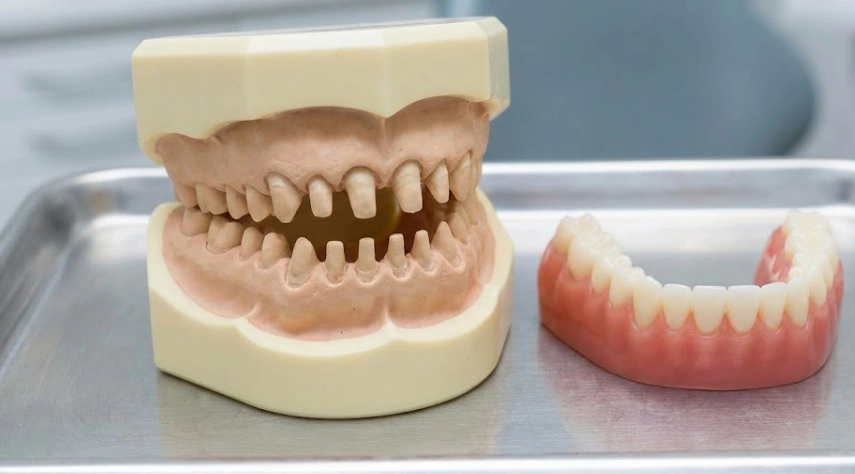
The “Peg” Myth: Veneers vs. Crowns
The most significant misunderstanding that led to the “Turkey Teeth” horror is the mixing up with the concepts of veneers and crowns.
Imagine a veneer as a contact lens for your tooth, only it is for your eye. It is but a wafer-thin layer of medical ceramic (frequently E.max) that covers the front side of the tooth. The means of bonding include always some enamel removal, that is, typically, less than 1/10th of a millimeter of the tooth surface is etched and buffed for sure no one would measure this depth, and it is the depth of a fingernail.
On the other side, a crown resembles more of a protective gear or a crash helmet for a tooth. It covers the entire tooth, 360 degrees. To fit this “helmet,” a significantly larger surface area of the tooth is being turned into a base. This is the point where the term pegs came from and was misunderstood by the laymen as something extremely harmful and reckless.
Professor Doctor Coşkun Yıldız stresses in his representations that we should not sacrifice our valuable natural teeth just to be prettier. A crown is an essential part of the treatment of a heavily filled or broken tooth, but if a smile is healthy and radiant, it will rarely feature any of these. The excessive use of dental crowns has been exaggerated and passed around as the norm via viral videos and posts.
Aesthetics: “Chiclets” vs. Natural Translucency
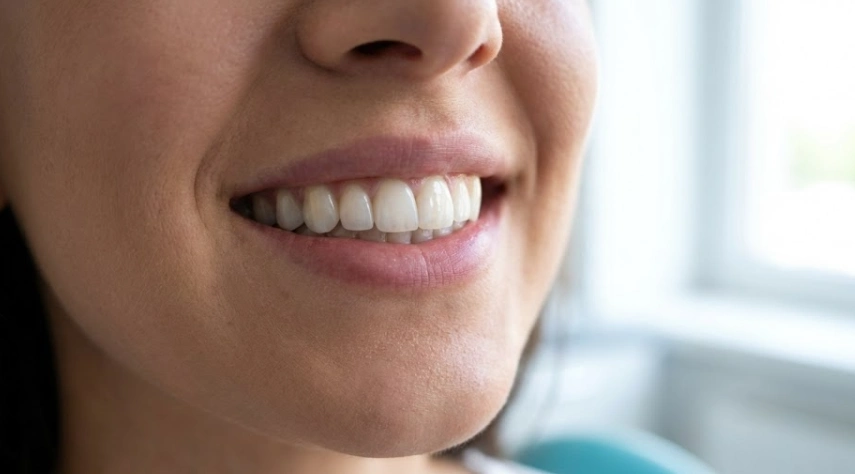
Another feature that was very recognizable in these trends was the fact that the teeth were opaque, flat, white, and lifeless, like the blocks.
Real teeth are not white all over. They are colorful. There is a little bit of transparency in the biting edge of a natural tooth, just as in the case of frosted glass, where the toothpaste has partially worn off the tooth. Dentist Polen Akkılıç and the staff don’t see their work as an automated product but rather as a painting. We use several layers of porcelain to simulate the tooth’s natural ability to scatter the light, giving it that exquisite translucency.
Do you want to have “Hollywood White” (BL1 shade)? We can do it. What we do is give it some depth and features so that you don’t look like you are wearing a fancy mouthpiece. The point of prime Turkish dentistry is when a smile is so good that people will notice it but won’t know why it has come about this well.
Comparing Approaches: The Trend vs. The Clinical Reality
Being able to separate high-volume dental tourism and specialized clinical care is essential.
| Feature | The “Viral Trend” Approach | The Lema Clinical Approach |
| Tooth Preparation | Aggressive reduction to “pegs” (full coverage crowns). | Ultra-conservative preparation (laminate veneers) whenever possible. |
| Material Focus | Often opaque, monolithic zirconia for maximum brightness. | Layered E.max or translucent zirconia for natural depth. |
| Design Philosophy | Uniform, symmetrical “perfect” shapes for everyone. | Customized design based on facial anatomy and lip dynamics. |
| Biological Risk | Higher risk of nerve trauma and future root canals due to over-preparation. | Priority on preserving vital tooth structure and nerve health. |
The Economics Behind the Geography
Why is high-quality treatment more accessible in Turkey? It is not about cutting corners on materials. We use the same German and Swiss ceramics and implant technologies as leading clinics in London or New York.
The difference lies in operational economics—labour costs, facility overheads, and currency exchange rates. You are travelling to secure the expertise of high-volume specialists like Dr. Yıldız at a fairer price point, not to buy “discount” dentistry.
Hard Questions on Safety and Aesthetics in Turkish Dentistry
If your teeth are relatively healthy and aligned, absolutely not. This is the crown preparation method mentioned earlier. For standard aesthetic makeovers at Lema Dental Clinic, we primarily use laminate veneers requiring minimal preparation. We believe in banking your natural tooth structure, not spending it all at once.
Nothing in medicine is permanent. However, well-placed, high-quality porcelain veneers or crowns, when cared for with excellent hygiene and regular check-ups, typically last between 10 to 15 years, often longer. They are a long-term maintenance commitment, not a “fit and forget” solution.
We actively encourage patients to consider softer, more natural shades. The “bleach white” look is a personal preference, but it is not the only option. We use digital smile design to show you various shades against your skin tone before we touch a single tooth.
Some transient sensitivity to hot and cold is normal after any restorative procedure as the teeth settle. This usually subsides within a few weeks. However, aggressive over-preparation (the “peg” style) significantly increases the risk of persistent nerve issues. This is why conservative preparation is so vital.
In dentistry, as in life, if it sounds too good to be true, it usually is. Extremely low prices often indicate compromises: inexperienced technicians, lower-grade porcelain blocks, or hurried clinical protocols. We operate as a premium medical facility, prioritizing long-term biological success over volume.
- Magne, P., & Belser, U. (2022). Bonded Porcelain Restorations in the Anterior Dentition: A Biomimetic Approach. Quintessence Publishing.
- Gürel, G. (2003). The Science and Art of Porcelain Laminate Veneers. Quintessence Publishing.
- Edelhoff, D., & Sorensen, J. A. (2002). Tooth structure removal associated with various preparation designs for anterior teeth. The Journal of Prosthetic Dentistry, 87(5), 503-509.
- Pini, N. P., Aguiar, F. H. B., Lima, D. A. N. L., & Lovadino, J. R. (2012). Advances in dental veneers: materials, applications, and techniques. Clinical, Cosmetic and Investigational Dentistry, 4, 9-16.
- Kelleher, M. G. D., Djemal, S., & Lewis, N. (2012). Ethical marketing in ‘aesthetic’ (‘esthetic’) dentistry. Dental Update, 39(5), 313-326.

