


Let’s Talk About Healthy Smiles for Kids 😁
As a parent, one of the best things you can ever give to your child is a good and healthy smile. It not only assists your child in becoming more confident but also paves the way for healthy oral hygiene throughout their lives. 💙
So it’s quite apparent that early dental habits are a must. The sooner your child gets the idea that teeth and gums need to be taken care of, the better will be his or her smile.
By the time a child reaches 10, he/she will already have implemented the correct practice of dental habits daily. But what those habits should exactly be? For a lifetime of healthy teeth, let’s break it down so you can better guide your child.
🦷 1. Brushing Twice a Day (With Proper Technique)
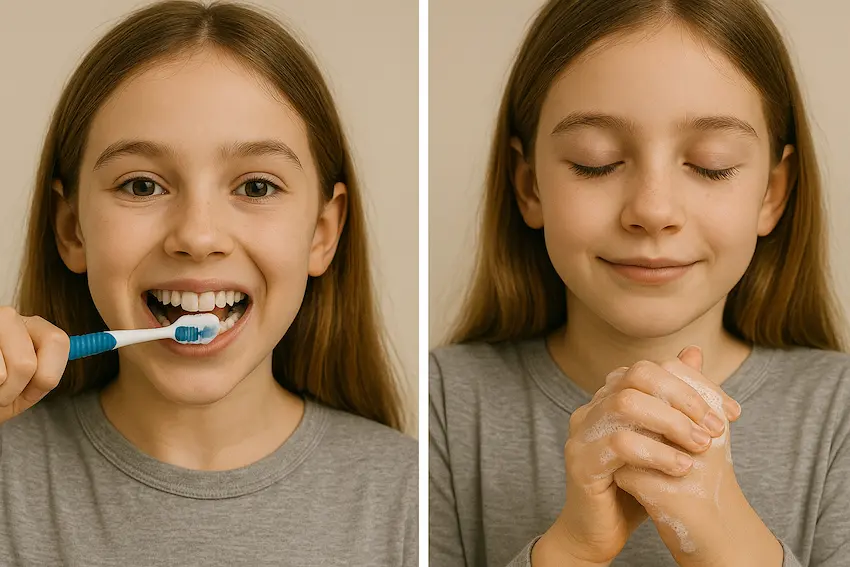
Brushing is the foremost habit that your child needs to get. The rule of brushing is that by the time a child is 10, kids are supposed to brush their teeth twice a day at least—once in the morning and once before going to bed.
Though it is very important to brush the teeth, doing it improperly may even cause more harm than good. These are the steps that need to be taken in order to make them brush properly:
- The bristles of the toothbrush ought to be soft and the size of the brush should be suitable for their mouth so that it is comfortable to hold and clean.
- Put on the brush a fluoride toothpaste of the size equal to that of the tip of the little finger.
- Brush for the complete 2 minutes without rushing.
- In brushing, it is very important that you do not miss the following surfaces: the outer, inner, and the chewing surface of each tooth.
- Try not to neglect the area around the gums since that is the place where bacteria live.
Lema Tip: Kids are more likely to brush well if they’re involved. Let them pick their toothbrush (maybe a fun character or color) and toothpaste flavor they like. 🦷✨
🧵 2. Flossing Daily 🧻
Flossing is just as essential as brushing, but it is quite a lot easier to miss out, especially for children. At the age of 6–7, your kid should be flossing once a day in order to clean that part of teeth which are not visible by a toothbrush. Regular flossing keeps plaque from building up on the teeth and also prevents gum diseases as well as cavities in those tight spaces.
How to help your child floss:
- Try to use floss picks if it is hard for your kid to floss in a traditional way.
- Supervise your child’s flossing until he/she has mastered it (usually by age 10).
- Show your child how to be careful—do not just quickly pull the floss through, as it may result in the gums getting hurt.
🦷 3. Limit Sugary Snacks and Drinks 🍭🥤
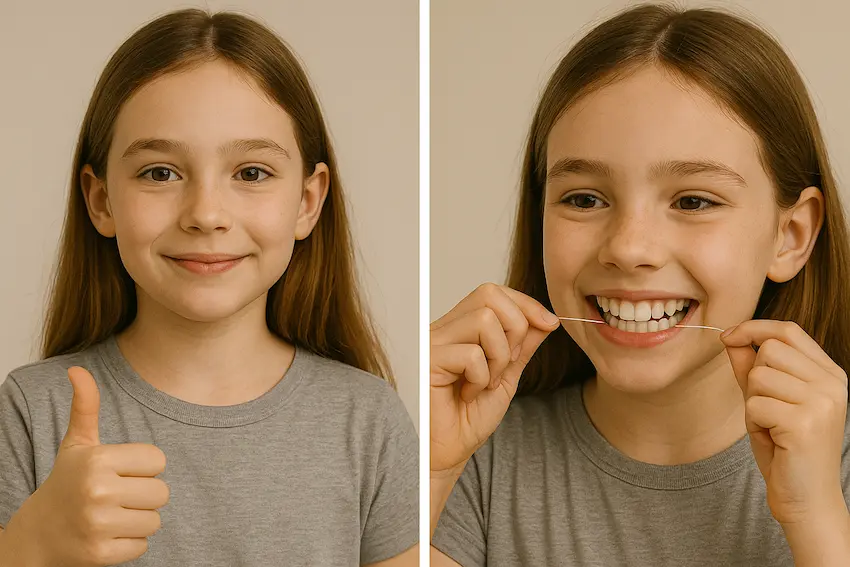
Kinder are all that sugar and candy, that’s a fact! But still, sugar is the main culprit behind the dental caries in kids. To keep your child’s teeth safe, you need to watch over how much sugar he/she takes in—not only that but also the type of sugar.
What to do:
- You could offer kids snacks like fruits, veggies, and cheese. 🧀🍎
- Sugary drinks such as sodas, fruit juices, and milkshakes should be limited.
- Encourage the child to rinse the mouth with water straight after having a sweet meal to get rid of the sugar and acid. 💧
Lema Tip: Water is the most recommended beverage for teeth, therefore let them have it all day long. What it does is that it keeps the mouth clean and moist at the same time. 🧴
🦷 4. Regular Dental Visits (Starting Early) 🩺
The earlier you start, the better. Your child’s first dental visit should be by age 1 or when their first tooth erupts. It is essential to have regular appointments not only to detect issues but also to educate the kids on the significance of oral care.
When a child is 10 years old, it is expected that he or she should have a dental visit every 6 months for the following reasons:
- Professional cleanings
- Cavity checks
- Fluoride treatments
- Early orthodontic evaluations (if needed)
Lema Tip: Make dentist visits fun by making it a positive experience. Talk to your child about the visit beforehand, keep the conversation light, and let them know it’s an opportunity to show off their healthy smile. 🎉
🦷 5. Teach Proper Tongue and Cheek Cleaning 👅
Do you realize that the tongue and the cheeks also must be cleaned? Kids quite often forget about these parts of their mouth, but the bacteria can settle on the tongue and be a reason for bad breath or plaque.
How to clean the tongue:
- Show your child how to clean their tongue gently with the toothbrush or they may use a tongue scraper.
- Also, they should brush the cheeks to remove the tiny pieces of the food that might have gotten there.
Lema Tip: Make it fun! Let your child see how well their tongue looks after brushing and make a game of it. 🎮
🦷 6. Avoid Thumb-Sucking and Pacifiers 👶
Thumb-sucking and pacifier are the two factors that can negatively affect oral development and bite of your child. The pushing of the teeth out of alignment is one of the ways that this habit can bring about orthodontic problems like overbites or crooked teeth in the future.
Most of the children will stop the habituation of thumb-sucking and pacifier using by the time they are 3 or 4 years old. If your child is still doing it beyond this age, you should probably consider getting some professional help from your dentist.
If your child is into sports, especially contact sports like football, basketball, or soccer, a mouthguard is a necessity. It will save your child’s teeth from getting injured in a fight or from an accident. The injuries could include the tooth being chipped or completely knocked out.
Lema Tip: Please discuss with your dentist the option of a custom mouthguard. It is more comfortable and provides better protection than a generic one you can buy at a store.
To begin with, the most significant thing is to teach your kid why oral health matters. The earlier they learn that taking care of their teeth is a way to have a good overall health, the more poised they will be to do it.
Speak to your child about:
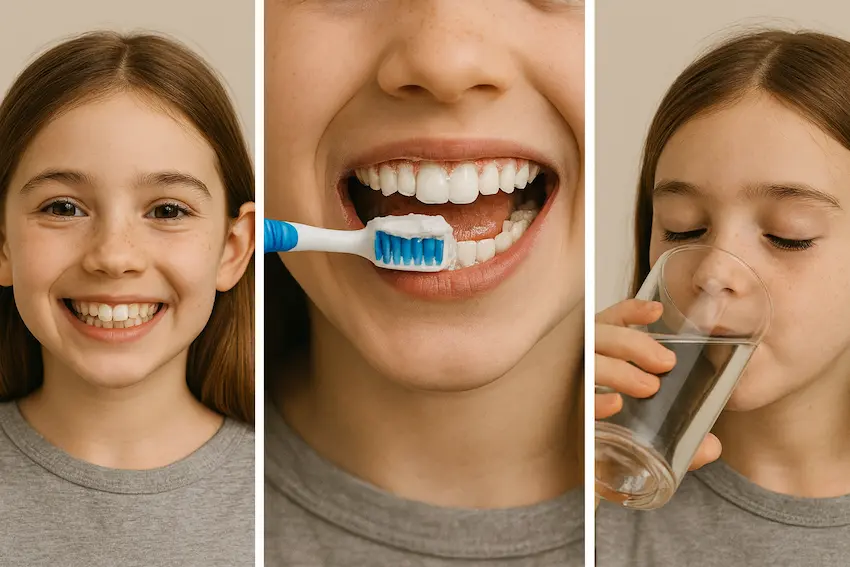
- Holes in teeth and their origin
- How healthy teeth and gums contribute to good health in general
- The need for regular brushing, flossing, and visits to the dentist
Lema Tip: Make use of kids books, games or even videos to make dental hygiene fun! 📚🎮
At Lema Dental Clinic in Istanbul, we offer dental care that is gentle and kid-friendly and makes the whole dentist visit a positive experience for your child. Here is what makes us different from the rest:
- Early pediatric dental exams for kids who are less than one-year-old 🧑⚕️
- Fun and relaxing atmosphere to make your child feel comfortable
- Preventive treatments such as fluoride applications and dental sealants
- Orthodontic evaluations for early intervention
- Multilingual team and multitalented pediatric dentists
As soon as their first tooth appears—use a soft toothbrush and fluoride toothpaste.
It could be a sign of gum disease or incorrect brushing. If it continues, see your dentist.
If thumb-sucking persists after age 3, talk to your dentist about possible solutions or early orthodontic intervention.
Your child should see the dentist by age 1 or when their first tooth erupts.
Let them pick their own toothbrush, use fun apps or songs, and offer small rewards for brushing.

