


Soft diet and desensitizing paste.
You’ve finally left Lema Dental Clinic in Turkey after getting that bright and symmetrical smile of your dreams. The aesthetics are flawless. However, the worst thing happened—a sharp, sudden “zing” when you take a sip of iced water or a hot coffee.
If you happen to experience some sensitivity after the treatment, please don’t get worked up. The truth is that this is an absolutely typical part of the biological adjustment period. Basically, your teeth are like having undergone a “wardrobe change,” and the nerves underneath need some time to get used to the new porcelain layers.
Why Does Sensitivity Happen?
Looking at tooth anatomy will help us understand the pain. Enamel is the body’s natural protective cover, keeping the sensitive nerves inside cool. When the veneer is done, usually a very thin layer of this enamel is taken off so that the porcelain can be set perfectly and the final look will be natural.
Professor Doctor Coşkun Yıldız quite frequently makes the comparison: “Imagine your enamel is like the insulation of a house. We are only briefly reducing that insulation when we prepare a tooth for a veneer. While the new porcelain ‘siding’ and the bonding cement are being stabilized, the nerve— the live wire of the tooth— is just more sensitive to temperature changes”.
However, let’s examine the bonding step more intimately. The bonding agent used for your veneers includes a slight etching of the tooth. So, it might be that the dentinal tubules (which are like very small tunnels that go right to the inside of the tooth) are therefore locally affected and chemically irritated for a short period of time.
Managing the Discomfort: The Lema Strategy

In our clinical experience at Lema Dental Clinic, most sensitivity peaks within the first 48 to 72 hours and gradually fades over two weeks. However, how you treat your teeth during this window determines how quickly you’ll return to enjoying your favorite meals.
Immediate Relief Tactics
- Temperature Control: For the first few days, aim for “room temperature” everything. Avoid ice-cold smoothies or steaming soups.
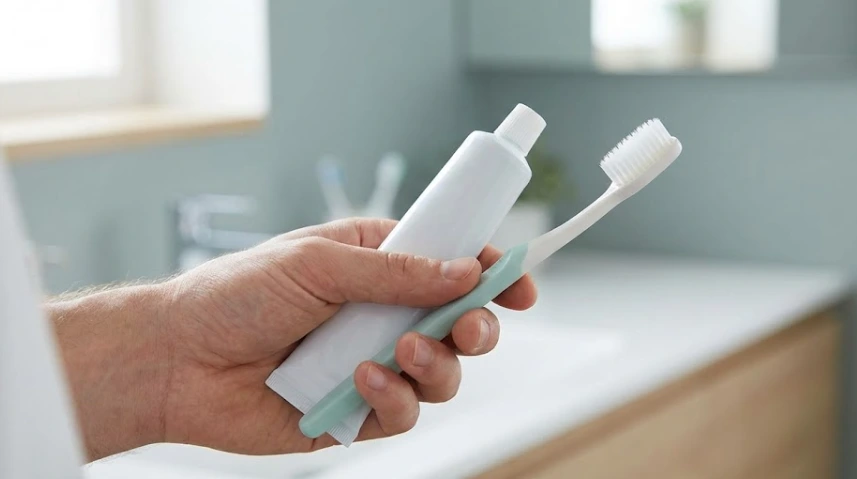
- Desensitizing Agents: Dentist Polen Akkılıç and her team often recommend high-quality potassium nitrate toothpaste. This mineral works by traveling down those “tiny tunnels” to help soothe the nerve endings.
- Saltwater Rinses: A gentle, lukewarm saltwater rinse can reduce gum inflammation, which often mimics or worsens tooth sensitivity.
What to Expect: A Recovery Timeline
The question remains: how long will this last? While every patient in Turkey has a unique biological response, we typically see a predictable pattern of recovery.
| Phase | What You Feel | Recommended Action |
| Days 1–3 | Sharp sensitivity to cold/hot. | Stick to soft, lukewarm foods; use desensitizing paste. |
| Days 4–10 | Dull awareness or “throbbing” after eating. | Avoid crunchy or highly acidic foods (citrus/soda). |
| Weeks 2–4 | Sensitivity mostly vanished. | Gradually reintroduce various temperatures. |
| 1 Month+ | Total comfort and “natural” feel. | Resume normal diet and regular check-ups. |
When Should You Be Concerned?
Here is what we see in the clinic: a difference between “adjustment sensitivity” and “functional pain.” If you feel a sharp pain specifically when you bite down, it might not be sensitivity at all. It could be that your bite alignment needs a microscopic adjustment.
A veneer that is even a hair too high can put extra pressure on the ligament of the tooth, causing an ache that feels like sensitivity. If this happens, our team at Lema Dental Clinic can quickly refine the porcelain to ensure your bite is as balanced as a perfectly tuned piano.
The Long-Term Outlook in Turkey
Choosing a clinic with high-precision technology reduces the risk of long-term issues. Because we use advanced digital scanning and minimally invasive preparation, the “trauma” to the tooth is kept to an absolute minimum. We believe that a beautiful smile shouldn’t come at the cost of your daily comfort.
FAQ: Direct Answers from the Lema Team
Absolutely. The gums are often manipulated slightly during the placement to ensure the veneer sits perfectly under the gumline. This usually resolves within 48 hours.
Yes. Professor Doctor Coşkun Yıldız usually suggests a mild anti-inflammatory for the first day if you have a lower pain threshold. This helps with both nerve and gum sensitivity.
Every tooth is an individual organ. One tooth may have had slightly thinner enamel or a more reactive nerve than its neighbor. Usually, it will catch up to the others in the healing process within a few days.
Not at all. It is a sign that your body is reacting to the procedure. Failure usually involves the veneer coming loose or significant worsening pain. Temporary sensitivity is just part of the “settling” period.
The reality is that in very rare cases, a nerve may not settle. If sensitivity persists beyond 4 to 6 weeks, come back to see us. We will check the bond, the bite, and the health of the underlying tooth to ensure everything is perfect.
- Addy, M. (2002). Dentine hypersensitivity: New perspectives on an old problem. International Dental Journal, 52(S5P1), 367-375.
- Besler, M., et al. (2019). Clinical evaluation of the postoperative sensitivity of porcelain laminate veneers. Journal of Esthetic and Restorative Dentistry, 31(2), 140-146.
- Friedman, M. J. (1998). A 15-year review of porcelain veneer failure—A clinician’s observations. Compendium of Continuing Education in Dentistry, 19(6), 625-630.
- Kern, M. (2015). Bonding to oxide ceramics—Laboratory testing versus clinical results. Dental Materials, 31(1), 8-14.
- Pashley, D. H. (1996). Dynamics of the pulpo-dentin complex. Critical Reviews in Oral Biology & Medicine, 7(2), 104-133.

