Thumb sucking may appear as a cute and lovable act in baby photos, but it is a strong habit that may influence the dental future of your child. For many babies, thumb sucking is a phase that they go through, i.e., from comforting bedtime routines to comfort and soothing moments. However, if the habit lasts too long, it can become an invisible enemy of healthy baby teeth.
We at Lema Dental Clinic in Istanbul are convinced that prevention is the first and most important step towards perfection. Our goal is to produce a smile that is fit for the red carpet, as every little one is a future Hollywood Smile, no matter if we have to lead parents through thumb sucking habits or provide advanced cosmetic treatments in the future.
Why Do Babies Suck Their Thumbs?
We should take a look at the very beginning of it all – literally. Thumb sucking is a naturally occurring reflex that the baby has already developed before coming into the world. True, babies sucking their thumbs in the womb have been proven by ultrasounds!
It’s natural, it’s instinctive, and it’s normal for babies and toddlers.
So what are the reasons for that?
- Comfort: The action of sucking on a thumb is pleasurable. It makes the baby think of breast or bottle feeding.
- Self-soothing: A baby who is tired, stressed, or overstimulated may be soothed by the practice of thumb sucking.
- Sleep: Thumb sucking is used by many toddlers to fall asleep and also to regain sleep during the night.
- Habit: Just as adults may do with nail-biting, it may end up being a subconscious or automatic behavior.
Most kids find alternative ways to self-soothe and quit the thumb sucking habit on their own between 2 and 4 years old. In instances where the thumb is still inside the mouth after that age, problems like tooth decay, occurrence of malposition, and jaw deformity may arise may occur.
When Does Thumb Sucking Start Affecting Baby Teeth?
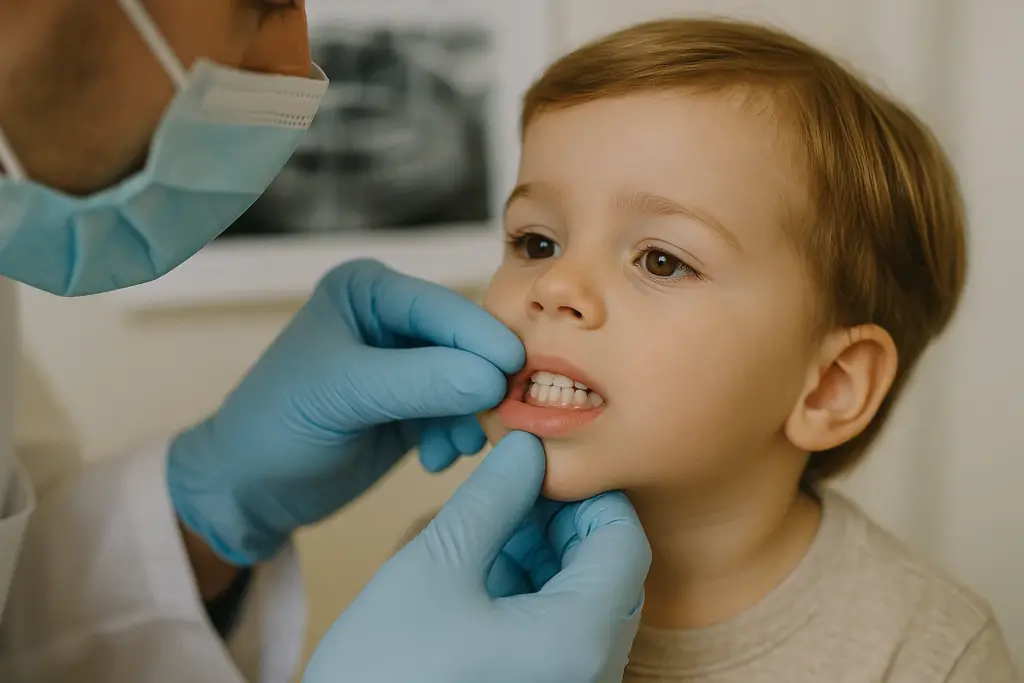
Not all thumb sucking is that bad. There’s a great difference between occasional thumb sucking at bedtime and forceful, frequent thumb sucking throughout the day.
If the pressure is strong or continuous, problems can begin as early as age 2, especially once baby teeth are fully in. The foremost concern is when thumb sucking after 4 years of age still exists, and adult teeth are starting to emerge.
The following are some of the effects of prolonged thumb sucking on baby teeth:
- Moving upper teeth forward (overjet)
- Lower teeth are pulled inward
- The development of an open bite (top and bottom front teeth do not meet)
- The palate that was narrowed due to the continuous pressing on the roof of the mouth
- Jaw misalignment, that causes uneven growth
- To be more specific, tongue thrusting and other speech difficulties appear
That’s not all. These aren’t just appearance issues — they can affect speech, eating, swallowing, and in some cases, even breathing.
Long-Term Dental Problems Caused by Thumb Sucking
When thumb sucking turns into a long-term habit, its impact on baby teeth can become the reason for adult teeth problems later.
Some of the long-term dental effects include:
1. Misaligned Permanent Teeth
The permanent teeth grow in the manner that their predecessor did – baby teeth. So, when baby teeth have been displaced as a result of thumb sucking, the permanent teeth will be in the same way, getting misaligned. The parents and the dentist will often have to decide on wearing braces or using clear aligners to correct the teeth’s alignment they will later come across.
2. Bite Problems
Open bites and overbites have been identified as some of the most frequent effects of the persistent thumb sucking habit. These bite problems may not only change the way your child can eat, but over time, they may also change the shape of their face.
3. Speech Impediments
When a child makes a sound, the tongue has to be in the right place, and the teeth have to fit together properly. Due to thumb sucking, a child may at first develop a lisp, start thrusting the tongue, and have trouble with some letters like “S” or “T” in that they cannot be pronounced correctly.
4. Gum and Tooth Damage
One who is constantly sucking on his thumb causes a situation where the surfaces of the thumb and the soft tissues are in continuous contact. As a result, there might be some areas on the gums that become inflamed and even little areas of the teeth where enamel is worn off.
The longer thumb sucking goes on, the more difficult it becomes to get rid of the damage without the help of a pro.
Thumb Sucking vs. Pacifiers: Which Is Worse?
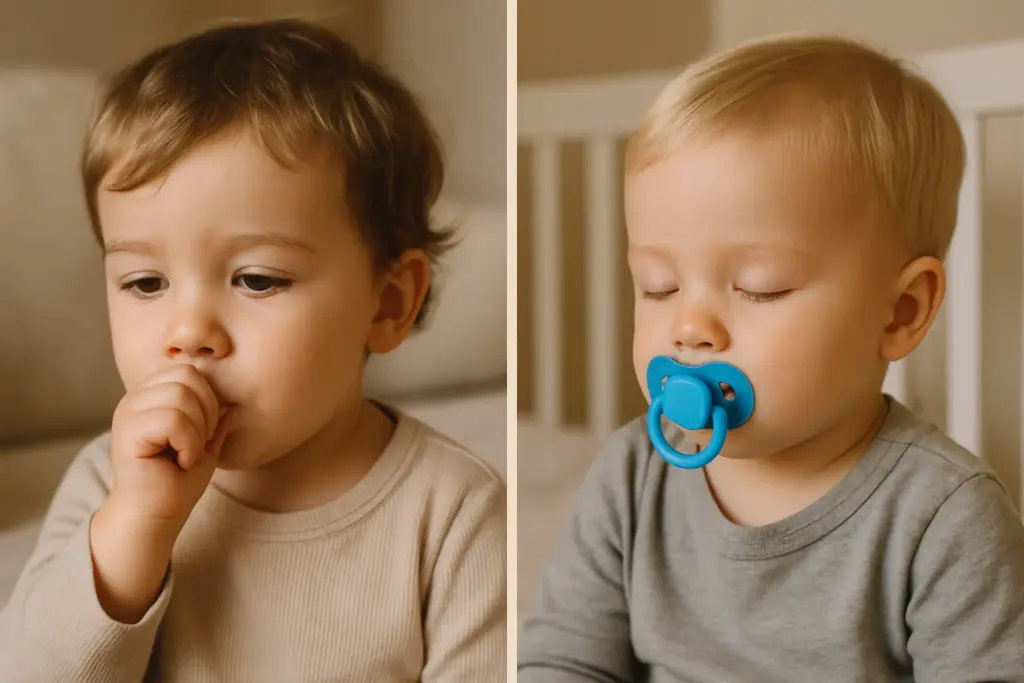
One of the most common questions new parents ask is whether it is better for a baby to have a pacifier or to be allowed to suck their thumb.
Let’s analyze it:
| Feature | Thumb Sucking | Pacifier |
|---|---|---|
| Always available | ✅ | ❌ |
| Easy to control | ❌ | ✅ |
| Easier to stop | ❌ | ✅ |
| Pressure on palate | ✅ (often more) | ✅ (less) |
| Risk of addiction | ✅ | ✅ |
| Removable | ❌ | ✅ |
The point is that a pacifier is generally better than a thumb, but both should be weaned at the latest by 2–3 years. The biggest benefit of a pacifier is that you can take it away. You can’t exactly remove your child’s thumb!
Nevertheless, long-term pacifier use still has associated problems with baby teeth. The children’s habits of thumb sucking and pacifier use need to be dealt with before they disturb the proper development of your child’s smile.
How to Help Your Child Break the Habit Gently

Thumb sucking should not be a “power struggle.” Really, a gentle, consistent support wins over punishment or shaming every time.
Step-by-Step Tips for Parents:
🧸 Praise, don’t punish
Small victories should be recognized. Encourage your child and reward him/her positively when he/she successfully refrains from thumb sucking, especially in a stressful hour or at sleep time.
🛏 Create comforting routines
If thumb sucking occurs at bedtime, it is usually related to the routine. Slowly change your child from the thumb to a soft toy or blanket, or play some relaxing music at the time of winding down.
🧠 Understand the emotional side
For anxiety reasons, many kids resort to thumb sucking. So, work on the cause of the problem by directly addressing the root rather than only the behavior. Is your child going to school? Facing major changes?
🛡 Try protective tools
Thumb guards, if your child is willing, and finger nail coverings filled with a bad taste are meant to help kids remember that they should not suck their thumbs; hence, most of the time, these are for night use only.
🦷 Involve your dentist
A pediatric dentist can tell in kid-friendly terms how thumb sucking impacts their smile. Sometimes, the expert’s opinion makes a big impact.
At Lema Dental Clinic, we provide special behavioral coaching and preventive treatments for young children who have the habit of thumb sucking. Our team is able to examine whether the habit is affecting your child’s bite and propose soft solutions.
FAQ: Thumb Sucking and Baby Teeth
Yes. Prolonged thumb sucking can misalign baby teeth, cause bite problems, and lead to costly dental issues later in life.
Ideally, the habit should stop between ages 2–4. By age 5, it could begin affecting adult teeth and jaw growth.
Be patient and supportive. Offer comfort alternatives, use praise, and consult a pediatric dentist if the habit continues.
Yes, because pacifiers are easier to control and remove. Both should be phased out by age 3 to protect baby teeth.
If the habit continues past age 5–6, it can shift permanent teeth, cause an open bite, and require orthodontic correction.