


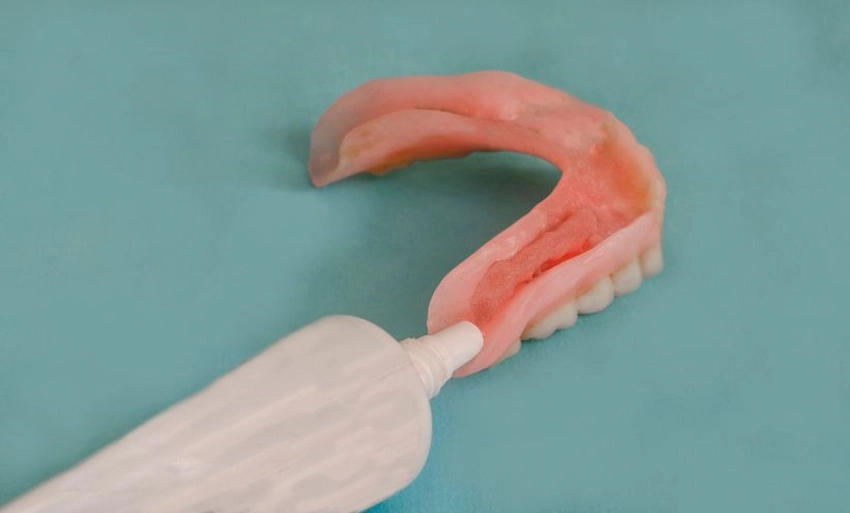
Apply denture adhesive on clean dentures, then remove it gently with warm water and a soft brush.
Honestly, getting dentures is like getting a whole new life. It changes your voice, the way you smile out loud, and even your food choices.
Besides, most people think that it is a major pain to clean and take care of dentures. For one thing, having to put on denture glue always feels very sticky and messy. But precisely, that is the reason why doing the whole process perfectly is essential.
Here is what we see in the clinic. Quite a lot of people want to have a very nice smile in only a short time, so they choose to go to Turkey.
We at Lema Dental Clinic are the ones performing the treatment. Afterwards, they go back home, where carrying out daily maintenance becomes their new normal. What a difference a denture adhesive can make in the expression of a loud and happy laugh, in contrast to a completely miserable day.
The best way to think about denture adhesive is to compare it to very thin mortar that has been laid between very strong bricks. These bricks already fit very well with one another. The mortar only acts as a barrier against wind and rain. Too much mortar results in a huge mess. Not enough mortar totally breaks the seal.
Why Proper Application Matters
During our work at Lema Dental Clinic, we have noticed many errors. The majority of adhesive failures are due to simple user mistakes. The paste is, in most cases, perfectly alright.
Professor Doctor Coşkun Yıldız is a big fan of pointing out an important fact. He says, “Before the adhesive goes on, a superb denture must have excellent suction and perfect anatomy. The adhesive is just a helper.”
Never put too much denture adhesive paste just to hold your denture in place. That basically tells you that your denture is not fitting properly anymore. Just think about your jawbone as the foundation of a house. Of course, over time, the ground under it moves, and the bone shrinks. The foundation is totally changed in the end.
In that case, no paste would be able to fix a poorly fitting denture.
Let’s instead discuss what the proper procedure is. This is how to correctly put on denture adhesive for a dependable, comfortable hold.
Step-by-Step: The Application Process
Clean and Dry Your Dentures
Think about it for a moment. Would you stick tape on a wet, greasy wall?
That same concept applies to your mouth. Actually, you always clean the items so thoroughly that they are spotless. Likewise, you must brush your teeth using a gentle brush and warm water. After that, completely dry them with a fresh towel. Acrylic that is still wet causes the immediate weakening of adhesive bonding strength.
Use Less Paste
Use paste mainly the size of a small pea. Besides, keep the glue away from the denture’s edges. Close your mouth. Is the paste pushing outside? If your answer is ‘yes’, then you have taken too much.
Warm Your Gums
The first time you open your mouth for a rinse, it should be with warm water. First, coming between the moisture and your gums will make re-gluing work faster when it’s in contact with your skin.
Position and Press Firmly
Put in your denture. Place it under pressure while imagining it conveniently fitting your mouth. Hold the bite for 3-5 seconds continuously.
The Art of Safe Removal: Protecting Your Tissues
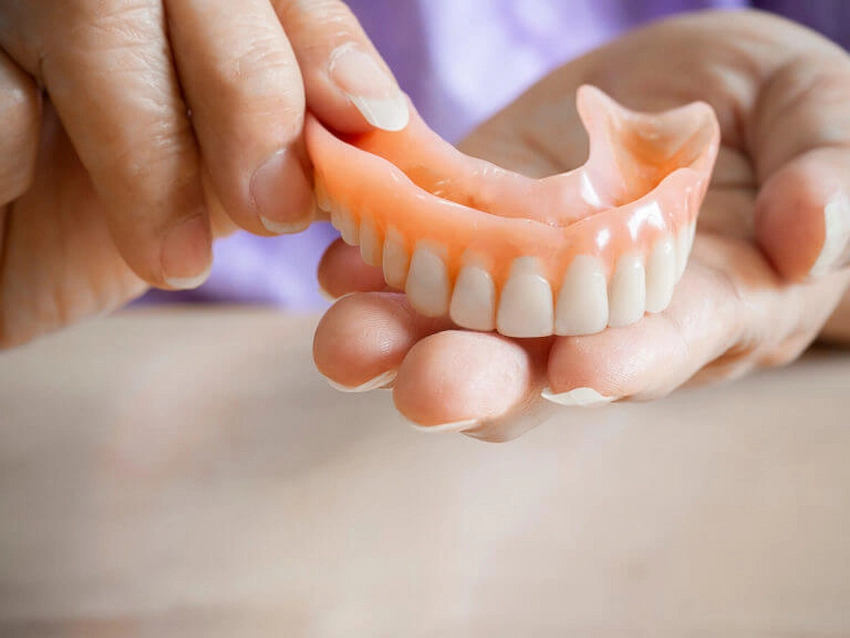
Besides being fluent in several languages, Dentist Polen Akkılıç and her team’s most treasured value is sharing a strict rule: never forcibly tear your denture apart. This is the cause of most sinister damages.
The soft tissue in your mouth is very delicate. It is like the thin skin inside an eggshell. Yanking the hard plastic tears the tissue. This causes serious pain and sores.
You might be wondering how we detach the tightly sealed denture in a safe way, right?
- The Warm Water Swis: Take a big sip of warm water, swish it around for 30 seconds. The warm water will easily reduce the tight grip.
- The Gentle Rocking Motion: Put your thumb against your front teeth. Gently rock the denture left and right. Do not pull straight down. Rocking breaks the vacuum seal naturally.
- Clean the Gums Safely: Take the denture out. You will feel sticky paste on your gums. Use a very soft toothbrush and warm water. Gently brush your gums to clean the skin.
Comparing Your Adhesive Options
Different adhesive types differ in many ways. Use the chart below to discover the kind that is most suitable for your regular use.
Denture Adhesive Comparison
| Adhesive Type | Holding Power | How to Apply | How to Remove | Best Clinical Use |
| Creams / Pastes | Very High | Requires dexterous hands | Gentle brushing needed | Tough hold against hard foods during the whole day. |
| Powders | Medium | Extremely easy (just shake) | Very easy (rinses away) | Favorite of the ones who detest the thick, sticky feeling. |
| Adhesive Strips | Strong | Very easy (pre-cut) | Easy (peels right off) | Best for patients with arthritis or weak hands. |
Frequently Asked Questions
In all honesty, I have to tell patients to follow a single application daily. The reason is that after a few hours, you will diffuse the adhesive via salivation and polyphenols present in the food. Besides, if you apply paste 3 times,s you might present better the existence of a new denture. We would like to see you for a new fitting.
Yes, such a small amount is completely safe. Manufacturers expect us to swallow a bit from these products and design them accordingly. If, however, paste regularly runs down your throat, we will have to check your application method.
Most probably, you are using excessive force. Start by breaking the suction seal. There is also the possibility of you leaving the hardened adhesive on your gum beyond the time you wear the denture. Always massage your gums with a soft brush and warm water.
My firm stance is a no. Your gum tissues need to breathe. Keeping dentures overnight in the mouth is a quick way to destroy the bone,e and at the same time will cause nasty yeast infections in the mouth.
Fingernail scraping could, unfortunately, hurt the skin. Start by swishing with warm water, then, using a soft, warm washcloth, carefully wipe the roof of your mouth. The cloth will get rid of the paste thoroughly.
- Felton, D., Cooper, L., Duqum, I., Minsley, G., Guckes, A., Haug, S., … & Sweitzer, B. (2011). Evidence-based guidelines for the care and maintenance of complete dentures: A publication of the American College of Prosthodontists. Journal of Prosthodontics, 20(s1), S1-S12.
- Grasso, J. E. (2004). Denture adhesives: changing attitudes. The Journal of the American Dental Association, 135(1), 86-92.
- Koronis, S., Zissko, A., & Kountouras, J. (2012). Clinical evaluation of denture adhesives in complete denture wearers. Gerodontology, 29(2), e214-e219.
- Polyzois, G. L., de Baat, C., & Blanco-Dalmau, L. (1995). Attitudes of European dentists toward the use of denture adhesives. The Journal of Prosthetic Dentistry, 74(3), 261-263.
- Shay, K. (2000). Denture adhesives: choosing the right powders and pastes. The Journal of the American Dental Association, 131(5), 581-586.

