


Denture adhesive can cause gum irritation, bad taste, stomach discomfort, and health risks if overused.
Millions of people worldwide extensively benefit from traditional dentures, experiencing the joy of a functional smile once again. If those dentures start to slip, relying on a tube of adhesive appears to be the next logical step. It’s fast. It’s cheap. It boosts one’s self-esteem during the evening meal, for example.
However, most people wouldn’t want to depend on paste just to smile. Even though these gels and powders, sold over the counter, offer a temporary hold, prolonged use covers up a much more serious problem with the structure. That inconspicuous tube of glue can, after some time, even be a source of unexpected physical and neurological side effects.
This is what happens quite often in our dental office: patients who come with gum irritation, extreme bone loss, and nerve symptoms that no one can explain. They are completely unaware that the denture routine they have been following every single day for years is their culprit.
What Denture Adhesives Can Cause Zinc Toxicity
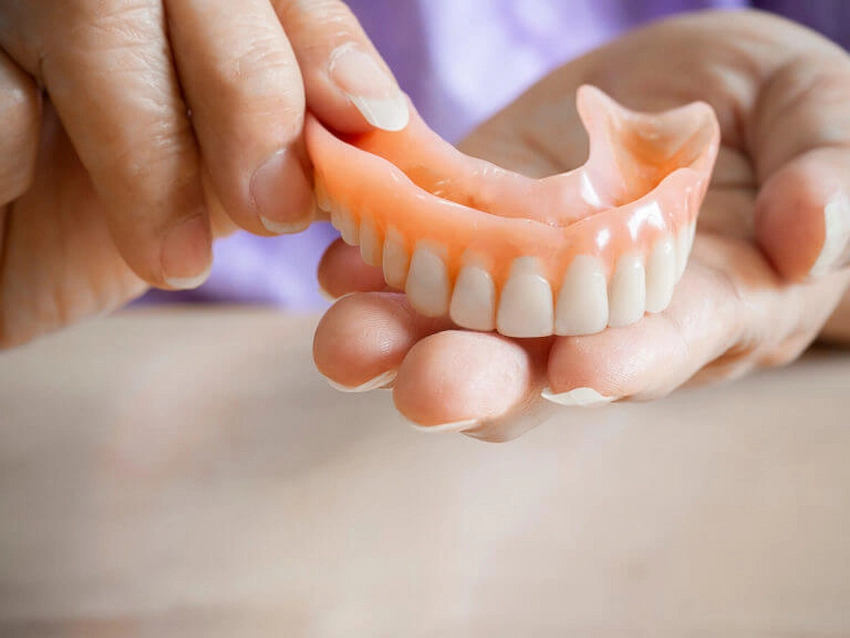
The major ingredient of that adhesive is what makes it strong. And it is no secret that zinc is the main component that these well-known denture creams use in order to get that strong and waterproof bond between the acrylic base and the gum tissue. Zinc is one of the most essential minerals for a person. It supports the immune system and also the body’s ability to heal.
Now the question is: how much is a lot?
Patients who can not wear the dentures properly are often ready to use a large amount of adhesive, which is sticky and helps keep the dentures stable. The zinc-containing paste in these adhesives, when small amounts are swallowed over a long period of time, may lead to zinc poisoning, as the mouth is an area very rich in blood vessels. High amounts of zinc interfere with the body’s ability to take in copper. Copper deficiency, which is the result of high zinc levels, mainly affects the nervous system and may hence lead to:
- Neuropathy: Why do we have the numbness, tingling, and the “pins and needles” in the hands and feet?.
- Muscle weakness: You may be a little more fatigued or find it harder to go for a walk.
- Cognitive changes: Brain fog and memory loss.
Professor Doctor Coşkun Yıldız frequently states that dozens of patients came to him after years of consultations with different neurologists for a nerve pain that could not be explained, only to find out that the root cause was in their own bathroom cabinet.
Unnoticed Bone Loss and Tissue Damage
Just like putting a band-aid on a foundation of a crumbling building doesn’t mean one is fixing the foundation, but only hiding the damage, so is the use of denture adhesive to fix a loose prosthetic.
Whenever natural teeth are lost, the jawbone is not stimulated anymore with the biting force, resulting in the loss of its density. The jawbone is like a muscle; if it is not used, it reduces in size. With the bone shrinkage, the dentures become loose. It is at this point that the patient starts to use the denture adhesive more and more.
The regular wearing of poorly fitting dentures alongside the use of strong chemical adhesives results in trapping bacteria against the gums. As a result, there is chronic inflammation, the appearance of sore spots, and oral thrush. Dentist Polen Akkılıç and her team are very familiar with cases of patients who have been suffering severe mucosal irritation caused by years of trapped bacterial plaque under adhesive-laden dentures.
The Permanent Solutions at Lema Dental Clinic
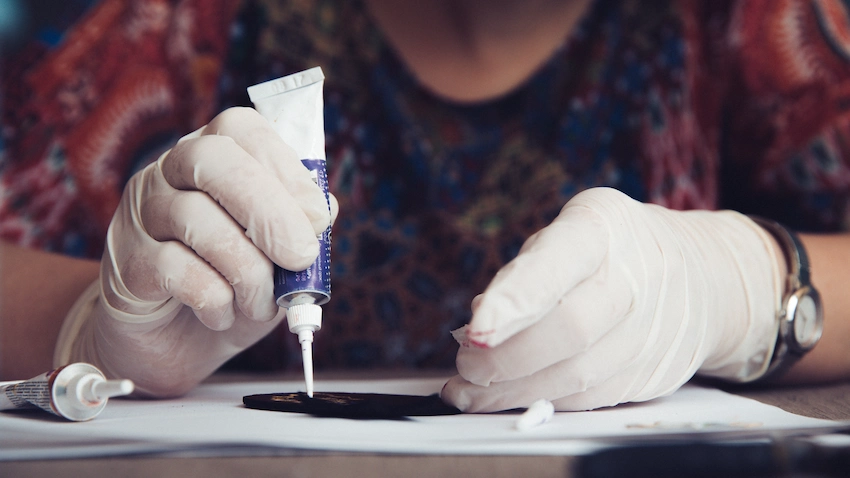
The dose of denture adhesive finally became excessive one day; getting rid of it completely is the best way to stay away from the risks of denture adhesive, according to our experience at Lema Dental Clinic. There are structurally restorative options in modern dentistry that support the bone directly, avoiding the gum entirely.
Dental holiday for restoration in Turkey has become a top pick for patients who prefer permanent, advanced substitutes to conventional dentures. By using the most modern implantology techniques, we fix the problem at the root, rather than just treating the symptoms.
Comparison Table for Denture Adhesive and Implant Solutions
| Feature | Normal Dentures + Adhesive | Implant-Supported Solutions (All-on-4/6) |
| Stability | Depends on suction and chemical glue; liable to slipping. | Directly screwed into the jawbone; completely fixed. |
| Bone Health | Facilitates jawbone loss as root stimulation is missing. | Dental implants cause bone stimulation, preventing facial collapse. |
| Bite Force | Only about 10-20% of the natural bite force. | Regains up to 95% of natural bite force. |
| Systemic Risks | High chances of zinc poisoning, oral thrush, and tissue damage. | Gray biocompatible titanium; no need for chemical adhesives. |
| Daily Maintenance | Needs the messy application every day and long soaking. | Just brushing and flossing like natural teeth. |
FAQs
In general, if you pay attention to the instructions and only add minor dots, swallowing accidental trace amounts should not cause any harm to you. The problem arises in a situation when bone loss results in your dentures becoming loose,e and then you start employing thick lines or giving yourself multiple applications in a day. It is chronic ingestion that causes a heavy metal build-up in the body over a period of time.
Usually, neurological signs can be the most obvious. You could be experiencing a tingling or numbness sensation in your toes and fingers, or the weakness that you feel in your legs could be unusual for you. But since these kinds of symptoms may actually be caused by diabetes or vitamin B12 deficiency, it is important to inform your doctor about the regular use of the denture adhesive.
One average tube of denture glue should be sufficient for a period of three to six weeks. Finishing a tube in a couple of days just to keep your denture in place means that you are using the product excessively,y and your health is at risk.
Actually, it is not your dentures that change, but your jaw. It is just that the tooth roots that stimulate the bone are missing, and so the jaw ridge keeps on melting away. Even a denture that used to fit perfectly would definitely become loose after five years. Adhesive cannot be really effective in solving the problem of bone loss; it only postpones the inevitable clinical adjustment.
The implant-supported restorations are really the most recent, best-performing alternatives in dentistry. Dental implant-supported teeth are attached directly to the bone. You get rid of the glue, get your full bite force back, and protect your health for the long run.
- Nations, S. P., Boyer, P. J., Love, L. A., Burritt, M. F., Butz, J. A., Wolfe, G. I., … & Trivedi, J. R. (2008). Denture cream: an unusual source of excess zinc, leading to hypocupremia and neurologic disease. Neurology, 71(9), 639-643.
- Hedera, P., Fink, J. K., Bockenstedt, P. L., & Brewer, G. J. (2009). Myeloneuropathy and syndromic zinc toxicity. The American Journal of Clinical Nutrition, 90(2), 435-436.
- Carlsson, G. E. (2014). Responses of the jawbone to pressure. Gerodontology, 31(S1), 2-7.
- Zarb, G. A., & Schmitt, A. (1990). The longitudinal clinical effectiveness of osseointegrated dental implants: The Toronto study. Part I: Surgical results. The Journal of Prosthetic Dentistry, 63(4), 451-457.
- Al-Ghannam, N. A., Starr, J. M., & MacEntee, M. I. (2020). The biological effects of denture adhesive on oral mucosa: A clinical review. Journal of Oral Rehabilitation, 47(11), 1438-1445.

