


Denture adhesives usually hold all day, but fit, saliva, and food can affect strength.
Reality: it gets tiring to use denture adhesive every day. You apply it in the morning. You pray it will last until lunchtime. But by dinner time, your teeth start to feel wobbly. In our clinical practice at Lema Dental Clinic in Turkey, we keep hearing patients talk about this issue. They really don’t enjoy the sensation.
To clarify, it is more the mouth rather than the denture that is to blame. Professor Doctor Coşkun Yıldız has often pointed to the fact that using glue does not solve the problem but only masks it. Think of your jawbone as the foundation. The denture is the house on top of the foundation. If the foundation shrinks or becomes weak, the house will start to shake. Whatever amount of glue you use, it cannot make a weak foundation work.
Real Story: Your Denture Glue and the Hours to Come
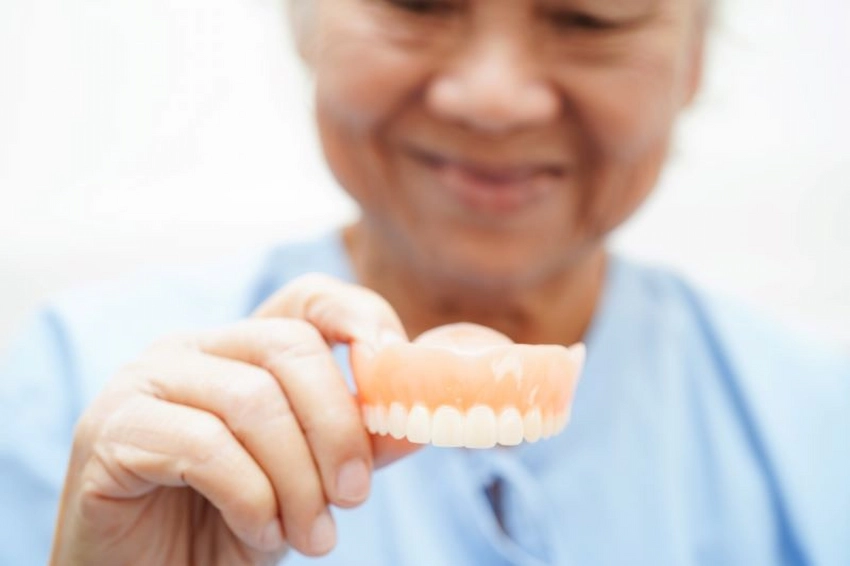
An excellent denture glue should hold for about 12 hours. A single application in the morning should last you the entire day.
This is our clinical experience. The 12-hour hold is seldom with older dentures. Why? Because this largely depends on the patient’s condition of gums and habits during the day
Lack of Hold in the Morning – Why?
These daily things actually break up the adhesive in your mouth.
- Hot Liquids: For example, the morning coffee could melt the paste.
- Hard-to-Chew Foods: Biting and a heavy dish such as steak, for instance, can lead to the denture becoming loose.
- Your Saliva: Naturally, your saliva wil,l over ti, wash away the glue in your mouth through normal spitting.
- Bone Loss: As the name suggests, it is a stealthy foe. Toothless areas result in jawbone atrophy. A denture that was fabricated three years ago definitely will not fit your oral cavity now.’
Just a Peek into the Day
Dr. Polen Akkılıç and her clinical crew have put together a chart that highlights your lifestyle choices and how they affect the dentures’ hold. The diagram is as simple as the daily life of a human.
| Daily habit | Maximum time span | Why |
| Rest & Talking | Up to 12 hours | Glue has not been disturbed, so the seal continues to keep holding firmly. |
| Drinking Hot Coffee | 6-8 hours | Temperature causes adhesive to become softer in a very short period. |
| Eating Tough Meat | Only 4-6 hours | Chewing heavily breaks the sealing action. |
| Wearing Old Denture | 2-4 hours | Glue cannot fill a big gap. |
Signs You Should Quit Denture Glue Forever
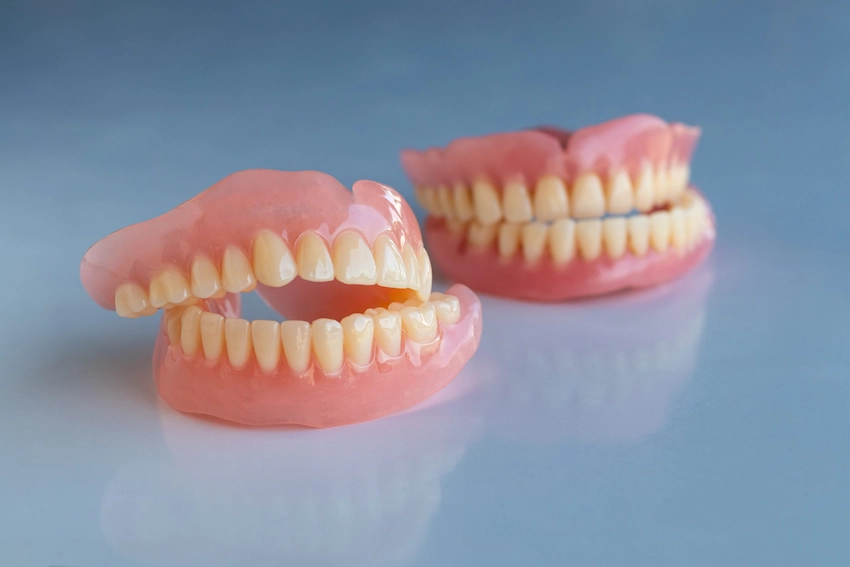
The big question that is left is, ‘How come you’re using so much glue?’ Well, the answer is simple: you are probably using it to compensate for the denture’s poor fit. Using glue repeatedly shows that your denture is ill-fitted or there’s the possibility of bone loss.
Our clinic in Turkey, Lema, encourages people not to be dependent on glues. We can reshape and polish your old denture to give it a better fit, or if you like, we can implant new teeth which can give a deep bite hold without denture glues at all. You should keep one thing in mind if you are considering implant options for holding your dentures in place – both major types we offer are fantastic, extremely high-quality selections. You definitely ought to have a smile that you can fully trust.
Frequently Asked Questions
Is it safe to use glue several times every day?
I advise my patients to be careful here, as overusing denture glue may result in health issues if it is excessive usage of glue which caused it to enter the bloodstream or be swallowed. However, the main point is, if you are putting the denture glue on 2 or 3 times during the day, that means you need a new denture fitted instead of more glue.e
Does it matter what denture glue one uses?
Yes, denture glue type matters significantly. Creamy formulas are known to provide the strongest hold. But cream is very stubborn to clean from the teeth and gums after a long time,e and it is the least pleasant way to remove. Powders, on the other hand, are simple to brush off but provide the least grip. As such, it is important to choose the one suitable for one particular need.d
Why do my lower dentures come off quicker?
The upper denture can be better anchored with the roof of your mouth, which provides extra suction. Whereas your lower jaw does not have that. The lower jaw, in fact, is small compared to the upper one. Moreover, your tongue and cheek muscles are constantly pushing your lower jaw inward against your lower front incisor region, which is also a small surface area.
Is it a bad idea to sleep with denture glue stuck to one’s gums?
It is a bad decision, I would say. Your periodontal tissues are very vital tissues for life, and they require some “breathing”. It is better to remove your teeth, clean them, and put a denture cleaner solution. This will help in keeping infections at bay in the oral cavity.
Can I do something so that the adhesive stays on all day long?
Make sure your dentures are as dry as bone. Apply a small amount of glue, not much. Avoid using long strips of glue; stick only a little bit where it is necessary to hold dentures in place. Press the denture very hard onto your gums for 10 seconds. Wait for 15 minutes before your first warm drink of the day.’
Academic References
- Felton, D., Cooper, L., Duqum, I., Minsley, G., Guckes, A., Haug, S., … & Smith, B. (2011). Evidence-based guidelines for the care and maintenance of complete dentures: a publication of the American College of Prosthodontists. Journal of Prosthodontics, 20(s1), S1-S12.
- Grasso, J. E. (2004). Denture adhesives: changing attitudes. The Journal of the American Dental Association, 135(1), 81-86.
- Kiesow, A., Sarembe, S., Pizzey, R. L., Axe, A. S., & Bradshaw, D. J. (2016). Material compatibility and antimicrobial activity of consumer products for denture care. The Journal of Prosthetic Dentistry, 115(2), 189-198.
- Slaughter, A., Katz, R. V., & Grasso, J. E. (1999). Professional attitudes toward denture adhesives: a Delphi technique survey of academic prosthodontists. The Journal of Prosthetic Dentistry, 82(1), 80-89.
- Zhao, K., Cheng, X. R., Chao, Y. L., & Li, Z. A. (2004). Laboratory evaluation of a new denture adhesive. Dental Materials, 20(4), 419-424.

