

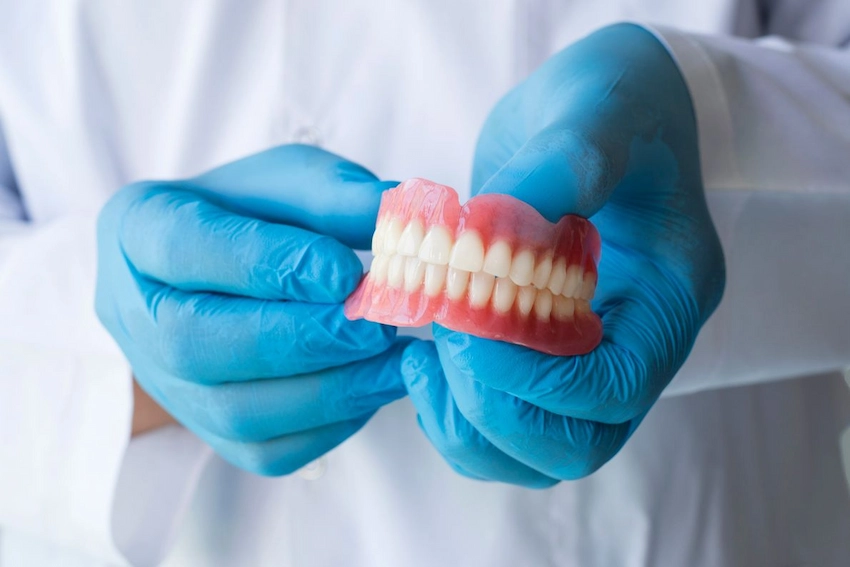
Die Wahrheit über Zahnprothesenhaftmittel: Wie lange halten sie?
Haftmittel für Zahnprothesen halten normalerweise den ganzen Tag, aber Passform, Speichel und Nahrung können die Haftkraft beeinträchtigen.
Realität: Es wird ermüdend, Haftmittel für Zahnprothesen jeden Tag zu verwenden. Sie tragen es morgens auf. Sie beten, dass es bis zum Mittagessen hält. Aber bis zum Abendessen fühlen sich Ihre Zähne wackelig an. In unserer klinischen Praxis in der Lema Zahnklinik in der Türkei hören wir immer wieder Patienten über dieses Problem sprechen. Sie genießen dieses Gefühl wirklich nicht. Zur Klarstellung: Es ist eher der Mund als die Prothese, die schuld ist. Professor Doktor Coşkun Yıldız hat oft darauf hingewiesen, dass die Verwendung von Klebstoff das Problem nicht löst, sondern nur maskiert. Stellen Sie sich Ihren Kieferknochen als Fundament vor. Die Prothese ist das Haus auf diesem Fundament. Wenn das Fundament schrumpft oder schwach wird, beginnt das Haus zu wackeln. Egal wie viel Klebstoff Sie verwenden, er kann ein schwaches Fundament nicht funktionsfähig machen.Wahre Geschichte: Ihr Prothesenkleber und die kommenden Stunden
Mangelnder Halt am Morgen – Warum?
Diese täglichen Dinge lösen tatsächlich das Haftmittel in Ihrem Mund auf.- Heiße Flüssigkeiten: Zum Beispiel könnte der Morgenkaffee die Paste schmelzen.
- Schwer zu kauende Speisen: Beißen und ein schweres Gericht wie zum Beispiel Steak können dazu führen, dass die Prothese locker wird.
- Ihr Speichel: Natürlich wird Ihr Speichel im Laufe der Zeit den Klebstoff in Ihrem Mund durch normales Spucken wegspülen.
- Knochenschwund: Wie der Name schon sagt, ist es ein heimtückischer Feind. Zahnlose Bereiche führen zu Kieferknochenatrophie. Eine vor drei Jahren angefertigte Prothese passt jetzt definitiv nicht mehr in Ihre Mundhöhle.
Ein kleiner Einblick in den Tag
Dr. Polen Akkılıç und ihr klinisches Team haben eine Tabelle zusammengestellt, die Ihre Lebensstilentscheidungen und deren Auswirkungen auf den Halt der Prothesen hervorhebt. Das Diagramm ist so einfach wie das tägliche Leben eines Menschen.| Tägliche Gewohnheit | Maximale Dauer | Warum |
| Ruhe & Sprechen | Bis zu 12 Stunden | Der Klebstoff wurde nicht gestört, daher hält die Versiegelung weiterhin fest. |
| Heißer Kaffee | 6-8 Stunden | Temperatur lässt das Haftmittel in sehr kurzer Zeit weicher werden. |
| Zähes Fleisch essen | Nur 4-6 Stunden | Starkes Kauen unterbricht die Haftwirkung. |
| Alte Prothese tragen | 2-4 Stunden | Klebstoff kann eine große Lücke nicht füllen. |
Anzeichen, dass Sie Prothesenkleber für immer aufgeben sollten
Häufig gestellte Fragen
Akademische Referenzen
- Felton, D., Cooper, L., Duqum, I., Minsley, G., Guckes, A., Haug, S., ... & Smith, B. (2011). Evidence-based guidelines for the care and maintenance of complete dentures: a publication of the American College of Prosthodontists. Journal of Prosthodontics, 20(s1), S1-S12.
- Grasso, J. E. (2004). Denture adhesives: changing attitudes. The Journal of the American Dental Association, 135(1), 81-86.
- Kiesow, A., Sarembe, S., Pizzey, R. L., Axe, A. S., & Bradshaw, D. J. (2016). Material compatibility and antimicrobial activity of consumer products for denture care. The Journal of Prosthetic Dentistry, 115(2), 189-198.
- Slaughter, A., Katz, R. V., & Grasso, J. E. (1999). Professional attitudes toward denture adhesives: a Delphi technique survey of academic prosthodontists. The Journal of Prosthetic Dentistry, 82(1), 80-89.
- Zhao, K., Cheng, X. R., Chao, Y. L., & Li, Z. A. (2004). Laboratory evaluation of a new denture adhesive. Dental Materials, 20(4), 419-424.
Häufige Fragen
Is it safe to use glue several times every day?
I advise my patients to be careful here, as overusing denture glue may result in health issues if it is excessive usage of glue which caused it to enter the bloodstream or be swallowed. However, the main point is, if you are putting the denture glue on 2 or 3 times during the day, that means you need a new denture fitted instead of more glue.e
Does it matter what denture glue one uses?
Yes, denture glue type matters significantly. Creamy formulas are known to provide the strongest hold. But cream is very stubborn to clean from the teeth and gums after a long time,e and it is the least pleasant way to remove. Powders, on the other hand, are simple to brush off but provide the least grip. As such, it is important to choose the one suitable for one particular need.d
Why do my lower dentures come off quicker?
The upper denture can be better anchored with the roof of your mouth, which provides extra suction. Whereas your lower jaw does not have that. The lower jaw, in fact, is small compared to the upper one. Moreover, your tongue and cheek muscles are constantly pushing your lower jaw inward against your lower front incisor region, which is also a small surface area.
Is it a bad idea to sleep with denture glue stuck to one's gums?
It is a bad decision, I would say. Your periodontal tissues are very vital tissues for life, and they require some "breathing". It is better to remove your teeth, clean them, and put a denture cleaner solution. This will help in keeping infections at bay in the oral cavity.
Can I do something so that the adhesive stays on all day long?
Make sure your dentures are as dry as bone. Apply a small amount of glue, not much. Avoid using long strips of glue; stick only a little bit where it is necessary to hold dentures in place. Press the denture very hard onto your gums for 10 seconds. Wait for 15 minutes before your first warm drink of the day.'