


Choose safe, medical grade kits.
It starts with a social media trend—a tiny, shimmering glint on a canine tooth that catches the light during a laugh. At Lema Dental Clinic, we understand the allure of personal expression. However, as the “DIY” culture grows, so does the influx of patients arriving at our clinic in Turkey with permanent enamel scarring and chemical burns.
The question remains: is there truly such a thing as a “safe” home tooth gem kit? In our clinical experience, while some kits are certainly less dangerous than others, the margin for error is razor-thin when you are dealing with living tissue.
The Chemistry of the Bond: Beyond Superglue
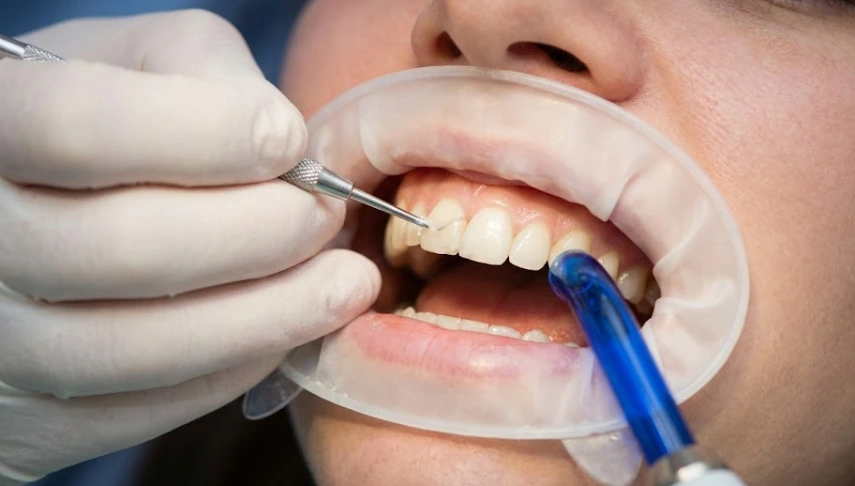
The most critical component of any kit is the adhesive. The reality is that many cheap kits found online contain industrial-grade resins or, worse, cyanoacrylate (superglue). Professor Doctor Coşkun Yıldız repeats the analogy of your tooth enamel being the protective varnish on a precious Stradivarius violin—as soon as you use a non-biocompatible and harsh chemical, you are going to destroy that protection permanently.
A safe kit must use medical-grade, light-cured bonding agents. These are the same materials Dentist Polen Akkılıç and her team use for orthodontic brackets. If a kit asks you to mix two tubes of “mystery glue” or use a product that air-dries without a UV/LED light, it is a red flag for toxicity and permanent staining.
Lead Content and “Craft” Crystals
But let’s look closer at the gems themselves. Many kits include glass crystals intended for nail art or fabric. These are often backed with lead-based foils to increase their “shimmer.” In the acidic environment of the mouth, these heavy metals can leach into your system.
A truly safe kit should provide lead-free Swarovski crystals or 18k-24k gold charms. At Lema Dental Clinic, we insist on lead-free certifications because a smile should never come at the cost of systemic health.
The “Etching” Trap: Don’t Melt Your Enamel
To get a gem to stick, the tooth surface must be “etched.” Most kits provide a mild phosphoric acid gel. Think of etching like using sandpaper to roughen a smooth piece of wood so the paint sticks better.
Here is what we see in the clinic: untrained hands often apply the etching gel for too long or over too large an area. This creates a permanent “matte” white spot on your tooth that acts like a sponge for coffee and wine stains. Professional application in Turkey ensures the etch is localized to the exact micron of the gem’s footprint.
Comparison: DIY Kits vs. Professional Clinical Application
| Feature | Low-Cost DIY Kit | “Premium” Home Kit | Lema Dental Clinic (Turkey) |
| Adhesive Type | Industrial Glue | Basic Dental Resin | Clinical-Grade Composite |
| Light Source | None or Weak LED | Small Handheld UV | High-Intensity Curing Light |
| Gem Quality | Craft Glass (Lead risk) | Lead-free Crystal | Certified Medical Gems/Gold |
| Enamel Safety | Extremely Low | Moderate (if careful) | Guaranteed Safe |
| Longevity | 2-5 Days | 2-4 Months | 6 Months to 2 Years |
The Role of Sterilization
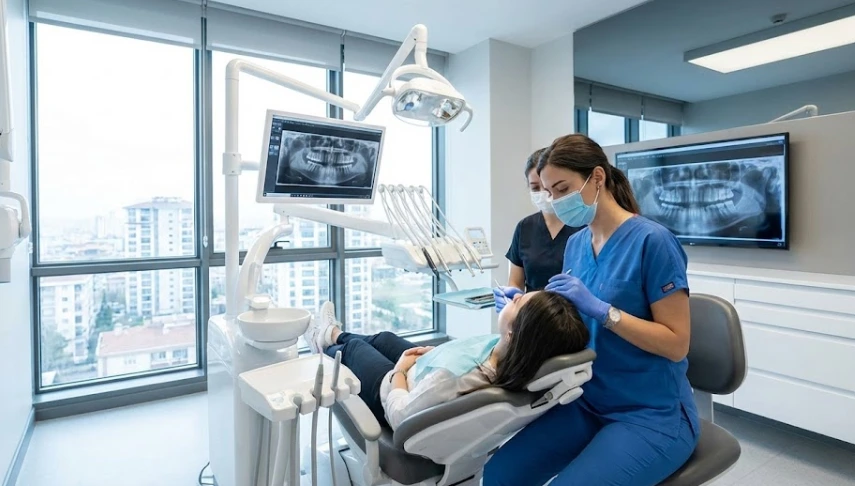
The question of hygiene is often overlooked in home kits. A tooth gem kit is essentially a medical procedure in a box. Are the cotton rolls sterile? Is the applicator single-use? If bacteria are trapped underneath the gem during the bonding process, you are effectively sealing a “decay bomb” onto your tooth. Dentist Polen Akkılıç emphasizes that without the sterile environment of a clinic like Lema, you risk localized gingivitis or even an abscess.
FAQ: Direct Advice from the Surgeons
Professor Doctor Coşkun Yıldız: Absolutely not. DIY bonding agents are designed for natural enamel. If you try to etch a porcelain veneer with a home kit, you will permanently ruin the finish of your expensive dental work.
Dentist Polen Akkılıç: Look for a “halo” of white, chalky texture around the gem, or persistent gum sensitivity. If the gum turns white or bleeds, you likely have a chemical burn from the adhesive.
The Lema Team: Most home UV lights are too weak to fully “cure” the glue. This leaves a layer of semi-liquid, toxic resin sitting against your tooth. In our clinic in Turkey, we use calibrated lights that ensure the bond is 100% solid and inert.
Professor Doctor Coşkun Yıldız: Never, ever try to “pop” it off with your fingernail or a tool. This can pull off a “chunk” of your enamel. You must have a professional buff it away using a specialized dental burr.
Dentist Polen Akkılıç: While we prefer clinical application for safety, if you must use one, look for kits that explicitly state they use “orthodontic-grade” materials and provide lead-free crystals. However, the safest kit is always a consultation with a pro.
- Artun, J., & Bergland, S. (1984). Clinical trials with crystal tooth ornaments: Bonding and enamel impact. Journal of Cosmetic Dentistry, 12(4), 45-52.
- Bhatia, R., & Sharma, A. (2015). Tooth jewellery: An emerging trend in cosmetic dentistry. International Journal of Scientific Research, 4(5), 23-25.
- Feigal, R. J., & Musherure, P. (2006). Analysis of bonding agents in cosmetic dental accessories. Journal of Esthetic and Restorative Dentistry, 18(3), 120-128.
- Kaur, H., & Singh, S. (2014). Tooth jewellery: A new tradition in cosmetic dentistry. Journal of Clinical and Diagnostic Research, 8(2), 260.
- Walsh, L. J. (2008). Clinical aspects of dental bleaching and decorative accessories. Australian Dental Journal, 53(s1), S15-S26.

