


Health matters more than age.
This is a question we often hear in our consultation rooms at Lema Dental Clinic in Turkey. A patient sits down, almost always with a loose denture in their hand, and asks, a little disappointed: “Doctor, be honest. Isn’t it too late for me? Is it really worth it at 70?”
The patient’s doubts are quite reasonable. After all, society basically keeps telling us that after a certain age we should “lower our expectations,” which usually means getting removable dentures and only being able to eat soft foods. But if we consider the matter more thoroughly from a biological point of view,
The short answer is: Yes, definitely. Unless the patient has uncontrolled systemic diseases, an elderly person of 70 years is a perfect candidate for dental implants. In fact, at this age, a dental implant is not just a “high-tech” cosmetic restoration but rather a very important element of the whole chain of care for nutrition and brain health.
Biological Age or Chronological Age

Your calendar might say 70 but your jawbone may have a different opinion. Professor Doctor Coşkun Yıldız is constantly reminding us, “Our skeletal cells do not have an ID card.”
What he tries to say is that the process of osseointegration—the direct structural and functional connection between living bone and the surface of a load-bearing artificial implant— is just as efficient in a healthy 70-year-old as in a 40-year-old. The healing period might extend a few weeks, but the biological connection is equally strong.
Age is only a limiting factor when it is accompanied by serious health problems. If you have diabetes that is not under control or if you have been treated with intravenous bisphosphonates for osteoporosis, then we may need to consider other options. But age by itself? It cannot be considered a diagnosis.
The “Quality of Life” ROI
I mean, why would a person at the age of 70 want to have a tooth implant? Is it really worth it?
According to our clinical experience, the return on investment (ROI) for older patients is significantly more than that for younger patients. Isn’t it because the alternatives—such as dentures—can be very depressing for the elderly, that they may want to endorse a more effective option?
The problems caused by loose dentures include:
- Nutrition Deficiencies: Fibrous vegetables and tough proteins are simply not eaten anymore.
- Social Isolation: The reluctance to eat out comes from the fear of the teeth slipping.
- Bone Atrophy: The bone resorption accelerates since there are no roots (implants) left for the jaw to get stimulated, thus, the face rapidly gains the appearance of old age.
Dentist Polen Akkılıç and her team are experts in reinstating the functionality of the oral cavity after such a loss. To be able to give a 7-year-old the possibility once more of biting an apple is arguably more important than repairing a slight cosmetic flaw on a grown-up’s tooth. It completely changes their lives.
A 70-Year-Old Patient’s Guide to Implant Surgery vs. Dentures
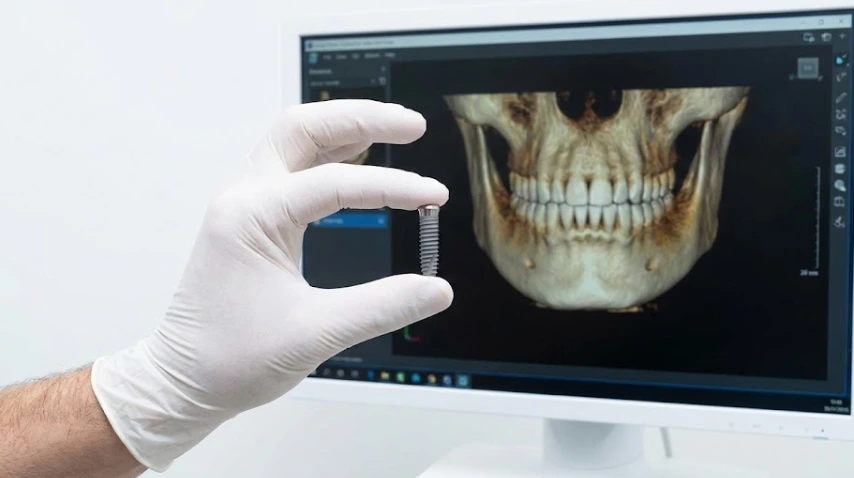
In order to assist you in making a more informed choice, we have prepared a comparison between the implant option and the use of traditional dentures at the age of 70 from a clinical perspective.
| Feature | Dental Implants (Fixed) | Traditional Dentures (Removable) |
| Biting Force | 90–100% of natural teeth | 20–30% of natural teeth |
| Bone Preservation | High (Stimulates bone) | None (Accelerates bone loss) |
| Palate Coverage | None (Taste food fully) | Covers roof of mouth (Loss of taste) |
| Maintenance | Brushing & Flossing | Soaking & Adhesives |
| Longevity | 20+ Years (Lifetime) | Replace/Reline every 5–7 years |
| Surgery Required? | Yes (Minor sedation used) | No (Impressions only) |
Osteoporosis and the Senior Jaw
This is the “elephant in the room” for many of our female patients. “I have osteoporosis; surely my bone is too soft?”
Not necessarily. Osteoporosis affects long bones (hips, wrists) differently from jawbones. While the jaw can be affected, it is often dense enough for implants. Even if there is bone loss, we use specialized techniques here in Turkey—such as short implants or tilted placement (All-on-4)—to utilize the available bone without needing extensive grafting.
Professor Doctor Coşkun Yıldız reviews every 3D tomography scan personally to ensure the bone density is sufficient before we ever schedule a flight.
Why Turkey for Senior Dental Care?
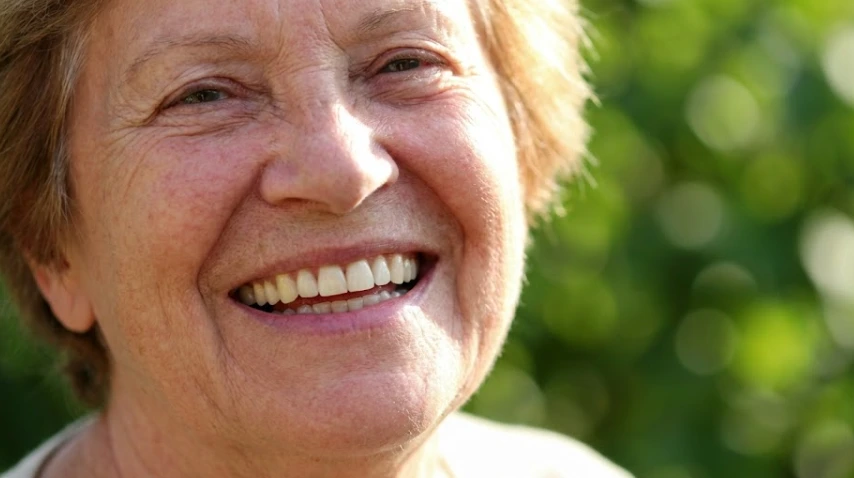
Traveling for surgery at 70 sounds daunting. We get it.
However, Lema Dental Clinic is designed specifically for international patients who need comprehensive care. We don’t just offer surgery; we offer logistics. VIP transfers, hotel stays, and a clinic environment that speaks your language.
For a senior patient on a fixed income, the cost difference is also a massive factor. Getting top-tier Swiss or German implant brands in Turkey costs significantly less than in the UK or US, allowing you to afford the best solution (implants) rather than the cheapest one (dentures).
Critical Queries on Senior Implant Safety
Pain levels are generally the same regardless of age. However, soft tissue (gums) may take a few days longer to heal in seniors compared to a 20-year-old. We simply adjust the suture removal timeline accordingly. Most of our senior patients manage with standard over-the-counter pain relief after 2 days.
Absolutely. We understand that anxiety doesn’t disappear with age. We offer various sedation options to ensure you “sleep” through the procedure and wake up with your new smile. Your heart health is monitored by anesthesiologists throughout the process.
Hypertension is common. As long as it is controlled with medication, it is not a barrier. We will consult with your cardiologist back home if needed and monitor your vitals continuously during the treatment in Istanbul.
Never. Dt. Polen Akkılıç ensures you leave the clinic with temporary teeth on the same day or the next day. You will never have to walk around without a smile while waiting for the implants to fuse.
Our patients often live well into their 80s and 90s. Investing in 15 or 20 years of ability to eat, laugh, and speak without embarrassment is, in our opinion, the best investment you can make. It is about life in your years, not just years in your life.
- Schimmel, M., et al. (2018). Implant dentistry in the elderly patient: specific considerations and precautions. Quintessence International, 49(1), 12-19.
- Srinivasan, M., et al. (2017). Dental implants in the elderly population: a systematic review and meta-analysis. Clinical Oral Implants Research, 28(5), 492-500.
- Jemt, T. (2019). Implant treatment in the elderly: A statistical evaluation of patients treated in the 1980s, 1990s and 2000s. International Journal of Prosthodontics, 32(6), 485-492.
- Misch, C. E. (2014). Dental Implant Prosthetics (2nd ed.). Elsevier Mosby. (Chapter on Geriatric Pharmacology and Physiology).
- Zarb, G. A., & Schmitt, A. (2015). The longitudinal clinical effectiveness of osseointegrated dental implants in elderly patients. The Journal of Prosthetic Dentistry, 114(2), 234-240.

